Apple Doesn't Sell Computers. It Sells Salvation.
Oxford neuroscientists found Apple triggers the same brain regions as religion. This is not accident—it's architecture. Discover the cult playbook behind the world's most valuable brand.
The Neuroscience of Belief
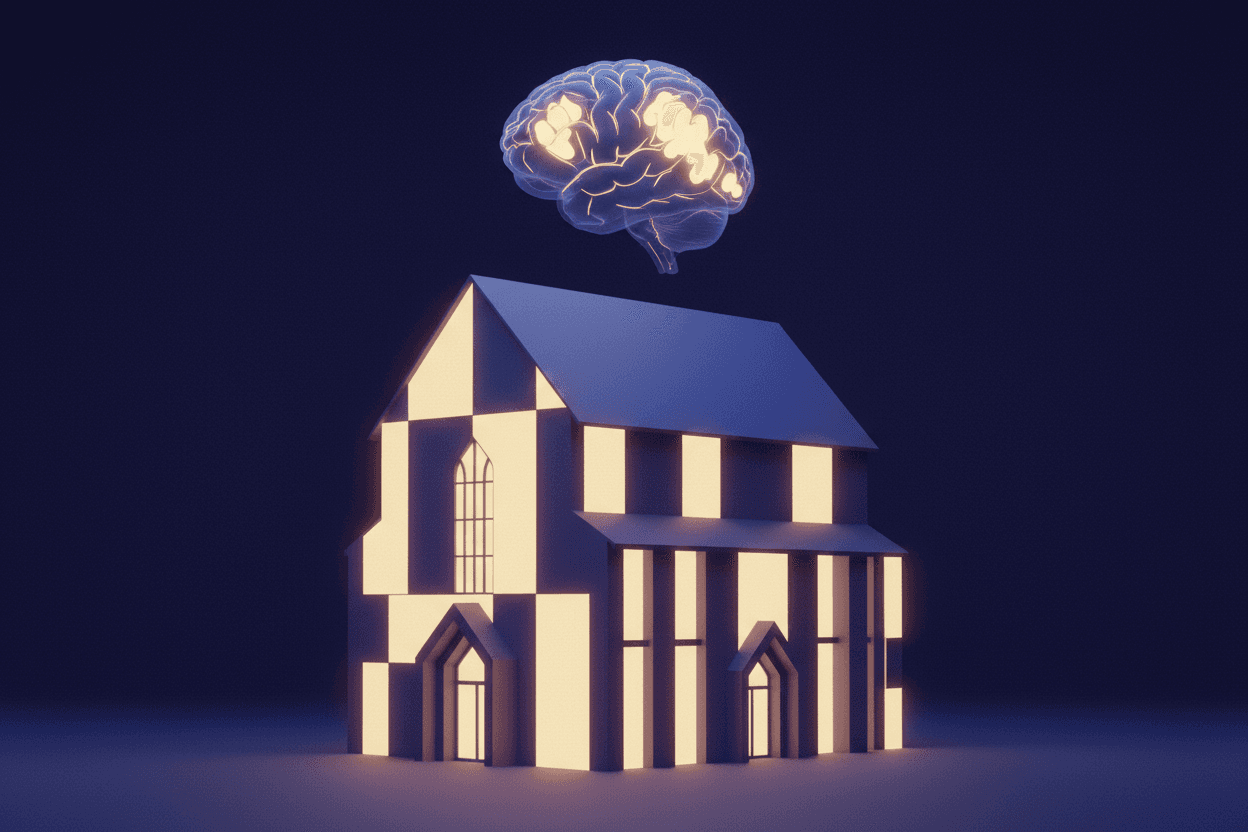
Neuroscientists at Oxford ran MRI scans on Apple devotees and found their brand activated the same neural patterns as religious imagery. Apple's response: they already knew. The 1984 ad was written by an anthropologist who studied cults, not a copywriter who studied products.
When researchers exposed Apple users to brand imagery, their anterior cingulate cortex lit up—the same region that fires when religious believers view sacred icons. In 2024, Apple's brand valuation reached $502 billion, surpassing the GDP of Portugal. But here's the question that should keep every CMO awake: What did Apple understand that textbook marketers still don't?
The answer lies not in features, pricing, or distribution. It lies in something far older than capitalism itself.
The Cult Playbook: Douglas Atkin's Discovery
In 2004, brand strategist Douglas Atkin published "The Culting of Brands," a systematic analysis of how cults recruit, retain, and radicalize followers. His conclusion was explosive: successful brands and successful cults use identical mechanisms. Apple didn't stumble into this accidentally—they engineered it.
Atkin identified six core mechanisms that transform casual customers into true believers:
- Creating a Enemy: Every cult needs an adversary. For Apple, it was IBM—the faceless, conformist corporate machine.
- Establishing a Creation Myth: Origin stories that explain why the movement exists.
- Defining the Chosen Few: Clear boundaries between insiders and outsiders.
- Ritual and Worship: Repeated behaviors that reinforce identity.
- Sacred Symbols: Physical objects that represent belonging.
- The Charismatic Leader: A human face for the movement.
[!INSIGHT] Apple's marketing department operated more like a theology department than an advertising agency. Every campaign asked not "What does this product do?" but "What does this product mean?"
The implications extend beyond marketing into organizational design. Apple Stores, for instance, were designed by former Gap CEO Millard Drexler and Starbucks veteran Ron Johnson—not to sell products, but to create temples of worship. The Genius Bar isn't customer service; it's confession.
1984: The Creation Myth
The most watched advertisement in Super Bowl history opens with a dystopian hellscape. Gray-skinned workers march in lockstep, eyes fixed on a giant screen where Big Brother lectures about conformity. A woman in bright orange shorts—the only color in this monochrome world—runs toward the screen and hurls a hammer through it.
The ad ran once. It cost $900,000. It generated $150 million in equivalent publicity.
But here's what marketing textbooks miss: the 1984 ad wasn't selling the Macintosh. It was establishing Apple's creation myth—the story of how the company came to be. The enemy wasn't IBM as a competitor; IBM was the secular religion of corporate conformity. Apple was offering an alternative faith.
“"The film didn't sell a computer. It sold a cause. It asked viewers to define themselves as either the gray masses or the revolutionaries. There was no middle ground.”
Director Ridley Scott had just finished Blade Runner. The Orwell references were explicit. But the structural genius came from the brief: Apple's agency Chiat/Day had studied how new religious movements establish themselves. The formula requires (1) a corrupt old world, (2) a prophet with forbidden knowledge, and (3) an invitation to join the elect.
The 1984 ad delivered all three in sixty seconds.
Think Different: The Chosen Few
In 1997, Apple was ninety days from bankruptcy. Steve Jobs returned and launched "Think Different"—a campaign that never showed a single Apple product.
Instead, it featured Albert Einstein, Bob Dylan, Martin Luther King Jr., Richard Branson, John Lennon, and other "crazy ones." The narrator didn't describe features or benefits. He described identity.
“"Here's to the crazy ones. The misfits. The rebels. The troublemakers. The round pegs in the square holes. The ones who see things differently.”
This wasn't aspiration marketing. It was doctrinal boundary-setting. Jobs understood that cults don't grow by being inclusive—they grow by being exclusive. The phrase "Think Different" was grammatically incorrect deliberately. It was a shibboleth, a password that separated insiders from outsiders.
[!INSIGHT] The campaign's genius was making customers feel like they were making a choice about themselves, not a choice about a computer. Buying Apple wasn't a purchase—it was an identity declaration.
The results speak for themselves. Between 1997 and 2011, Apple's market cap grew from $2 billion to $350 billion. The same period saw the launch of the iMac, iPod, iPhone, and iPad—products that would have failed under conventional marketing logic because they entered non-existent markets. But Apple wasn't marketing products. It was deploying new sacraments for its congregation.
The Ritual Architecture of Apple Stores
Step into an Apple Store and observe the behaviors. Customers approach products on tables like altar artifacts. They pick them up, turn them over, stroke the surfaces. The Genius Bar operates as a confessional where problems are heard and absolved. Product launches become pilgrimage events.
In 2023, Apple Stores generated $74 billion in revenue—an average of $5,500 per square foot, the highest of any retailer in history. But the stores' true function isn't retail. It's reinforcement.
Ron Johnson, who designed the retail concept, explicitly modeled it on hotel lobbies and museum galleries—spaces designed for lingering, not transacting. Products are displayed without price tags, removing the transactional frame. Staff don't wear nametags, suggesting a community of equals rather than a hierarchy of service.
The architectural vocabulary is consistent: glass staircases, open spaces, natural light, stone floors. These are the same design elements found in religious structures across cultures. They signal: this is sacred space.
Implications: What Brands Get Wrong
Most companies study Apple's marketing tactics—minimalist design, product keynotes, ecosystem lock-in—while missing the underlying theology. They ask "How does Apple advertise?" instead of "What does Apple believe?"
The cult framework predicts several common mistakes:
- Conflating loyalty with belief: Net Promoter Scores measure satisfaction, not faith. Apple doesn't want satisfied customers; it wants converts.
- Copying rituals without meaning: Samsung's Galaxy launches looked like Apple keynotes but lacked the doctrinal foundation. They were performances, not sacraments.
- Fearing exclusion: Most brands try to appeal to everyone. Cults understand that exclusion creates belonging.
[!NOTE] This framework has limits. Apple's products genuinely work well—the cult mechanism amplifies quality, it doesn't substitute for it. The Lisa and Newton failed despite cult marketing because they were bad products. Faith requires evidence.
The implications extend beyond branding into leadership, product development, and organizational culture. The question isn't whether your brand can become a cult—it's whether you're willing to do the work that cult-building requires.
The Cathedral and the Computer
Apple understood something that behavioral economists are only now documenting: humans are meaning-seeking animals. We don't buy products; we buy identities. We don't choose brands; we choose tribes.
The neuroscience data confirms what Atkin observed twenty years ago. When Apple users defend the brand against criticism, they're not defending a corporation—they're defending their congregation. The anterior cingulate activation isn't a marketing success; it's an anthropological fact.
Apple's $502 billion brand valuation isn't about logo recognition or advertising recall. It's about successfully positioning itself as the answer to a question customers didn't know they were asking: "Who am I, and who are my people?"
Sources: Douglas Atkin, "The Culting of Brands" (2004); Oxford Centre for Functional MRI of the Brain, "Neural Correlates of Brand Perception" (2011); Apple Inc. Annual Reports (1997-2024); Interbrand Best Global Brands Rankings; Ron Johnson interview, Harvard Business Review (2012); Chiat/Day internal documents, "1984 Campaign Brief" (1983).