Why Your Brain Predicts Reality Before You Experience It
Your brain hallucinates reality 100 milliseconds ahead of time. What happens when prediction fails—and what this reveals about consciousness itself?
Hyle Editorial·
In 2024, neuroscientists at the Allen Institute confirmed something unsettling: your brain is never experiencing the present moment. Neural transmission delays mean sensory data arrives 80-100 milliseconds late—yet you perceive a seamless, instantaneous now. Your brain is continuously hallucinating reality based on predictions, only correcting itself when predictions fail.
This predictive processing framework has upended centuries of assumptions about perception. We do not see the world as it is; we see what our brains expect to see. When expectations and reality diverge dramatically, the consequences range from everyday illusions to schizophrenic breaks.
Here is the question that keeps cognitive scientists awake at night: if consciousness is fundamentally predictive rather than reactive, what does that mean for our sense of free will, our shared reality, and our attempts to recreate consciousness in machines?
The Predictive Brain: A Paradigm Shift
For over 300 years, the dominant model of perception was essentially a camera metaphor. Light hits the retina, signals travel to visual cortex, and the brain constructs a picture of the world. This "bottom-up" processing assumed consciousness emerged from sensory data flowing upward through neural hierarchies.
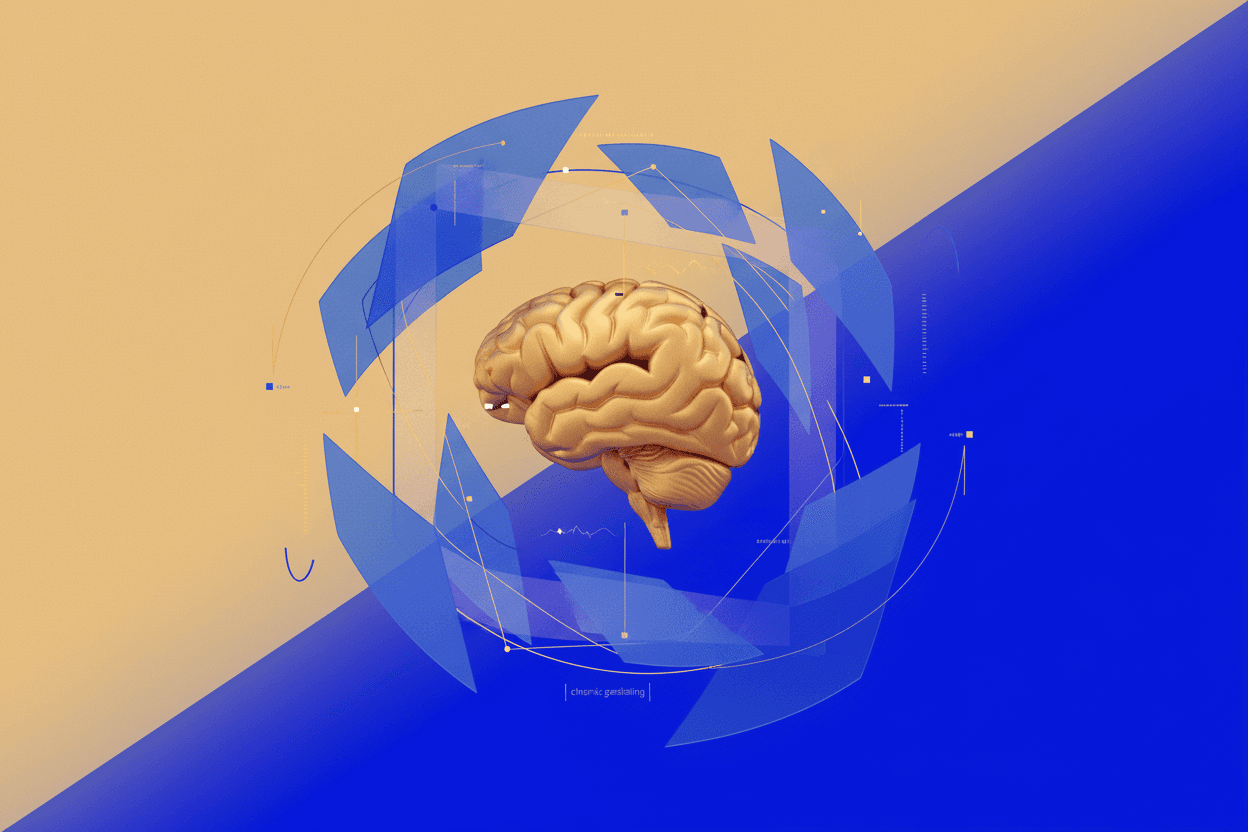
The predictive processing model inverts this entirely. The brain is fundamentally a prediction engine, constantly generating top-down forecasts about incoming sensory data. Perception is not construction from data—it is the brain's best guess, updated only when predictions encounter "prediction errors" that demand correction.
[!INSIGHT] Under predictive processing, consciousness is not a passive receiver of reality but an active generator of controlled hallucinations. What we experience is the brain's prediction, not raw sensory data.
The Evidence Is Everywhere
Consider the blind spot in your visual field. Your optic nerve creates a literal hole in your retina where there are no photoreceptors—yet you never perceive a black spot. Your brain fills in the gap using surrounding information and predictions about what should be there.
A 2023 study by researchers at University College London demonstrated this principle dramatically. Participants viewed ambiguous figures while their brain activity was monitored via fMRI. The researchers could predict which interpretation the subject would see before conscious awareness—sometimes up to 11 seconds in advance—based solely on pattern formation in visual cortex.
“*"The brain does not wait for information to arrive. It anticipates. When anticipation fails, only then does it admit surprise into consciousness.”
— Professor Karl Friston, inventor of the Free Energy Principle
Prediction Error: Where Reality Breaks Through
If prediction ruled entirely, we would live in a solipsistic dream. What anchors us to shared reality is prediction error—the mismatch between expectation and sensation that forces the brain to revise its model.
This explains phenomena from déjà vu to phantom limb sensations:
Schizophrenia: Some researchers now view certain psychotic symptoms as hyperpredictive states where the brain's priors overwhelm sensory evidence, generating hallucinations.
Autism: Conversely, some theories suggest autism involves overweighting prediction errors, making the world feel chaotic and overwhelming in its raw sensory intensity.
Optical Illusions: The Müller-Lyer illusion persists even when you know the lines are equal because your brain's built-in predictions about 3D space override conscious knowledge.
The Implications: Who Is Driving?
If your brain predicts your experience before you consciously register it, the implications for agency are profound.
A 2024 meta-analysis of readiness potential studies found that neural activity predicting a decision appears up to 10 seconds before subjects report conscious intention. The predictive brain, it seems, may be making decisions before "you" know about them.
This does not mean free will is an illusion in the simple sense—but it does suggest consciousness plays a different role than we assumed. Rather than originating decisions, consciousness may function as a review mechanism, a way for the brain to integrate predictions, evaluate outcomes, and construct coherent narratives about why we act.
[!NOTE] This framework aligns with the "Interpreter Module" theory from split-brain research, where the left hemisphere confabulates explanations for actions initiated elsewhere in the brain.
Machine Consciousness and the Prediction Gap
Current AI systems, including large language models, operate on fundamentally different principles. They process input and generate output—but they do not maintain continuous predictive models of an environment in which they are embodied.
This may explain why AI systems can seem intelligent yet lack anything resembling human consciousness. They lack the constant, embodied prediction-error loop that characterizes biological minds.
So What?
The predictive processing framework changes how we understand:
Mental Health: Depression may involve overly precise negative predictions; anxiety could be hypervigilant prediction-error signaling. Treatments might target prediction mechanisms rather than neurochemistry alone.
Human Disagreement: Political polarization may partly stem from different populations operating under incompatible predictive models, with each side genuinely perceiving a different reality.
Education: Learning might be reconceptualized as prediction-error minimization. Good teaching creates productive surprises that force model revision.
Key Takeaway
Your brain is a prediction engine, not a camera. What you experience as reality is a controlled hallucination, continuously updated by prediction errors. This means consciousness is not a passive window onto the world but an active construction—predictive, embodied, and always slightly ahead of the present moment. Understanding this principle may be essential to solving consciousness itself.
Sources: Allen Institute Brain Observatory (2024); Friston, K. (2023). "The Free Energy Principle." Nature Reviews Neuroscience; UCL Vision Lab (2023); Schurger et al. (2024). "Revisiting the Readiness Potential." Trends in Cognitive Sciences; Clark, A. (2024). "Whatever Next? Predictive Brains, Situated Agents." Behavioral and Brain Sciences.
This is a Premium Article
Hylē Media members get unlimited access to all premium content. Sign up free — no credit card required.