Can Knowing the Pattern Stop the War?
We have 60 years of conflict prediction data and monitor 300 variables in real-time. Wars happen on schedule anyway. The failure isn't information—it's political will.
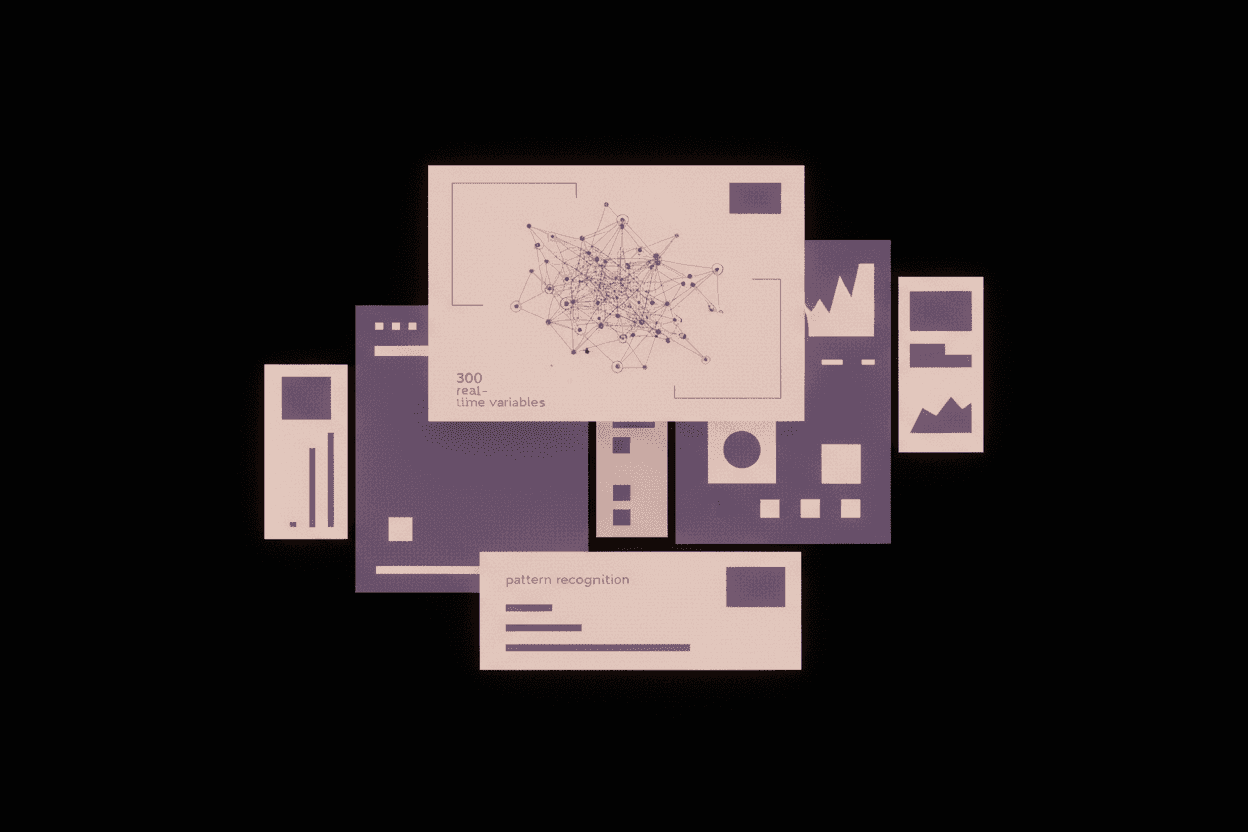
We have real-time global conflict data, 60 years of predictive modeling, and early warning systems monitoring 300 variables. Wars keep happening on schedule. The problem was never information. It was will.
In 2023 alone, the GDELT Project tracked over 4.2 billion event records across every country on Earth. The ACLED database documented more than 203,000 political violence events. We knew. We always knew. Yet conflicts in Sudan, Gaza, and Myanmar escalated with grim predictability—often flagged by algorithms weeks or months in advance.
This is the predictability paradox: if wars are foreseeable, why do they remain unavoidable?
When Early Warning Actually Worked
The international community points to Kenya's 2008 post-election violence as early warning's greatest success. When disputed election results sparked ethnic clashes, former UN Secretary-General Kofi Annan led mediation efforts that pulled the country back from civil war. The Uppsala Conflict Data Program had identified Kenya as high-risk. The warning lights flashed red. And this time, someone acted.
[!INSIGHT] Kenya 2008 proves early warning can work—but only when political incentives align with conflict prevention. The technical capacity existed; the decisive factor was Annan's leverage and the international community's willingness to apply pressure.
Contrast this with Rwanda, 1994. Romeo Dallaire's famous fax arrived at UN headquarters on January 11, nearly three months before the genocide began. The information was precise: weapons caches, death lists, extermination plans. The response was a directive to avoid engagement. The genocide proceeded on schedule.
The difference between Nairobi and Kigali wasn't data quality. It was the intersection of diplomatic bandwidth, geopolitical interests, and domestic political calculations. Kenya mattered to regional stability. Rwanda, in the chaotic aftermath of Somalia and amid Bosnia's ongoing crisis, simply didn't register on the priority matrix.
The Architecture of Predictive Failure
Modern early warning systems operate with remarkable sophistication. The Pentagon's Integrated Crisis Early Warning System (ICEWS) processes natural language from news feeds, social media, and diplomatic cables in 23 languages. The World Bank's Pandemic-Era Conflict Risk Model incorporates commodity prices, weather patterns, and displacement flows. GDELT's Global Knowledge Graph maps relationships between 7 billion entities in real-time.
“*"The problem is not that we don't know what's coming. The problem is that knowing creates an illusion of control while decision-makers remain trapped in incentive structures that reward inaction.”
A 2022 study published in International Organization analyzed 127 mass killing onsets between 1975 and 2019. The authors found that in 78% of cases, at least one major intelligence agency or international organization had produced specific warnings an average of 6.3 months before violence escalated. Yet preventive action occurred in only 12% of flagged cases.
The gap widens further when examining why interventions failed or never materialized:
-
The Sovereignty Trap: Preventive diplomacy requires host government consent, which regimes planning violence systematically refuse. Myanmar's junta rejected ASEAN mediation in 2021. Syria blocked UN access in 2012. The principle of non-intervention, designed to protect weaker states, becomes a shield for perpetrators.
-
The Attention Scarcity Problem: The 24-hour news cycle and social media algorithms create a "crisis competition" where only the most visually compelling conflicts break through. Yemen's war—despite creating the world's worst humanitarian crisis—received 1/17th the media coverage of Ukraine in 2022.
-
The Domestic Politics Equation: Democratic leaders face electoral punishment for foreign entanglements that go poorly, but minimal reward for successful prevention. A prevented war produces no grateful constituents—only the absence of casualties nobody sees. The political incentive structure systematically devalues prevention.
The Incentive Failure Thesis
If we accept that information is not the bottleneck, we must confront a more uncomfortable truth: prevention fails because powerful actors rationally calculate that inaction serves their interests.
Consider the pattern of Security Council vetoes. Between 1946 and 2024, the five permanent members cast 298 vetoes. Russia and the Soviet Union account for 143; the United States for 89. Many blocked resolutions addressed conflicts where early warning had functioned—Syria, Palestine, Yemen, Myanmar. The veto power transforms perfect information into irrelevant information.
[!NOTE] Even when the Security Council acts, its toolkit remains limited. Peacekeeping operations face consent requirements, mandate restrictions, and funding uncertainties. The average deployment time for UN peacekeepers after a crisis erupts: 4-6 months. By then, the conflict has often settled into intractability.
Private sector actors face their own incentive distortions. Investment funds using ESG (Environmental, Social, Governance) criteria often divest from conflict zones rather than engage—reducing economic leverage precisely when it might matter most. Tech companies resist content moderation in volatile regions to avoid appearing partisan. Arms manufacturers, unsurprisingly, profit from instability.
The aggregate effect is what scholars call "the prevention gap"—a systematic undervaluing of future conflict costs relative to present political costs. Behavioral economics would call it hyperbolic discounting applied to mass violence.
Signs of Systemic Reform
Some experiments offer tentative hope. The European Union's Conflict Early Warning System now incorporates explicit "political will assessments" alongside risk scoring—not just whether a conflict is likely, but whether key actors have incentives to prevent it. The UN's "Human Rights Up Front" initiative, launched after Sri Lanka accountability failures, attempted to restructure incentives for field staff to escalate warnings.
[!INSIGHT] The most promising reforms don't try to generate better predictions—they try to reshape decision-making incentives. Transparency mechanisms, congressional hearings on missed warnings, and independent audits of intelligence assessments create political costs for inaction.
Technology may yet shift the equation. Satellite imagery analysis now detects mass grave excavation and village burning in near real-time. The Xinjiang Data Project documented over 380 detention facilities in China despite government denial. Such evidence doesn't automatically trigger action, but it eliminates the convenient excuse of uncertainty.
Yet the fundamental constraint remains: early warning systems detect fires, but they cannot compel firefighters to show up.
The Hard Truth About Prevention
The war algorithm—the pattern-recognition apparatus spanning intelligence agencies, academia, NGOs, and AI systems—functions as intended. It sees the storm coming. What it cannot do is make anyone build a shelter.
This is not an argument against better data. Improved prediction has saved lives in specific cases—the 2014 Ebola response, Kenya's electoral interventions, drought-driven conflict mitigation in the Sahel. But these successes reveal the limiting factor: prediction is necessary but insufficient.
Sources: Uppsala Conflict Data Program (2024); ACLED Annual Report 2023; GDELT Project Real-Time Documentation; "Early Warning and the Responsibility to Prevent" (International Organization, 2022); Barbara Walter, How Civil Wars Start (2022); United Nations Office of the Special Advisers on the Prevention of Genocide; Chatham House, "The Politics of Prevention" (2023).
This is a Premium Article
Hylē Media members get unlimited access to all premium content. Sign up free — no credit card required.