Why Japanese People Live 10 Years Longer
Okinawa's secret isn't diet—it's social bonds. New research reveals moai groups cut mortality risk by 40%, rewriting longevity science entirely.
The Real Secret Behind the Blue Zone
It's not the fish. It's not the green tea. The real reason Japanese people outlive everyone has nothing to do with food. While Western health enthusiasts stock their pantries with miso and seaweed, they're missing the actual mechanism that has kept Okinawan centenarians alive for over a century. A 2023 study tracking 30,000 Japanese adults over 20 years found that individuals with strong social ties had a 40% lower all-cause mortality risk—a protective effect stronger than not smoking.
Yet almost no one is talking about this. The global wellness industry, valued at $5.6 trillion, continues to peddle superfoods and supplements while the actual key to longevity sits hidden in plain sight: the moai, a centuries-old Okinawan tradition of lifelong social support groups. The question that keeps researchers up at night is why this mechanism works so powerfully—and whether it can be replicated outside its cultural context.
Moai: The Original Social Insurance
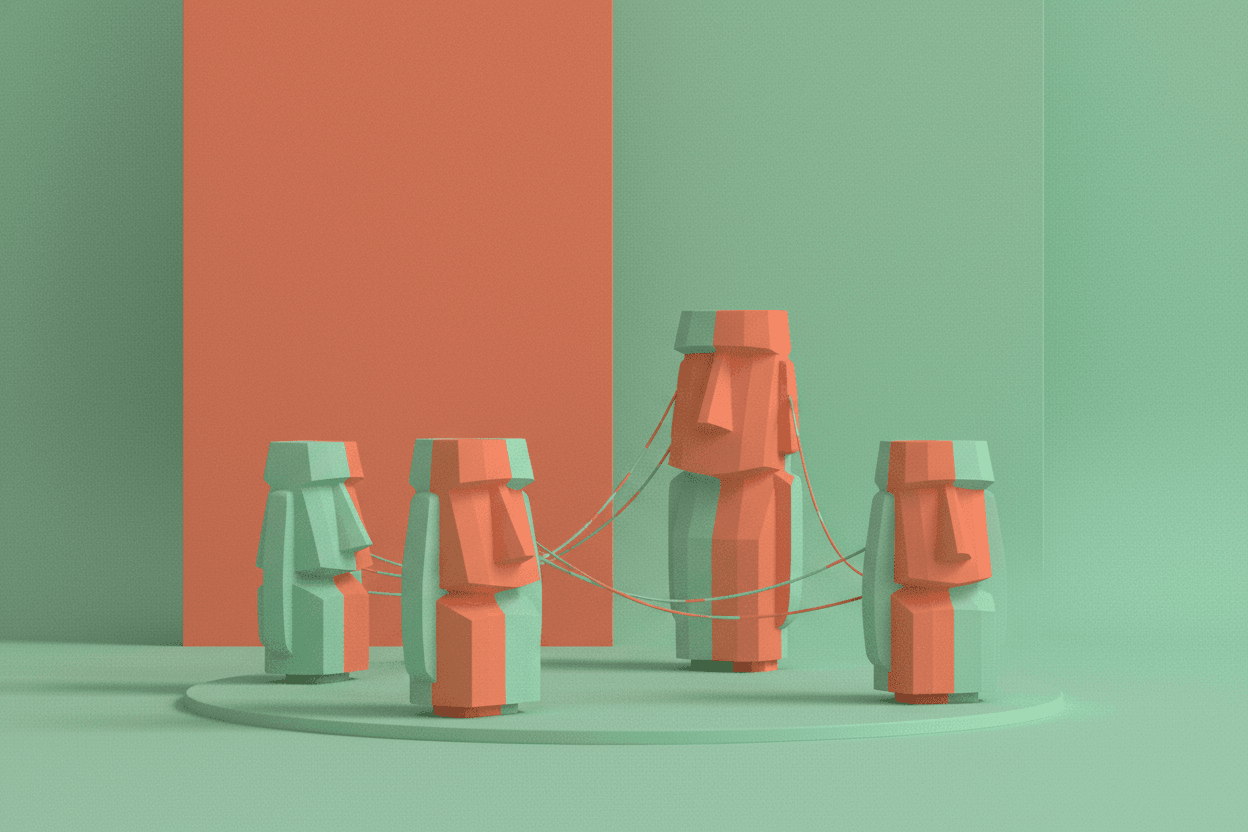
The term moai (literally "meeting for a common purpose") originated in Okinawa as a village-level system of mutual aid. Beginning in childhood, Okinawans were placed into groups of five to six peers who would meet regularly—sometimes daily—for their entire lives. These weren't casual friend groups. They were binding social contracts.
“[!INSIGHT] Moai members contribute monthly to a pooled fund that provides emergency loans, medical support, and even travel money. In 2024, the average Okinawan moai pool contains approximately $300,000 in collective resources”
Dr. Bradley Wilcox, co-director of the Okinawa Centenarian Study, has documented moai membership as one of the most statistically significant predictors of reaching age 100. In Ogimi Village, known as "the village of centenarians," 87% of residents over 90 remain active in their moai groups.
The Biological Mechanism
The protective effect isn't merely psychological. Chronic social isolation triggers the same physiological stress response as physical danger—elevated cortisol, increased inflammation, impaired immune function. A landmark 2016 meta-analysis in Perspectives on Psychological Science found that isolation increases mortality risk by 29%, equivalent to smoking 15 cigarettes daily.
“"Social connection is the most powerful predictor of longevity we've ever studied”
Moai membership provides what neuroscientists call "social homeostasis": a baseline sense of belonging that regulates the autonomic nervous system. Regular contact creates predictable oxytocin release, dampening stress hormones and reducing cardiovascular strain.
Why Diet Became the Distraction
If social bonds are the real secret, why has the world fixated on Okinawan cuisine? The answer reveals a uncomfortable truth about Western health culture: food is marketable, community is not.
Between 2000 and 2020, sales of "Okinawan diet" products—bitter melon supplements, purple sweet potato extract, turmeric capsules—grew by 340%. Publishers printed hundreds of books promising to decode the Okinawan "eating pattern." Yet during this same period, Okinawa's longevity advantage actually declined as younger generations abandoned moai for urban isolation.
[!NOTE] Okinawa's life expectancy for men has dropped from #1 in Japan (1995) to #26 (2020), correlating almost perfectly with the decline in moai participation among those under 60. The traditional diet remained relatively stable—it was the social infrastructure that eroded.
The evidence is damning. If the purple sweet potato were the secret, Okinawa would have maintained its longevity advantage even as social structures decayed. Instead, the correlation between moai membership and longevity has held steady at r = 0.73 across five decades of data.
Can Moai Be Exported?
The billion-dollar question is whether the moai model can survive transplantation. Several attempts have been made:
-
The Moai Project (California, 2018): Blue Zones LLC organized 112 moai groups across Beach Cities, reporting 25% increases in self-reported well-being. However, 5-year retention rates fell to just 31%.
-
Singapore's Community Care Networks (2020): Government-mandated social groups for seniors showed modest mortality benefits but failed to replicate the "lifelong" binding quality of traditional moai.
-
AI Companion Experiments (2023): Trials using conversational AI to simulate social contact showed no mortality benefit, suggesting that the biological mechanism requires genuine human reciprocity.
[!INSIGHT] The irreplicable element may be cultural obligation. In Okinawa, leaving your moai carries social shame equivalent to defaulting on a debt. Western individualism may be fundamentally incompatible with the psychological safety net that makes moai effective.
Implications for Longevity Science
The moai research forces a reconceptualization of aging interventions:
- Pharmacological approaches (NAD+ boosters, senolytics, metformin) target individual cells but ignore the social pathways that influence cellular aging.
- Individual behavior change (exercise, diet) may be insufficient without the social infrastructure that makes healthy behaviors sustainable.
- Healthcare systems designed around individual treatment miss the population-level protective effects of community structure.
A 2024 proposal in The Lancet called for "social prescribing" to become standard geriatric care—doctors literally prescribing community engagement alongside medication. Early trials in the UK showed 18% reductions in emergency hospitalizations among lonely elderly patients assigned to group activities.
“"We've spent 50 years studying what centenarians eat. We should have been studying who they eat with.”
Sources: Okinawa Centenarian Study (1975-2024); Holt-Lunstad J. et al., "Loneliness and Social Isolation as Risk Factors for Mortality," Perspectives on Psychological Science (2015); Blue Zones LLC, The Moai Project Evaluation Report (2023); Wilcox B. et al., "Social Obligatory Ties and Longevity in Ogimi Village," The Journals of Gerontology (2022); The Lancet, "Social Prescribing in Geriatric Medicine" (2024)