Your DNA Has a Typo — Here's Who Can Fix It
Your genome is 3.2 billion letters. One typo can kill you. CRISPR-Cas9 can fix it — but sometimes it edits the wrong word. The stakes couldn't be higher.
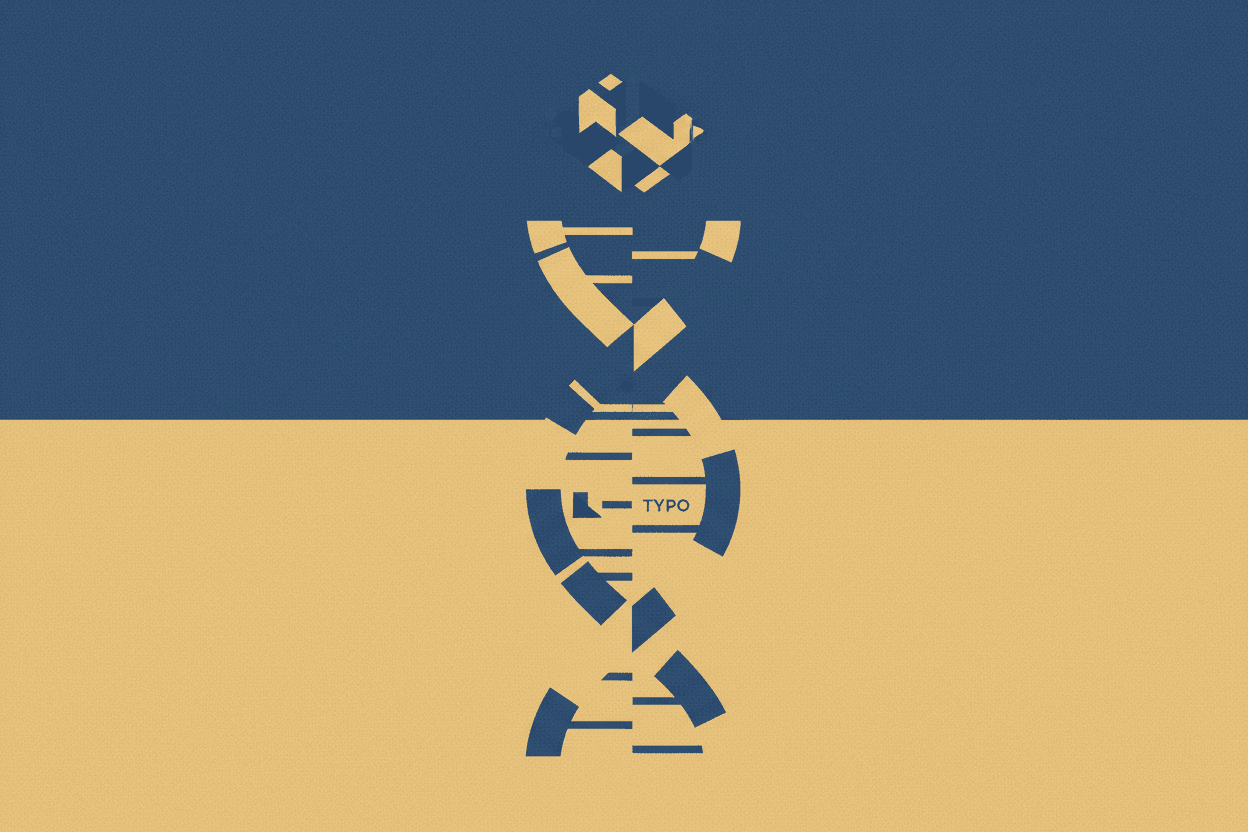
Your genome is 3.2 billion letters long. A single typo can kill you. Scientists have built a molecular word processor that can find that typo and fix it — but sometimes it edits the wrong word.
In the time it takes you to read this sentence, CRISPR-Cas9 systems deployed in research labs worldwide will have made approximately 10,000 precise cuts to DNA. In December 2023, the FDA approved the first CRISPR-based therapy for sickle cell disease — a $2.2 million treatment that rewrites patients' blood cells. Yet in that same month, a peer-reviewed study documented off-target mutations in 16% of edited cells in certain contexts, raising an uncomfortable question: How do you Ctrl+Z a genetic mistake?
The technology that won Jennifer Doudna and Emmanuelle Charpentier the 2020 Nobel Prize has transformed from laboratory curiosity to clinical reality at breathtaking speed. But behind the headlines lies a more complex story of molecular biology, quantitative uncertainty, and life-or-death calculations that researchers are still learning to navigate.
The Molecular Word Processor: How CRISPR-Cas9 Actually Works
The Search Function
CRISPR-Cas9 operates through two components: a guide RNA (gRNA) of approximately 20 nucleotides and the Cas9 protein, a 1,368 amino acid enzyme that functions as molecular scissors. The guide RNA serves as a search query — it scans the genome for a matching sequence.
The search process follows base-pairing rules: adenine pairs with thymine (A-T), guanine with cytosine (G-C). A perfect 20-nucleotide match should occur only once in a 3.2 billion base pair genome. The mathematical probability of a random perfect match is:
$$P = \left(\frac{1}{4}\right)^{20} \approx 9.1 \times 10^{-13}$$
This translates to roughly a 0.000000000091% chance of a random match — seemingly vanishingly small. Yet biology rarely follows clean probability distributions.
“[!INSIGHT] The PAM Constraint: Cas9 doesn't search blindly. It requires a Protospacer Adjacent Motif (PAM)”
The Cut and the Consequences
Once the guide RNA finds its target, Cas9 undergoes a conformational change, activating two nuclease domains (HNH and RuvC). Each domain cuts one strand of the DNA double helix, creating a blunt double-strand break precisely 3 base pairs upstream of the PAM.
This break triggers the cell's emergency repair systems:
-
Non-Homologous End Joining (NHEJ): A fast, error-prone process that simply stitches the broken ends together — often inserting or deleting nucleotides (indels). If these indels disrupt a gene's reading frame, the gene stops working. This is useful for knocking out disease-causing genes.
-
Homology-Directed Repair (HDR): A slower, template-driven process that can insert new genetic material. This enables true "find and replace" functionality but only works in dividing cells.
“*"We're not just cutting DNA. We're co-opting cellular repair pathways that evolved over billions of years to fix damage, not to implement our engineering designs. The cell has its own agenda.”
The Off-Target Problem: When Find and Replace Goes Wrong
The central challenge facing CRISPR therapeutics isn't making the cut — it's ensuring that's the only cut. Off-target edits occur when the guide RNA binds to sequences that partially match the intended target.
Mismatch Tolerance
Cas9 tolerates mismatches differently depending on their position. The 8-12 nucleotides closest to the PAM (the "seed region") require near-perfect matching, while mismatches in the distal region are more easily tolerated. A 2018 study in Nature Biotechnology quantified this:
| Mismatch Position | Binding Efficiency Retained |
|---|---|
| Seed region (pos. 1-8) | < 5% |
| Distal region (pos. 13-20) | 40-70% |
| Multiple mismatches | Highly variable |
Real-World Stakes: Three Case Studies
Case 1: Sickle Cell Disease (Success Story) In the landmark CASGEVY trial, patients received autologous (self-donated) stem cells edited to reactivate fetal hemoglobin production. Of 44 patients treated, 97% achieved sustained, transfusion-free survival over 24 months. Off-target analysis using GUIDE-seq technology detected no clinically significant unintended edits.
Case 2: The CAR-T Mishap In 2022, researchers at the University of Pennsylvania discovered that CRISPR-edited CAR-T cells (designed to fight cancer) had acquired chromosomal abnormalities in 14% of cells — not from off-target DNA cuts, but from on-target cuts that triggered large-scale genomic reshuffling during repair.
Case 3: The Embryo Warning A 2020 study attempting to correct a blindness-causing mutation (CRYAA gene) in human embryos found that 19% of edited embryos experienced "genomic chaos" — including unintended deletions, insertions, and chromosomal loss.
[!NOTE] The Mosaicism Problem: When embryos are edited, not all cells receive the same edit. A resulting organism may contain a patchwork of edited and unedited cells (mosaicism). In clinical IVF contexts, this means a child could still inherit the disease despite attempted correction.
Engineering Solutions: Making CRISPR More Precise
The biotech industry has not accepted off-target edits as an unavoidable tradeoff. Multiple engineering approaches have improved specificity by orders of magnitude:
High-Fidelity Cas9 Variants
-
SpCas9-HF1: Introduced in 2016, contains 4 amino acid substitutions (N497A, R661A, Q695A, Q926A) that weaken non-specific DNA binding. Reduced off-target activity by >85% while maintaining 70% on-target efficiency.
-
eSpCas9(1.1): Engineered to reduce negative charge in the DNA-binding groove, making it harder for the enzyme to grip mismatched sequences.
-
HypaCas9: The current gold standard, with mutations in the REC3 domain that make the enzyme wait for perfect RNA-DNA pairing before cutting. Off-target rates approach background mutation levels.
The Base Editing Revolution
Rather than cutting DNA, base editors chemically convert one nucleotide to another without creating double-strand breaks:
- Cytosine Base Editors (CBEs): Convert C•G to T•A
- Adenine Base Editors (ABEs): Convert A•T to G•C
In 2022, a base editing therapy for familial hypercholesterolemia achieved a 46% reduction in LDL cholesterol in a single dose — with zero detected off-target edits in the treatment group.
Prime Editing: The Search-and-Replace Upgrade
Developed by David Liu's lab at Harvard, prime editing uses a fusion protein (Cas9 nickase + reverse transcriptase) guided by a prime editing guide RNA (pegRNA) that specifies both the target location and the desired edit. It can perform all 12 possible base-to-base conversions, plus small insertions and deletions.
| Editing Method | Double-Strand Break | Indel Rate | Off-Target Risk | Efficiency |
|---|---|---|---|---|
| Wild-type Cas9 | Yes | 40-60% | High | 70-90% |
| High-Fidelity Cas9 | Yes | 35-50% | Very Low | 50-70% |
| Base Editors | No | < 1% | Low | 30-50% |
| Prime Editors | No (nick only) | < 5% | Minimal | 20-40% |
The Clinical Landscape: Who Gets Fixed and When?
As of 2024, the gene therapy pipeline includes over 2,300 clinical trials worldwide. The diseases being targeted reveal a strategic logic:
Ex Vivo vs. In Vivo Editing
Ex Vivo (cells edited outside the body, then reinfused):
- Sickle cell disease and beta-thalassemia: FDA-approved
- CAR-T cancer therapies: Multiple FDA approvals
- HIV resistance (CCR5 knockout): Phase II trials
In Vivo (editing directly inside the body):
- Hereditary angioedema (Intellia Therapeutics): Phase I showed 95% reduction in attacks
- Transthyretin amyloidosis: Phase III ongoing
- Duchenne muscular dystrophy: Delivery to muscle tissue remains challenging
[!INSIGHT] The Delivery Bottleneck: The biggest limitation isn't editing precision — it's delivery. Getting CRISPR components into the right cells requires lipid nanoparticles (for liver) or adeno-associated viruses (AAVs). Each organ needs a different delivery vehicle, and the immune system often recognizes and destroys both.
The Economics of Precision
CASGEVY's $2.2 million price tag reflects not just R&D costs, but the complexity of personalized manufacturing. Each patient's cells must be extracted, edited, expanded, quality-tested, and reinfused. Scale-up solutions — including universal donor cells and in vivo approaches — aim to reduce costs by 80% by 2030.
The Unresolved Questions
Germline Editing: The Line We Haven't Crossed
Somatic cell edits (affecting only the patient) are ethically straightforward. Germline edits (affecting eggs, sperm, or embryos) would be inherited by all future descendants — effectively altering human evolution.
In 2018, He Jiankui crossed this line, creating the first CRISPR-edited babies (twins with a CCR5 deletion intended to confer HIV resistance). The scientific community's condemnation was near-universal. He was sentenced to three years in prison, and subsequent analysis suggested the edits were incomplete and may have introduced new health risks.
“*"The technology is not ready. The risks are not understood. The ethical framework doesn't exist. And yet”
Equity and Access
If sickle cell disease — which primarily affects people of African descent — is curable at $2.2 million per patient, who actually gets cured? Nigeria has over 4 million sickle cell patients. The entire country's healthcare budget is approximately $1.5 billion annually.
Long-Term Follow-Up
The longest CRISPR patient follow-up is approximately 5 years. We don't know whether edits remain stable over decades, whether immune responses to Cas9 protein might emerge later, or whether low-frequency off-target mutations might accumulate into clinically significant effects.
Conclusion
CRISPR-Cas9 has transformed from a bacterial immune system discovered in 2012 to an FDA-approved therapy in 2023 — one of the fastest translational timelines in medical history. The technology can now fix the typos in your 3.2 billion letter genome with precision that would have seemed impossible a decade ago.
But the off-target problem hasn't disappeared — it's been reduced to manageable levels for some applications while remaining a critical barrier for others. Every editing decision involves a calculation: Is the risk of an imperfect edit acceptable given the severity of the disease being treated?
Sources: Doudna, J.A. & Charpentier, E. (2014). The new frontier of genome engineering with CRISPR-Cas9. Science. Intellia Therapeutics (2024). Phase 1 Data Presentation. FDA Approval Package for CASGEVY (2023). Tsai, S.Q. et al. (2015). GUIDE-seq enables genome-wide profiling of off-target cleavage by CRISPR-Cas nucleases. Nature Biotechnology. Anzalone, A.V. et al. (2019). Search-and-replace genome editing without double-strand breaks or donor DNA. Nature.
This is a Premium Article
Hylē Media members get unlimited access to all premium content. Sign up free — no credit card required.