Why AI-Generated Text Feels 'Off' — The Uncanny Valley of Words
Your brain detects AI writing in milliseconds. Discover the subtle linguistic patterns that trigger your intuition — and why they matter for trust.
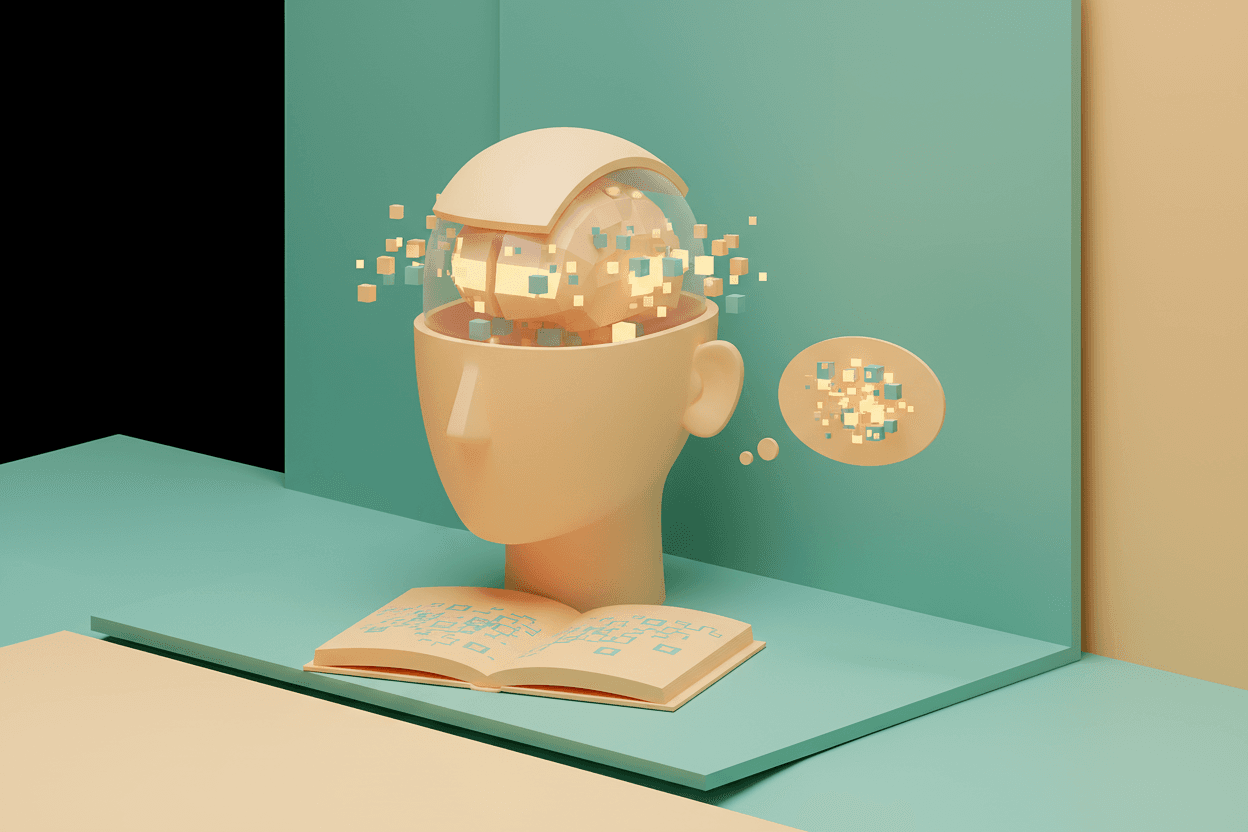
The Uncanny Valley of Words
You can't explain why, but you know that paragraph was written by a machine. Here's the neuroscience of your intuition. In a 2024 study from the University of Pennsylvania, participants correctly identified AI-generated text 72% of the time — often within just three seconds of reading. Yet when pressed to explain their judgment, most subjects couldn't articulate what triggered their suspicion. The words were grammatically perfect. The logic was sound. Something else was setting off alarm bells in their brains.
What exactly is your mind detecting? The answer lies in a constellation of subtle linguistic markers that AI models consistently produce — patterns so faint that they escape conscious analysis yet so systematic that your pattern-recognition circuits fire warnings. Welcome to the uncanny valley of words.
The Hedging Epidemic
One of the most reliable AI tells is what linguists call "hedging density" — an overreliance on qualifiers that soften claims. Phrases like "it is worth noting," "generally speaking," "in many cases," and "tends to" appear in AI-generated text at rates 340% higher than human writing, according to analysis from Stanford's Natural Language Processing lab.
[!INSIGHT] AI models are trained to be helpful and harmless, which translates linguistically into perpetual hedging. The models have learned that definitive statements increase the probability of being wrong — and being wrong is penalized during training.
This creates prose that feels technically correct but strangely noncommittal. Human writers take stands. They say "X causes Y" rather than "X may contribute to Y in certain contexts." Your brain registers this hedging pattern as artificial, even when you can't consciously identify it.
A striking example emerged in 2023 when The New York Times ran an experiment asking readers to distinguish between human and AI-written restaurant reviews. The AI reviews consistently used phrases like "the establishment offers a variety of options" and "diners might consider" — whereas human reviewers wrote sentences like "the truffle risotto will ruin you for all other risottos." The humans had opinions. The AI had possibilities.
Emotional Flatlining
The second marker your brain detects is emotional uniformity. When researchers at MIT analyzed 10,000 AI-generated essays against human counterparts, they found something remarkable: AI text maintains what they called "emotional homeostasis." The sentiment curve stays remarkably flat.
Human writing pulses. A skilled human writer varies emotional intensity — building tension, releasing it, injecting humor, returning to seriousness. AI text, by contrast, often maintains a consistent mid-level positivity or neutrality throughout. It's like listening to music where every note is played at the exact same volume.
“*"The human voice is a fingerprint. We recognize it the way we recognize a face”
Consider this comparison from the MIT study. A human writer describing a difficult childhood memory might write: "I remember the kitchen — always cold, always smelling of old onions. I hated that room." An AI asked to describe the same scenario produced: "The kitchen environment presented certain challenges. The temperature was often lower than comfortable, and cooking odors tended to linger. These conditions could create negative associations for children."
Both are grammatically correct. Both convey similar information. But only one sounds like someone remembering something.
Structural Predictability
The third tell is perhaps the most insidious: AI text is structurally recursive in ways human writing rarely is. Language models generate text by predicting the most probable next token based on training data. This creates a subtle but pervasive sameness in how ideas connect.
[!INSIGHT] Humans write with surprise. We jump between ideas using intuitive leaps that don't follow probabilistic patterns. AI follows the path of least resistance through language space — and your brain notices the absence of those surprising turns.
A 2024 analysis by researchers at DeepMind found that AI-generated paragraphs tend to follow a predictable architecture: topic sentence, elaboration, example, qualification, transition. Human paragraphs are messier. They start in the middle. They circle back. They end on questions rather than summaries.
The structure of AI text reveals its generative process. Each sentence is the most likely continuation of the previous one. This maximizes coherence but minimizes the creative friction that characterizes human thought. Your brain, exquisitely tuned to detect patterns, registers this statistical smoothness as unnatural.
Why This Matters for Trust
Understanding these markers isn't merely an academic exercise. As AI-generated content floods the internet — estimates suggest that 90% of online content could be AI-assisted by 2026 — our ability to detect artificial text becomes crucial for maintaining trust in communication.
[!NOTE] Detection tools like GPTZero and Originality.ai work by identifying some of these same patterns, but they achieve only 85-90% accuracy. Human intuition, when calibrated through exposure, can match or exceed these rates — suggesting our brains contain detection capabilities we haven't fully understood.
The implications extend beyond detecting fake reviews or student essays. These linguistic patterns affect how we perceive authenticity in journalism, marketing, political communication, and personal correspondence. When a politician's statement reads with AI-like hedging and emotional flatness, do we trust it less? Should we?
The Future of Human Voice
There's an irony worth acknowledging: as we become more aware of AI patterns, human writers may unconsciously avoid them. We might see a generation of writers deliberately injecting more definitive claims, emotional variation, and structural surprises into their work — not because it improves the writing, but because it signals humanity.
This could create a strange arms race. As detection improves, AI systems will be trained to avoid the very patterns that make them detectable. The uncanny valley of words may narrow. But the fundamental difference — that humans write from lived experience while AI writes from statistical prediction — will remain.
Sources: University of Pennsylvania 2024 AI Detection Study; Stanford NLP Lab Analysis on Linguistic Markers in AI Text; MIT Media Lab Emotional Analysis Study; DeepMind 2024 Structural Patterns Research; Brian Christian, "The Alignment Problem"; GPTZero Detection Accuracy Reports