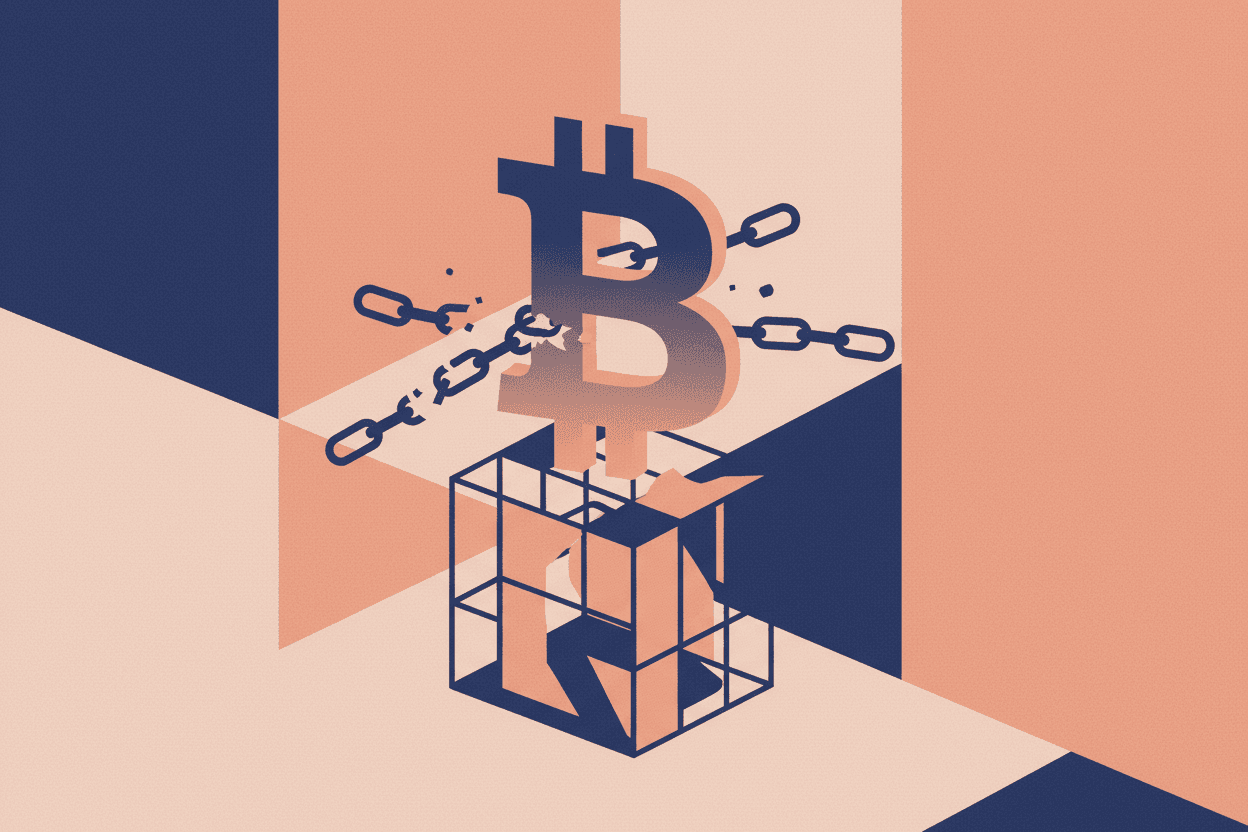
The One Blockchain Use Case That Actually Works
Forget crypto speculation. The real blockchain revolution is tracking lettuce at Walmart—and it proves immutability, not decentralization, creates value.

Forget crypto. Forget DeFi. The most successful blockchain deployment in history tracks lettuce at Walmart. And it has nothing to do with decentralization.
In 2018, an E. coli outbreak contaminated romaine lettuce across the United States, sickening over 200 people and killing five. Walmart's response was swift: they mandated that all leafy green suppliers join their blockchain-based Food Trust system by September 2019. The results were staggering—traceability time dropped from 7 days to 2.2 seconds. Yet this triumph had nothing to do with crypto tokens, decentralized governance, or replacing trusted intermediaries. It worked because of one property alone: immutability.
This raises an uncomfortable question for blockchain evangelists: if the technology's most successful deployment abandons every ideological pillar of the crypto movement, what does that tell us about where blockchain actually creates value?
The Supply Chain Revelation
The blockchain industry has burned through billions of dollars pursuing a decentralized fantasy—replacing banks, governments, and corporations with trustless smart contracts. But the actual winning application operates under complete centralized control, owned by IBM, with Walmart as the gatekeeper. The Food Trust network includes Nestle, Tyson Foods, and Kroger, but make no mistake: Walmart sets the rules.
[!INSIGHT] The Food Trust blockchain succeeds precisely because it rejects decentralization. Permissioned networks with known participants eliminate the Byzantine General problems that plague public chains, while retaining the cryptographic guarantees that make tampering detectable.
The economics are telling. IBM's Food Trust charges subscription fees ranging from $100 to $250,000 per month depending on data volume. This is not a disruption of corporate rent-seeking—it's enterprise software with better audit trails. Yet the value delivered is undeniable. Before blockchain integration, tracing a contaminated product's origin required manual review of paper records across dozens of suppliers. Now a QR code scan reveals the complete journey from farm to shelf.
The Diamond Standard
De Beers, the diamond monopoly that once controlled 90% of global supply, launched Tracr in 2018—the world's largest diamond blockchain. By 2022, the platform tracked over 2.5 million stones. The goal wasn't decentralization; it was proving provenance and excluding conflict diamonds from legitimate markets.
“*"Blockchain provides an immutable record that cannot be altered by any participant”
The system works because De Beers controls who can write to the blockchain. Miners upload rough diamond data at the source, and every subsequent transaction is recorded. Counterfeiters cannot inject fake stones because they lack the cryptographic credentials to participate. The security comes from gatekeeping, not consensus algorithms.
What Actually Makes Blockchain Work Here
Supply chain blockchain succeeds by abandoning three sacred cows of crypto ideology:
1. Abandoning Decentralization
Public blockchains like Bitcoin and Ethereum spend enormous resources maintaining consensus among anonymous participants who cannot trust each other. Supply chain networks avoid this entirely—participants are identified, vetted, and legally bound. The blockchain becomes a shared database with cryptographic signatures, not a replacement for institutional trust.
2. Embracing Permissioned Access
Walmart's suppliers cannot join Food Trust anonymously. They must be approved, onboarded, and integrated into existing business relationships. This "centralized decentralization" eliminates the Sybil attacks and spam that plague public networks while preserving the audit trail benefits.
3. Ignoring Token Economics
Neither Food Trust nor Tracr uses a cryptocurrency. Participants pay subscription fees in regular money to the platform operator. There are no tokens, no staking, no governance voting. The blockchain is infrastructure, not investment vehicle.
“[!INSIGHT] The common thread across successful enterprise blockchain deployments is that they solve coordination problems between parties who already have business relationships but lack shared data infrastructure. The "trustless" narrative is backwards”
The Pharmaceutical Frontier
The Drug Supply Chain Security Act (DSCSA), fully implemented in November 2024, requires pharmaceutical companies to track every prescription drug at the package level through the U.S. supply chain. Early pilots using blockchain showed 90% reduction in verification time compared to traditional serialization systems.
Pfizer, Genentech, and McKesson participated in blockchain pilots that traced billions of dollars in medication. The stakes are enormous: the World Health Organization estimates that 10% of medicines in low and middle-income countries are substandard or falsified, causing over 280,000 deaths annually. An immutable record of custody could transform verification from a sampling exercise to a universal guarantee.
[!NOTE] The DSCSA compliance deadline was November 27, 2024, making this the largest mandatory blockchain-adjacent deployment in history. However, most implementations use traditional databases with cryptographic hashing rather than full blockchain architectures—suggesting that even in regulated industries, true blockchain features may be overkill.
The Immutability Premium
Why do these applications work when decentralized finance struggles with hacks, scams, and regulatory crackdowns? The answer lies in what value blockchain actually captures.
Public blockchains charge users for block space through transaction fees. This creates a market for something nobody actually wants—you pay to have your transaction included. Enterprise blockchain flips this model: participants pay for the guarantee that records cannot be altered after the fact. Immutability is the product.
Consider the economics of foodborne illness. The CDC estimates that 48 million Americans get sick from contaminated food annually, costing the economy $15.5 billion. If blockchain traceability reduces outbreak duration by even 20%, the savings exceed $3 billion per year. Walmart's investment in Food Trust wasn't technological experimentation—it was risk management with calculable returns.
“*"We went from 7 days to 2.2 seconds. That's not an incremental improvement”
Implications: The Blockchain Reality Check
The success of supply chain blockchain carries uncomfortable lessons for the broader industry. After $100 billion invested in crypto infrastructure, the killer application remains tracking vegetables and gemstones on permissioned networks run by the same corporations blockchain was supposed to disintermediate.
This suggests that blockchain's core value proposition was never about decentralization. Cryptographic hashing and distributed ledgers provide audit trails that resist tampering—a valuable property for any industry where provenance matters. But the ideological baggage of eliminating intermediaries was always unnecessary. Banks, corporations, and governments can be inefficient without being fundamentally untrustworthy.
The future likely holds more specialized blockchain deployments in logistics, healthcare records, and digital identity—run by consortia of established players who understand that cooperation benefits everyone. The crypto dream of replacing institutions with code will persist as a philosophical project, but the real money and impact will flow toward boring enterprise applications that solve specific coordination problems.
[!NOTE] IBM has reportedly considered selling its blockchain division as the company restructures, suggesting that even successful enterprise blockchain deployments may not generate sufficient returns compared to other enterprise software categories. The technology works, but the business model remains unproven.
Blockchain's only proven enterprise success is supply chain traceability—and it works by abandoning everything that makes crypto revolutionary. The technology creates value through immutability, not decentralization. Permissioned networks with known participants deliver the audit benefits of distributed ledgers without the costs of trustless consensus. The lesson is clear: blockchain is useful infrastructure for verification problems, not a replacement for institutional trust.
Sources: Walmart Food Trust case studies (IBM, 2019-2024); De Beers Tracr platform reports; CDC Food Safety statistics; WHO counterfeit medication estimates; Drug Supply Chain Security Act implementation data; Frank Yiannas interviews, MIT Technology Review.