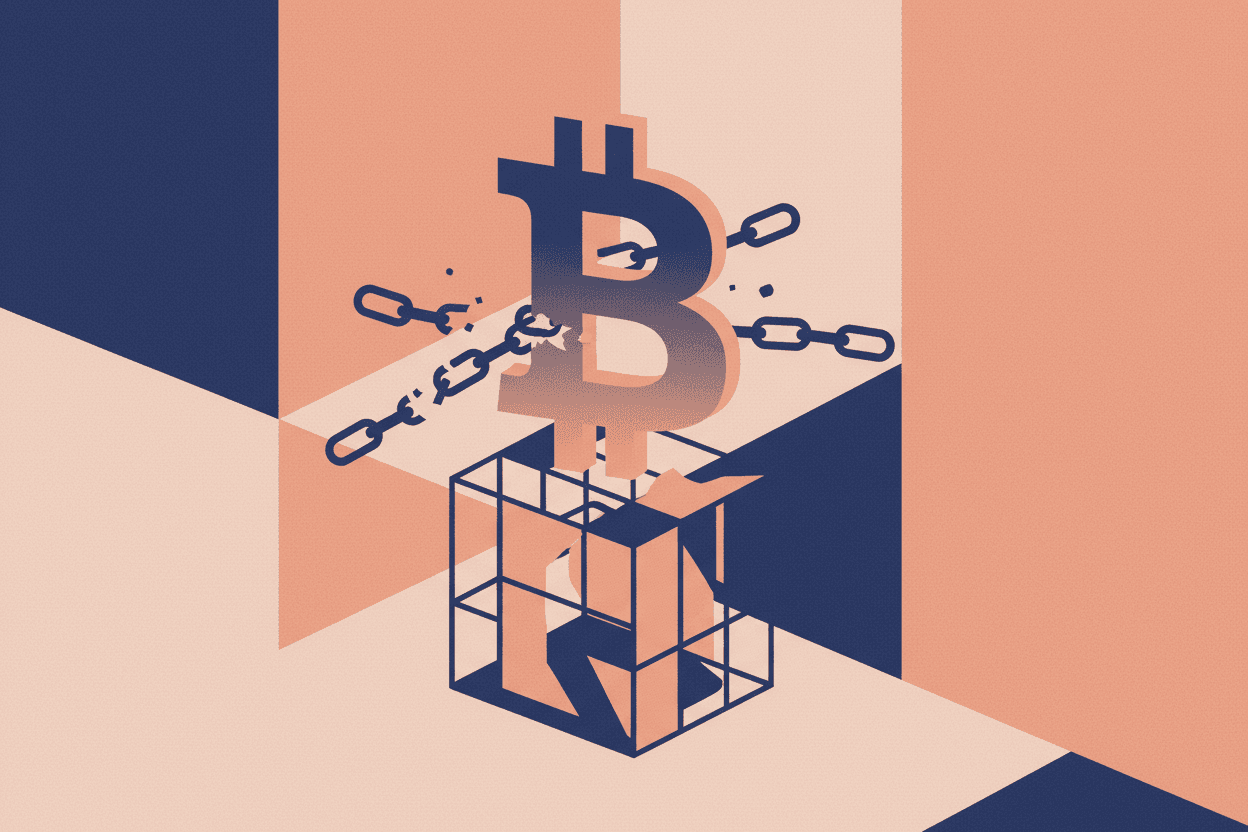
The DAO That Was Too Democratic to Function
Blockchain governance promised democracy. Instead, 1% of token holders control 90% of votes. The paradox of decentralized organizations, explained.
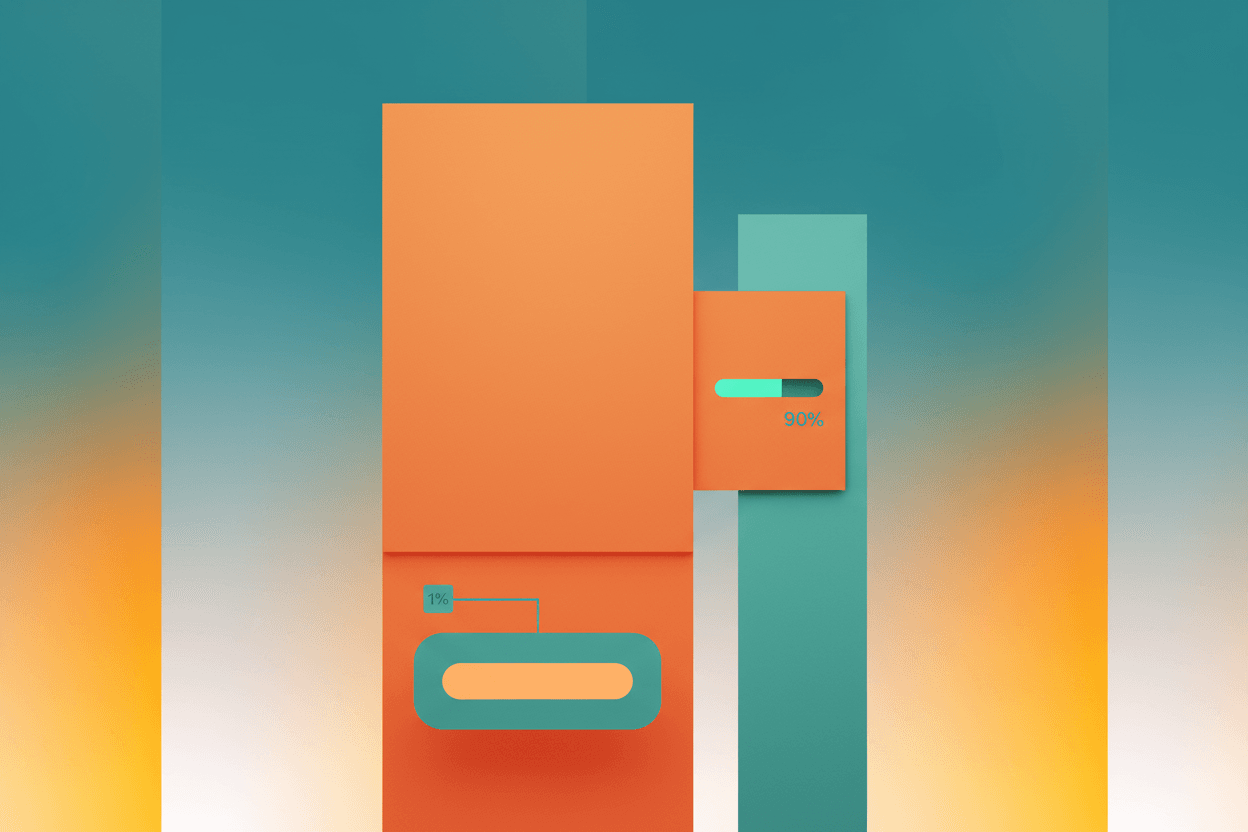
The DAO promised governance by the people, for the people. In practice, 1% of token holders controlled 90% of votes. Democracy failed faster on the blockchain than it did in real life.
When "The DAO" launched in April 2016, it raised $150 million in ether—the largest crowdfunding campaign in history at the time. Its whitepaper promised nothing less than a revolution: a decentralized venture capital fund where every token holder could vote on investments, code would replace lawyers, and no single entity could override the collective will. By June, a hacker had exploited a recursive call vulnerability and siphoned $60 million. By July, Ethereum itself had hard-forked to reverse the theft.
But here's what few discuss: The DAO's code worked exactly as designed. The failure wasn't technical—it was philosophical. The assumption that token-weighted voting equals democratic governance revealed itself as a category error that continues to plague decentralized organizations today.
The Governance Illusion: Numbers Don't Lie, But They Don't Tell the Truth
The fundamental promise of Decentralized Autonomous Organizations reads like a political theorist's fever dream: replace fallible human institutions with immutable smart contracts, distribute decision-making across thousands of participants, and eliminate the principal-agent problems that plague corporations and governments alike.
The reality has proven far messier.
A 2023 analysis of voting patterns across major DAOs revealed a pattern that would make any political scientist weep. In MakerDAO—one of DeFi's oldest and most respected protocols—just 34 addresses have historically controlled over 50% of voting power. Uniswap's governance token launch in 2020 distributed 400 million UNI to users, yet a 2022 study found that the top 1% of holders controlled 94% of the supply. Compound Finance, Aave, SushiSwap—the story repeats with depressing consistency.
[!INSIGHT] The "decentralized" in DAO has become a misnomer. Token distribution mirrors wealth distribution in traditional economies, meaning governance power concentrates among early investors, venture capitalists, and institutional players who acquired positions before public markets opened.
The mechanics are simple but devastating. Most DAOs use one-token-one-vote systems. If you hold 10,000 tokens and I hold 10, our voting power differs by three orders of magnitude. Proponents argue this is meritocratic—those with more "skin in the game" should have more say. Critics point out that this recreates plutocracy in cryptographic clothing.
The Voter Apathy Problem
Concentration of power might be tolerable if broad participation counterbalanced it. It doesn't.
Voter turnout in DAO governance hovers between 3% and 10% for most proposals. Even high-profile votes—like Uniswap's decision on whether to charge fees on liquidity pools—often see participation rates below 5% of eligible tokens. The reasons range from rational apathy (my vote won't matter) to cognitive overload (too many proposals, too little time) to simple disinterest (I just want to trade, not govern).
“"The average crypto user treats governance tokens like lottery tickets, not ballots. They're hoping for price appreciation, not policy influence.”
This creates a feedback loop. Low participation means fewer votes needed to pass proposals. Fewer votes means whales can unilaterally determine outcomes. The perception that outcomes are predetermined further suppresses participation. The cycle compounds.
The Original Sin: The DAO of 2016
Understanding current governance failures requires returning to the original sin—the DAO that gave the model its name.
Launched on April 30, 2016, by the German startup Slock.it, The DAO (styled with the definite article, as if there could only ever be one) was designed as a decentralized venture fund. Holders of DAO tokens would vote on which Ethereum projects to fund. No board of directors, no management team, no legal structure—just code and collective will.
The fundraising was unprecedented. Within 28 days, The DAO accumulated 11.5 million ether, worth approximately $150 million at the time—about 14% of all ether in circulation. Over 11,000 participants contributed. By any metric, it was a watershed moment for blockchain governance.
Then came the reentrancy attack.
On June 17, 2016, an anonymous attacker began exploiting a recursive call vulnerability in The DAO's code. By repeatedly calling the withdrawal function before the contract updated its balance, they drained approximately 3.6 million ether—worth $60 million then, billions today.
[!INSIGHT] The technical vulnerability was a simple programming error—calling an external contract before updating internal state. But the real failure was governance-related: The DAO's curators had been warned about the vulnerability days before the attack. A proposal to fix it was submitted but failed to gain sufficient votes before exploitation.
The response to the hack revealed an uncomfortable truth about "code is law." When code produces unwanted outcomes, humans intervene. The Ethereum community debated for weeks before implementing a hard fork that returned the stolen funds. This "intervention" split the blockchain—Ethereum Classic continues the original chain where the hack stands unreversed.
The DAO demonstrated that truly autonomous organizations are either impossible or indistinguishable from chaos. Some human oversight—curators, core developers, founding teams—proves necessary. The question becomes not whether governance exists, but who governs and how accountable they are.
Three Experiments, Three Failures, Three Lessons
MakerDAO: The Technocratic Compromise
MakerDAO issues DAI, the crypto-collateralized stablecoin that underpins much of DeFi. Its governance model attempts to balance decentralization with practical functionality through a system of elected "delegates" who commit to voting on behalf of smaller holders.
The results are mixed. Delegate systems have increased participation marginally—from roughly 3% to 8% of eligible tokens—but have also created new political dynamics. Delegates campaign, form coalitions, and occasionally engage in vote-buying. The system increasingly resembles parliamentary democracy with its attendant corruption risks.
A 2024 proposal to increase the DAI savings rate passed with 92% of votes coming from just three addresses. Whether this represents efficient governance or oligarchic capture depends on your perspective.
Uniswap: The Fee-Switch Debacle
When Uniswap launched its UNI governance token in September 2020, it distributed 400 million tokens—40% of total supply—to past users. Critics called it a bribing exercise; supporters celebrated the most egalitarian distribution in crypto history.
Four years later, the "fee switch" controversy illustrates governance paralysis. Uniswap's protocol generates hundreds of millions in trading fees annually, but UNI holders—nominally the protocol's governors—receive none. Activating the fee switch would redirect protocol revenue to token holders but requires governance approval.
Multiple proposals have failed. Some cite regulatory concerns (the SEC might classify fee-receiving UNI as a security). Others cite disagreement over distribution mechanisms. The underlying issue is more fundamental: Token holders who acquired positions for trading speculation lack the expertise, incentive, or patience to make complex protocol-level decisions.
ConstitutionDAO: When the Money Runs Out
In November 2021, ConstitutionDAO raised $47 million in cryptocurrency to purchase a rare copy of the U.S. Constitution at a Sotheby's auction. The story captured global attention—a decentralized internet collective outbidding established institutions for a piece of American history.
They lost. Hedge fund manager Kenneth Griffin won with a $43.2 million bid.
The aftermath proved more instructive than the campaign. ConstitutionDAO had no mechanism for collective decision-making beyond "bid on the Constitution." When they lost, they had to return funds to contributors—but the Ethereum network's gas fees made refunds uneconomical for small contributors. Many simply abandoned their money.
The experiment demonstrated that DAOs excel at coordination (raising money) but struggle with strategic adaptation (what do we do if we lose?). Traditional organizations have contingency plans; DAOs have proposals.
The Paradox Explained: Why Decentralization Centralizes
The persistent concentration of power in supposedly decentralized organizations isn't a bug—it's an emergent property of the system design.
Token-weighted voting creates what economists call a "wealth amplifier." Those with more resources acquire more tokens, gaining more governance power, enabling decisions that benefit large holders, providing resources to acquire more tokens. The feedback loop is identical to the wealth concentration dynamics in traditional capitalism, merely expressed in cryptographic form.
[!NOTE] The comparison to corporate governance is instructive. Public companies also concentrate voting power among large shareholders. The difference: corporations operate within legal frameworks that mandate disclosure, fiduciary duties, and minority shareholder protections. DAOs operate in regulatory voids where anything not explicitly coded is permitted.
Furthermore, token-based governance conflates several distinct functions that traditional organizations separate: ownership (equity), participation (membership), and governance (voting rights). A university alumna doesn't get more votes in university affairs because she donated more money. A citizen doesn't get extra ballots because she pays more taxes. These separations exist because they produce more robust organizations—separations DAOs have yet to implement.
What Comes Next: Governance Beyond Tokens
The industry is experimenting with alternatives. Quadratic voting—where voting power scales as the square root of tokens held—reduces whale dominance but introduces new attack vectors. Conviction voting allows continuous expression of preference rather than binary yes/no votes. Reputation-based systems award governance power through participation rather than purchase.
Optimism's "Citizen House" experiments with one-person-one-vote governance for certain decisions, using a selection process for citizenship. GitcoinDAO uses quadratic funding to allocate resources based on the number of contributors rather than amounts contributed.
These experiments remain small-scale. The fundamental tension—between those who want governance tokens to function as investment vehicles and those who want them to function as democratic instruments—remains unresolved.
Sources: "The DAO, The DAO Hack, and Lessons Learned" — ConsenSys (2016); "Measuring Decentralization in DAOs" — Chainalysis (2023); "Token Weighted Governance: An Empirical Study" — Espressos Research (2023); "The Political Economy of Blockchain Governance" — Polygon Research (2024); MakerDAO Transparency Reports (2022-2024); "A Hacker's Guide to The DAO" — Patron (2016)
This is a Premium Article
Hylē Media members get unlimited access to all premium content. Sign up free — no credit card required.