The Video That Almost Started a War
A fabricated 90-second audio nearly swung Slovakia's election. Deepfakes are now documented weapons of statecraft. The era of truth decay is here.
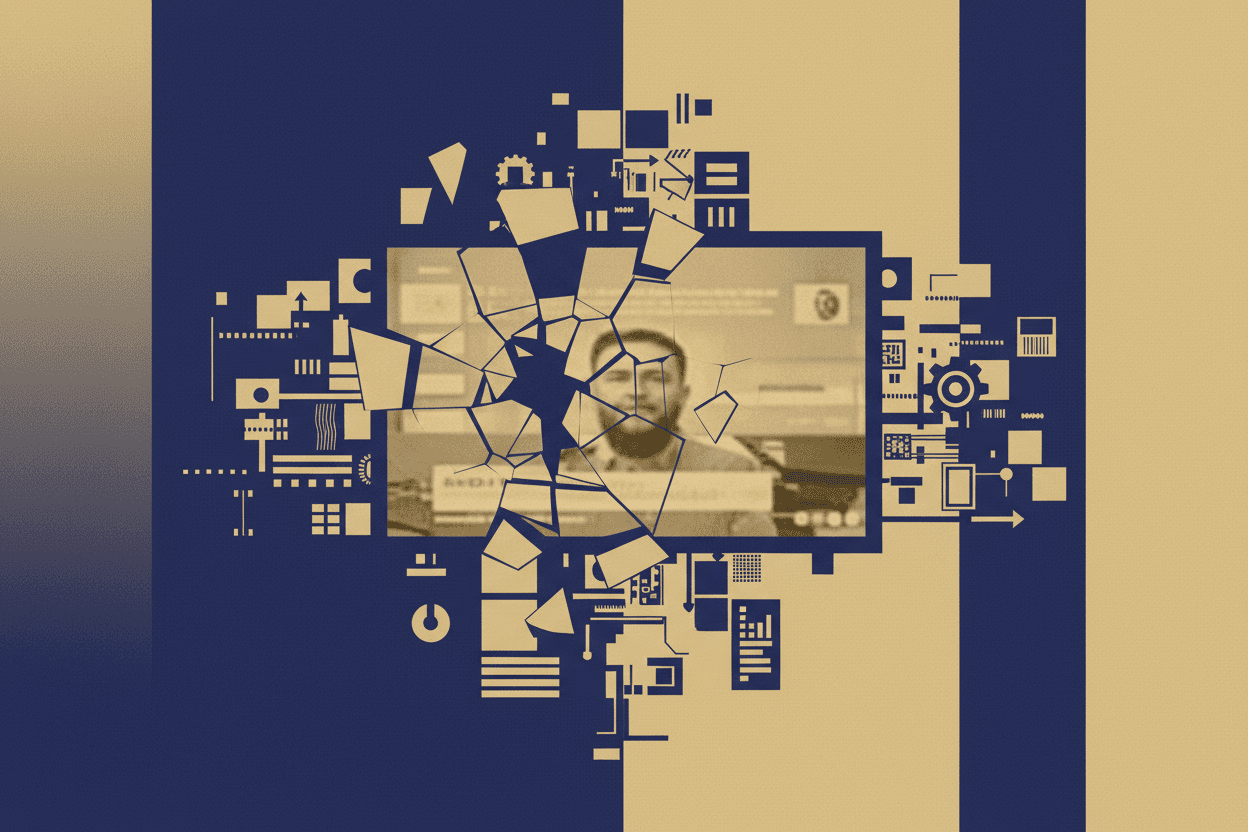
When Reality Became a Battlefield
A 90-second audio clip nearly swung a national election in Slovakia. It was completely fabricated. By the time fact-checkers confirmed it, the damage was done.
The recording appeared just 48 hours before polls opened in Slovakia's September 2023 parliamentary election. It allegedly captured Progressive Slovakia party leader Michal Simecka discussing with a journalist how to rig the vote and—bizarrely—raise beer prices. The audio was AI-generated. The voice clone was convincing enough that it spread across WhatsApp, Facebook, and TikTok before anyone could verify it.
Here's the terrifying part: we will never know how many votes it changed.
The Slovakia Incident: A Blueprint for Information Warfare
The Slovakia deepfake represents a watershed moment in electoral interference. Unlike previous disinformation campaigns that relied on doctored text or misleading context, this was synthetic media designed to sound authentically damning.
The timing was surgical. Released on a Friday before the Saturday-Sunday election, the audio exploited the "48-hour blind spot"—the window when fact-checkers cannot respond before voters head to the polls. In Slovakia, election law prohibits publishing opinion polls in the final 14 days, creating a vacuum that fabricated content rushed to fill.
[!INSIGHT] The perpetrator released the deepfake during the pre-election moratorium, when Slovak law bans campaigning. This wasn't coincidence—it was legal arbitrage, exploiting democratic guardrails designed to protect elections.
Robert Fico's SMER party won with 22.94% of the vote. Progressive Slovakia finished second at 17.96%. The margin was approximately 150,000 votes. The deepfake targeted younger, urban voters—Progressive Slovakia's base—with a message calculated to trigger cynicism: "they're all corrupt, why bother?"
Meta's investigation later concluded the audio was "likely created using AI voice-cloning technology." But by then, Slovakia had a government that would halt military aid to Ukraine.
The Zelenskyy Precedent
Ten months earlier, in March 2022, a different deepfake attempted something even more audacious: ending a war.
A video circulated on social media appearing to show Ukrainian President Volodymyr Zelenskyy instructing soldiers to surrender to Russian forces. The fabrication was crude—his head appeared disproportionately large, his accent slipped—but it represented the first documented attempt by state actors to use deepfake technology as an instrument of war.
“"The deepfake was quickly debunked, but its existence signaled that synthetic media had entered the arsenal of modern warfare.”
Ukrainian officials recognized the threat immediately. Within hours, they had published the real Zelenskyy denying the video. But the incident revealed an uncomfortable truth: in a world of synthetic media, authenticity becomes a competitive advantage that democracies must actively defend.
The Architecture of Audio Deception
Why did the Slovakia deepfake succeed where the Zelenskyy video failed?
Audio bypasses visual skepticism. Humans have evolved sophisticated facial recognition. We instinctively notice when a mouth doesn't sync with words or when skin textures look wrong. But audio? We trust our ears. A 2023 University of London study found that participants could identify AI-generated voices only 73% of the time—barely better than chance.
The distribution infrastructure was ready. Encrypted messaging apps like WhatsApp and Telegram allow audio files to spread without scrutiny. Unlike YouTube or Facebook, these platforms cannot automatically flag synthetic audio. By the time content jumps to open platforms, it has already achieved critical mass in private channels.
[!NOTE] In the 72 hours before Slovakia's election, the deepfake audio was shared over 11,000 times across public Facebook groups alone. Private sharing estimates range from 50,000 to 200,000 additional exposures.
The cost has collapsed. In 2020, cloning a voice required 30 minutes of sample audio and specialized expertise. By 2023, free tools could generate convincing audio from just 10 seconds of public speech. Simecka's voice was readily available from campaign videos, podcasts, and parliamentary proceedings.
State Actors and the New Arms Race
The Russia-Ukraine war has accelerated state investment in synthetic media capabilities. Western intelligence agencies have documented:
-
Russian troll farms experimenting with AI-generated content since at least 2019, with the Internet Research Agency maintaining dedicated "synthetic media" teams
-
Chinese influence operations ("Spamouflage Dragon") testing deepfakes in Taiwanese disinformation campaigns during 2022-2023
-
North Korean operatives using AI-generated profile photos and voice modification for social engineering attacks on cryptocurrency firms
But the Slovakia incident suggests a more disturbing evolution: the democratization of weaponized deepfakes. You don't need state resources to swing an election anymore. You need a laptop, $50 in API credits, and timing.
“"We've moved from state-sponsored disinformation to disinformation-as-a-service. The barrier to entry has collapsed while the detection capability has barely improved.”
The Detection Gap
Here is the fundamental asymmetry: generating a convincing deepfake takes hours. Detecting one with high confidence takes... we don't actually know.
Current detection tools achieve 80-90% accuracy under laboratory conditions. But adversarial attacks—small modifications designed to fool detectors—can reduce this to near-random performance. A 2024 study from Northwestern University demonstrated that adding imperceptible noise to a deepfake could defeat seven out of eight commercial detection systems.
The problem compounds at scale. Facebook removes over 3 billion fake accounts quarterly. Even if detection were 99% accurate (it isn't), reviewing flagged content requires human moderators who cannot keep pace with generation speed. AI creates; humans verify. The math doesn't work.
[!INSIGHT] Detection is a losing game. The only sustainable defense is provenance—cryptographic signatures that verify content origin, not content authenticity. But provenance requires infrastructure that doesn't exist yet and adoption incentives that remain unclear.
Implications: Living in a Post-Truth Politics
The Slovakia and Zelenskyy incidents are not aberrations. They are proof of concept.
In 2024, over 60 countries representing half the world's population held elections. Each represented a target opportunity for synthetic media interference. The European Union's AI Act, which took effect in August 2024, mandates watermarking of AI-generated content—but applies only to platforms operating in Europe and exempts private messaging where deepfakes spread fastest.
The deeper threat is not that voters will believe fakes. It's that they will stop believing anything.
“"The goal of disinformation isn't always to convince people of a lie. It's to exhaust their capacity to discern the truth.”
When every video could be fake, when every audio clip could be synthesized, the default response becomes cynicism. Why investigate claims when the investigation itself might be manipulated? Why trust institutions when they've been wrong before? This "epistemic exhaustion" may be the most durable weapon in the information warfare arsenal.
Conclusion
The 90 seconds that echoed through Slovakia's election cost almost nothing to create and cannot be undone. They changed something fundamental about democratic discourse: the assumption that evidence—audio, video, documents—reflects reality.
We are entering an era where seeing is no longer believing, where authentication requires infrastructure we haven't built, and where the speed of fabrication outpaces the speed of verification by orders of magnitude. The Slovakia deepfake wasn't the first shot in this war. It was the moment we realized the war had already begun.
Sources: Meta Threat Intelligence Report (2023), Atlantic Council Digital Forensic Research Lab, European Parliament AI Act Documentation, University of London Voice Cloning Study (2023), Northwestern University Adversarial Detection Research (2024), McCain Institute Disinformation Analysis, Interviews with Hany Farid (UC Berkeley), Reuters Institute Digital News Report 2024