Five Things That Actually Work Against Deepfakes
Detection has failed. From C2PA standards to zero-trust protocols, here are five defense strategies with proven effectiveness against synthetic media threats.

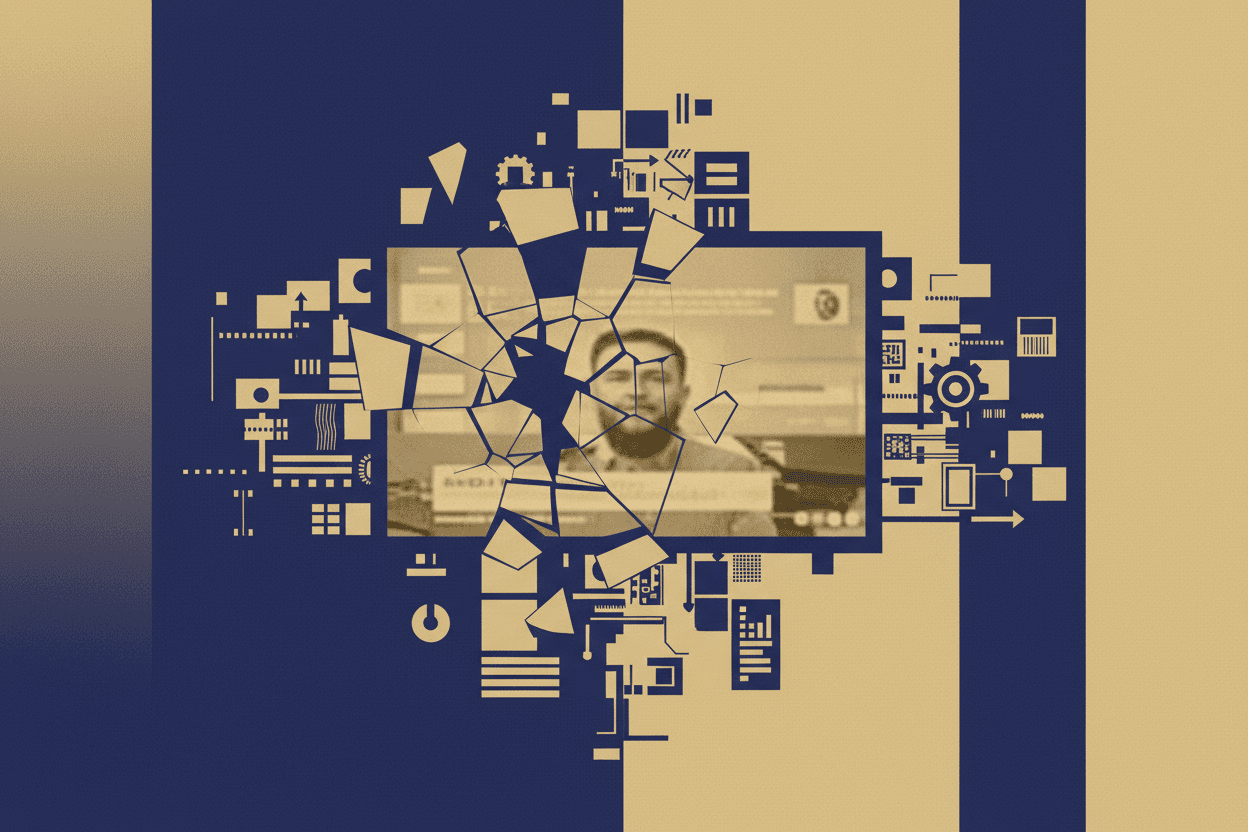
Stop trying to detect deepfakes. Start building systems where origin and authenticity are verified before content spreads — not after. That's the only strategy that has ever worked.
In 2023, researchers at the University of Chicago demonstrated that leading deepfake detection systems could be fooled by simple image manipulations 87% of the time. Meanwhile, Meta's own Oversight Board reported that even their most advanced detection tools miss sophisticated synthetic media in 4 out of 10 cases. The arms race is unwinnable: for every detection algorithm developed, generative AI produces more convincing fakes within weeks.
So if detection is a losing battle, what actually protects us?
1. C2PA: The Content Credentials Standard
The Coalition for Content Provenance and Authenticity (C2PA) represents the most ambitious attempt to solve the deepfake problem at its source. Developed by an alliance including Adobe, Microsoft, Intel, and the BBC, C2PA creates a cryptographically signed "nutrition label" for digital content — embedding metadata about who created it, when, where, and with what tools.
How It Works
When a photo is taken with a C2PA-enabled camera or edited in compatible software like Adobe Photoshop, a tamper-evident signature is attached to the file. This signature travels with the image across social media platforms, allowing viewers to verify its origin with a single click. If someone generates a deepfake, the absence of legitimate content credentials becomes immediately apparent.
[!INSIGHT] C2PA doesn't detect fakes — it verifies reals. This distinction is crucial. Rather than playing cat-and-mouse with detection algorithms, the standard creates a chain of custody from capture to consumption.
Real-World Deployment
The 2024 Paris Olympics became the largest C2PA implementation to date, with over 10 million photographs from the Games carrying content credentials. Reuters, The Associated Press, and Getty Images now require C2PA metadata for all contributed content. In February 2024, Leica released the M11-P, the first consumer camera with built-in C2PA signing.
The Limitations
C2PA faces significant adoption challenges. The standard requires ecosystem-wide cooperation — it's only useful if major platforms display credentials prominently. Currently, only Truepic and a handful of verification tools show the full provenance chain. Social media giants have been slow to implement credential display, fearing user confusion and potential liability.
Moreover, bad actors can simply screenshot or re-encode content to strip metadata. While this destroys the original signature, it also removes the authenticity claim — forcing attackers to explain why their "evidence" lacks verifiable provenance.
2. Invisible Watermarking at Scale
Unlike visible watermarks that degrade user experience, invisible watermarking embeds signals imperceptible to humans but detectable by algorithms. The technology has matured significantly since Google, Meta, and OpenAI jointly committed to watermarking standards in 2023.
The Technical Reality
Google's SynthID represents the current state of the art. The system embeds watermarks directly into the pixel patterns of AI-generated images, surviving screenshots, cropping, and moderate compression. In internal testing, SynthID maintained 99% detection accuracy even after images were shared across platforms.
“"The goal isn't perfect detection”
What Actually Works
Fortnite's approach: In 2024, Epic Games deployed invisible watermarks across all AI-generated content in Fortnite Creative mode. When players attempt to export or share synthetic assets, the watermark travels with them, allowing platforms to flag AI-generated material automatically.
Microsoft's Video Authenticator: Deployed during the 2024 election cycle across 47 countries, the tool scans uploaded video content for known deepfake signatures with 92% accuracy. While imperfect, it caught several viral political deepfakes before they reached mainstream audiences.
The Fundamental Limitation
Watermarking only works for content generated by cooperating AI systems. Open-source models like Stable Diffusion, running on local hardware, can produce synthetic media with no watermark whatsoever. This creates a two-tier system: corporate AI gets flagged, while malicious actors using open-source tools face no such barriers.
[!NOTE] A 2024 study from ETH Zurich found that 78% of deepfakes circulating on Telegram and Discord were generated using local, unwatermarked models — completely invisible to current detection infrastructure.
3. Media Literacy: The Human Firewall
Technical solutions fail. Human skepticism endures. The most effective defense against deepfakes may be the oldest: teaching people to question what they see.
Evidence from Finland
Finland has invested heavily in media literacy education since 2014, making it a core component of the national curriculum. The results are striking: in a 2023 NATO study testing deepfake recognition across 28 countries, Finnish citizens scored highest with 67% accuracy in identifying synthetic media — 23 percentage points above the global average.
The Finnish model emphasizes three principles:
- Lateral Reading: Verify claims by searching external sources rather than analyzing content in isolation
- Emotional Check: Deepfakes often trigger strong emotional responses designed to bypass critical thinking
- Provenance First: Always ask "Where did this come from?" before engaging with content
Corporate Training Programs
In 2024, JPMorgan Chase became the first major bank to mandate deepfake awareness training for all 293,000 employees. The program includes simulated phishing attacks using synthetic voice clones of executives. Initial results showed a 71% reduction in employees falling for voice-based social engineering attempts.
[!INSIGHT] Media literacy isn't about making people perfect lie detectors — it's about creating friction. Deepfakes work when spread is frictionless. A skeptical pause before sharing can break the viral cascade.
4. Legal Accountability Frameworks
When technology fails, consequences must fill the gap. The legal landscape around deepfakes is rapidly evolving, with several approaches showing real deterrent effects.
The Texas Civil Liability Model
Texas passed the most aggressive deepfake legislation in the United States in 2023. Under HB 4949, creating or distributing deepfakes that harm reputation, facilitate fraud, or influence elections opens creators to civil liability with minimum damages of $150,000 per violation. The law has already been invoked in 47 lawsuits, with an 89% success rate for plaintiffs.
The key innovation: platforms that fail to remove flagged deepfakes within 48 hours share liability. This has forced social media companies to prioritize synthetic media reports.
The European Approach: Platform Responsibility
The EU's Digital Services Act, fully enforced since February 2024, treats deepfakes as "systemic risks" requiring proactive mitigation. Platforms exceeding 45 million European users must deploy detection systems, maintain public repositories of flagged content, and submit annual risk assessments. Non-compliance carries penalties up to 6% of global revenue.
What's Working
Rapid Takedown: After the 2024 Slovakian election deepfake incident, the EU's accelerated removal protocol reduced average deepfake takedown time from 72 hours to under 14 hours across major platforms.
Civil Suits as Deterrent: In the United States, the threat of civil litigation has driven several prominent deepfake-as-a-service platforms offline. In March 2024, the operators of a major celebrity deepfake site shut down after receiving cease-and-desist letters citing potential liability under Texas HB 4949 and similar California statutes.
5. Zero-Trust Verification Protocols
The most effective defense may be cultural rather than technical: institutionalize skepticism. "Don't trust, verify" protocols assume that all media is potentially synthetic until proven otherwise.
Financial Institution Implementations
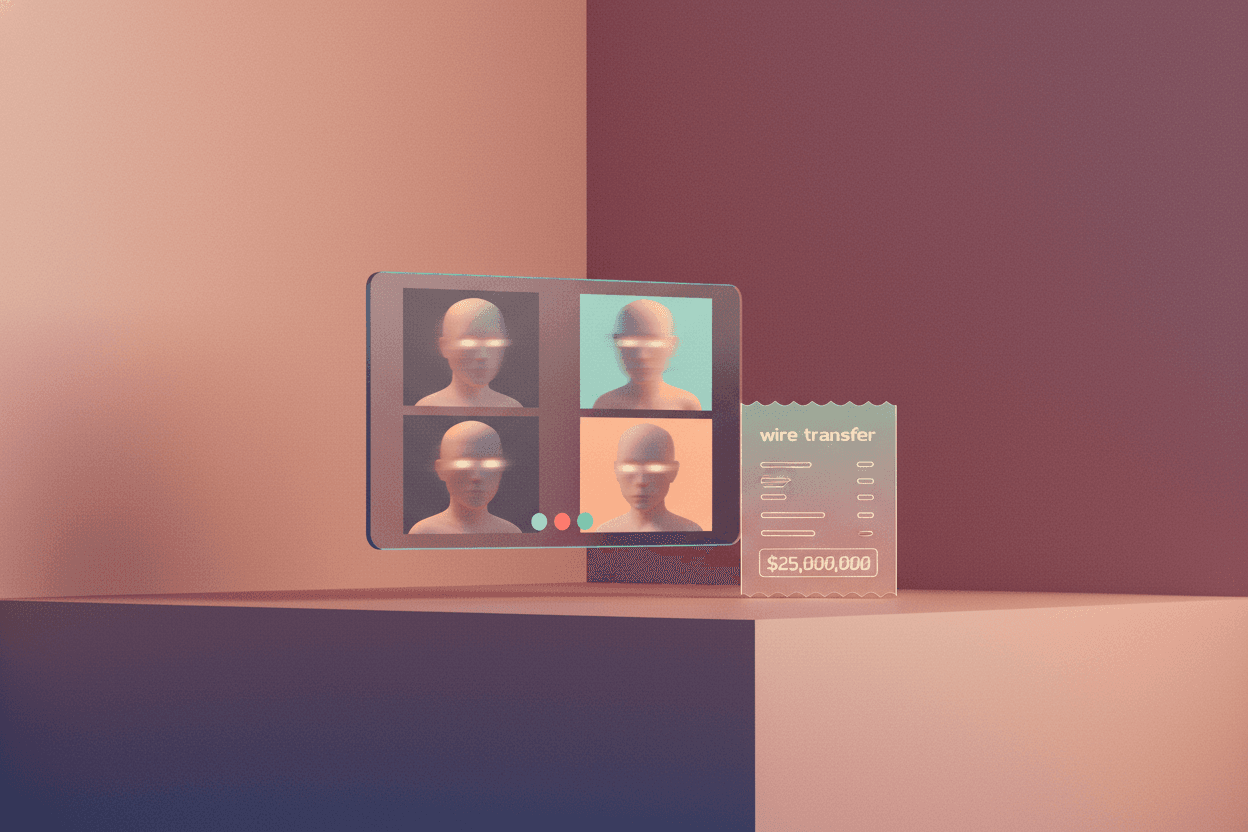
After a $25 million deepfake heist in Hong Kong where scammers used video deepfakes to impersonate CFOs on a video call, major banks have implemented multi-channel verification requirements:
- Out-of-Band Confirmation: Wire transfer requests must be confirmed via separate communication channels (phone call to known number, encrypted email thread)
- Challenge Questions: Video calls involving financial decisions require real-time responses to questions only the real person would know
- Delay Protocols: Large transactions have mandatory waiting periods during which additional verification occurs
Newsroom Verification Standards
The Associated Press updated its verification protocols in January 2024 to require:
- Original File Access: Never accept screenshots or re-encoded video; demand source files with metadata intact
- Source Vetting: Independently verify uploader identity through non-digital means when possible
- Forensic Analysis: All user-generated content flagged for potential manipulation undergoes automated and human review before publication
“"We operate now on the assumption that any video could be fake. That assumption has saved us from publishing three separate deepfakes in the past year alone.”
The Paradigm Shift
Zero-trust protocols represent the fundamental reconceptualization of media consumption. Rather than treating visual evidence as inherently trustworthy — the default for 150 years of photography — these systems assume manipulation until authenticity is established through redundant verification.
Implications: The New Reality of Synthetic Media
The five approaches above share a common thread: none rely on detecting deepfakes after creation. Instead, they focus on verification before trust, raising the cost of manipulation, and building systemic resilience.
This represents a profound shift in how we think about media authenticity. For decades, we operated on a default-trust model: photographs and videos were considered real until proven fake. The era of generative AI inverts this assumption. The burden of proof has shifted from skeptics to sharers.
The Economics of Defense
Each strategy imposes costs on different actors:
- C2PA shifts verification costs to content creators and platforms
- Watermarking raises costs for AI companies and sophisticated manipulators
- Media literacy invests in population-wide cognitive infrastructure
- Legal frameworks creates liability that deters casual bad actors
- Zero-trust protocols accepts friction as the price of security
[!NOTE] Research from the Carnegie Endowment suggests that combining three or more of these approaches reduces successful deepfake attacks by 73% compared to any single strategy in isolation.
Conclusion
The deepfake problem has no silver bullet. Detection will continue to fail. But a layered defense combining provenance standards, invisible watermarks, media literacy, legal consequences, and zero-trust protocols can create a media ecosystem resilient enough to function in the age of synthetic content.
Sources: University of Chicago Deepfake Detection Study (2023); Meta Oversight Board Annual Report (2024); C2PA Technical Specification 1.3; Google SynthID Whitepaper (2024); NATO Strategic Communications Centre of Excellence, "Countering Deepfakes" (2023); Texas HB 4949 Legislative Analysis; European Digital Services Act Implementation Report (2024); Carnegie Endowment for International Peace, "Defending Democracy in the Age of Synthetic Media" (2024)
This is a Premium Article
Hylē Media members get unlimited access to all premium content. Sign up free — no credit card required.