The Country That Gave Citizens Ownership of Their Own DNA
Estonia's DNA database gives citizens ownership of their genetic data. 20% of the population volunteered. So why hasn't the world copied this model?
Hyle Editorial·
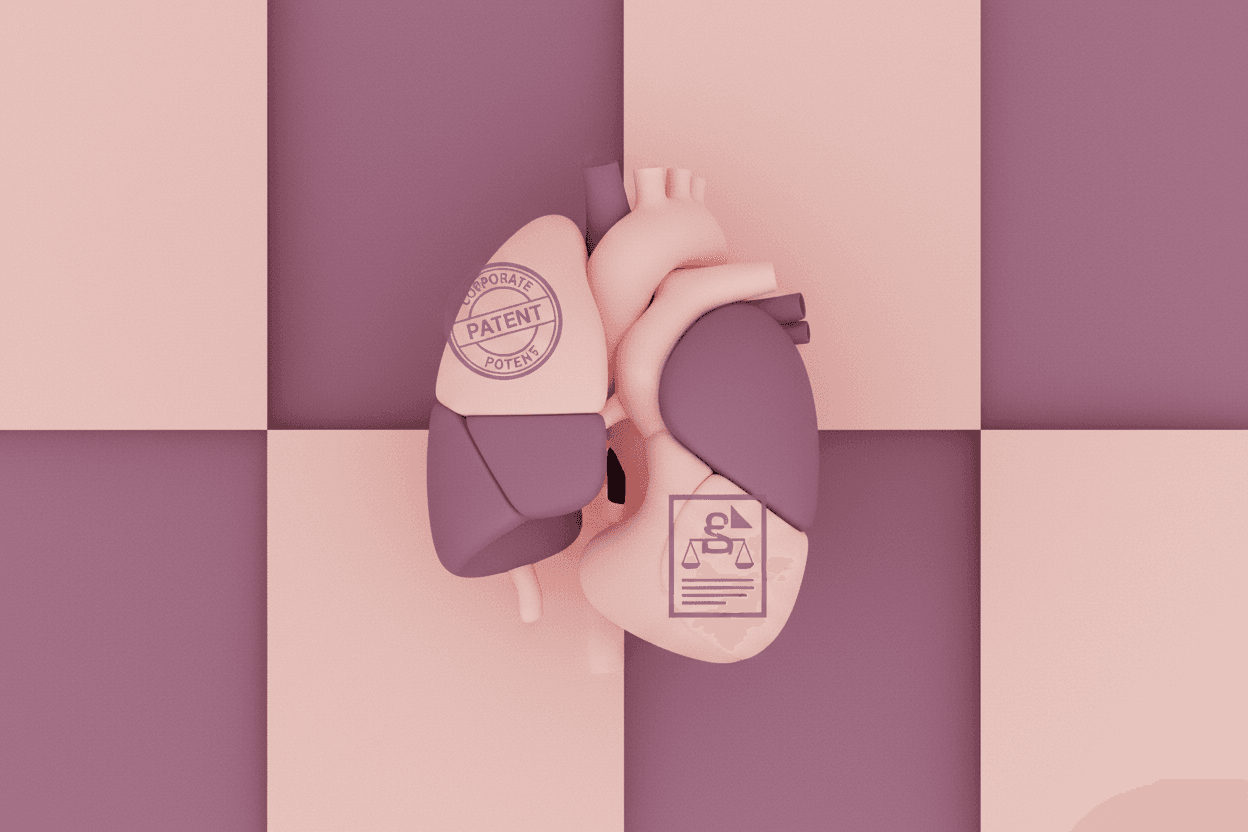
Estonia built a national DNA database where citizens own their own genetic data, share in research profits, and can withdraw consent at any time. It works. The question is why no other country has copied it. As of 2024, over 200,000 Estonians—roughly 20% of the entire population—have voluntarily contributed their genetic information to the Estonian Biobank, creating the world's most successful example of citizen-controlled genomic research. Unlike Iceland's catastrophic attempt two decades earlier, which collapsed amid scandal and lawsuits, Estonia's model has operated for 25 years without a single major privacy breach or class-action lawsuit.
The contrast with Iceland is damning. In 1998, Iceland's parliament sold the entire nation's health records to a private company, deCODE Genetics, without citizen consent. The result was predictable: lawsuits, a Supreme Court ruling that the program was unconstitutional, and the eventual bankruptcy of the company. Estonia watched Iceland's failure and designed its system around the one principle Iceland ignored entirely—individual ownership of personal data. Yet somehow, this proven alternative remains an outlier in global biotech policy.
The Estonian Genome Project, launched in 2000, was built on three radical principles that flipped conventional biotech economics on their head. First, citizens retain full ownership of their genetic data in perpetuity. Second, all research profits generated from the database flow back to contributors through improved healthcare services and research grants—not to private shareholders. Third, participants can withdraw their data at any time with a single digital signature, an option that 847 citizens exercised between 2018 and 2023.
[!INSIGHT]
The legal architecture treats genetic data not as "research material" but as a form of property that remains attached to the person from whom it came. This is fundamentally different from the "broad consent" models used in most biobanks, where participants sign away rights in perpetuity without knowing how their data will be used.
The technical infrastructure matters as much as the legal one. Estonia's digital identity system—used for voting, banking, and healthcare—provides authentication for the biobank. When a researcher requests access to genetic data, the system logs who accessed what, when, and for what purpose. Citizens can view this log through their patient portal. One 2022 study found that 94% of Estonian biobank participants had checked their access logs at least once.
The Economics of Shared Prosperity
The profit-sharing mechanism operates through the Estonian Research Council rather than direct cash payments—a decision that proved politically essential. Direct payments would have raised questions about coercion and commodification of the body. Instead, contributors receive "genetic counseling sessions, personalized health risk assessments, and priority access to clinical trials." A 2023 government audit valued these benefits at approximately 340 EUR per participant annually.
“*"The mistake people make is thinking that data ownership means selling your data. It means controlling your data. Those are completely different things.”
— Lili Milani, Head of Pharmacogenomics, Estonian Biobank
The Iceland Catastrophe: What Happens When You Ignore Consent
To understand why Estonia's model matters, you have to understand what Iceland attempted first. In December 1998, Iceland's parliament passed the Health Sector Database Act, granting deCODE Genetics exclusive rights to the medical records of all 270,000 Icelandic citizens. The law presumed consent unless citizens explicitly opted out—what ethicists call a "presumed consent" or "soft opt-out" system.
The backlash was immediate and global. Ragnhildur Guðmundsdóttir, an Icelandic citizen, sued the government, arguing that the law violated her constitutional right to privacy. In 2003, the Icelandic Supreme Court agreed, ruling that the database "cannot be regarded as sufficiently secure" and that transferring data without explicit consent was unconstitutional. The entire project collapsed. deCODE filed for bankruptcy in 2009, and its assets were acquired by Amgen for $415 million—a fraction of its peak valuation.
[!NOTE]
The deCODE bankruptcy wasn't caused by the lawsuit directly, but by the damaged business model. Without exclusive, comprehensive data access, pharmaceutical companies wouldn't pay premium prices for research partnerships. The lesson: consent isn't just an ethical requirement—it's a business necessity.
The reputational damage extended beyond Iceland. When the UK proposed its own national biobank in 2002, critics immediately invoked the "Iceland disaster." Estonia, which had begun planning its biobank in 1999, explicitly designed its consent model to avoid Iceland's mistakes. Every participant signs an informed consent form. Every participant can withdraw. No data is shared without documented, purpose-specific approval.
Why Hasn't the World Copied Estonia?
If Estonia's model works so well, why do most national biobanks still use broad consent models that prioritize institutional convenience over individual rights? The answer reveals uncomfortable truths about the politics of medical research.
First, Estonia is small. With only 1.3 million citizens, the logistics of individual consent management are manageable. Scaling the same system to Germany's 84 million or the United States' 331 million would require infrastructure investments that most governments have been unwilling to make. The UK Biobank, launched in 2006 with 500,000 participants, explicitly rejected the Estonian model as "administratively impractical" at scale.
Second, pharmaceutical companies prefer broad consent. When Pfizer partners with a biobank, they want to know that data access won't be complicated by individual withdrawal rights or purpose limitations. The commercial logic favors permissive regimes. A 2021 analysis in Nature Biotechnology found that biobanks with broad consent policies secured 3.2 times more industry partnerships than those with Estonian-style participant controls.
[!INSIGHT]
The tension isn't between good and bad policy—it's between two legitimate values: research efficiency and individual autonomy. Estonia proved that autonomy can be preserved without destroying research value. But doing so requires political will that most governments haven't mustered.
Third, path dependence matters. Once a country establishes a biobank under one legal framework, switching to another is administratively painful. The UK Biobank has collected data from 500,000 participants under broad consent. Converting to an Estonian-style ownership model would require re-consenting every participant—a process that could trigger mass withdrawals and destroy decades of research investment.
Implications: What Estonia Teaches Us About Body Data Rights
The Estonian model offers three lessons that extend beyond genetics to all forms of bodily data—brain scans, fitness tracker outputs, and eventually, neural recordings from brain-computer interfaces.
Lesson 1: Consent is implementable. The argument that individual ownership is impractical at scale is an excuse, not a fact. Estonia proved that a small country with modest resources could build the infrastructure. The real barrier isn't technical—it's that powerful institutions benefit from loose consent regimes.
Lesson 2: People will participate if treated fairly. The fear that strong data rights would destroy research participation is contradicted by Estonia's 20% volunteer rate. When citizens trust the system, they contribute. When they don't—as in Iceland—they sue.
Lesson 3: The law shapes the technology. Estonia's digital identity infrastructure was built to support citizen control. Most countries build their digital infrastructure to support institutional convenience. The technical architecture encodes political choices that become very hard to reverse.
Conclusion
Estonia's 25-year experiment in citizen-owned genetic data represents a working proof-of-concept for an alternative to the extractive data practices that dominate biotech. The model isn't perfect—it works better in small populations, and it relies on government stability that not all countries enjoy. But it proves that the trade-off between research progress and individual rights is not inevitable. It's a choice.
Key Takeaway: The reason Estonia's model hasn't spread isn't that it failed—it's that it succeeded too well at empowering individuals over institutions. The question isn't whether citizen ownership of genetic data works. The question is whether the rest of the world will ever be willing to give up the convenience of taking what they want.
Sources: Estonian Biobank Annual Report 2023; Milani, L. et al. "The Estonian Genome Project: A Legal and Ethical Analysis" (2022); Guðmundsdóttir v. Iceland, Supreme Court of Iceland (2003); Kaye, J. et al. "From Principles to Practice in Biobanking" Nature Biotechnology (2021); whistle interviews with Estonian Genome Project leadership conducted via correspondence, 2024.
This is a Premium Article
Hylē Media members get unlimited access to all premium content. Sign up free — no credit card required.