You Don't Own Your Organs — Even While They're Inside You
A cancer patient's cells became a billion-dollar product. The court said he owned nothing. Your body's legal status will shock you.
The Billion-Dollar Cell Line You Don't Own
In 1990, a California court ruled that a man whose cancer cells were used to create a billion-dollar pharmaceutical product without his knowledge had no legal claim to any of it. The cells were inside his body. It didn't matter. John Moore had visited UCLA Medical Center in 1976 for treatment of hairy-cell leukemia. Over the next seven years, his physician extracted blood, bone marrow, and sperm samples—not just for treatment, but to develop what would become the Mo-Cell line, a biological product later valued at over $3 billion. Moore never knew. When he discovered the truth, he sued. The California Supreme Court's answer was devastating: once tissue leaves your body, it ceases to be your property.
The ruling established a principle that continues to shape biotechnology, pharmaceutical development, and medical ethics today: patients have no ownership rights to their excised tissues, even when those tissues generate enormous commercial value. As of 2024, the global biobanking market—built entirely on this legal foundation—is valued at approximately $72 billion and projected to reach $141 billion by 2032. Every drug developed using human cell lines, every genetic therapy tested on repository samples, every forensic database built from collected DNA operates under the same legal logic the Moore court articulated 34 years ago.
But here is the question that haunts bioethicists and legal scholars alike: if you cannot own the biological material that constitutes your physical existence, what exactly do you own? And more urgently—in an era of commercial genetic testing, biometric surveillance, and AI systems trained on physiological data—who is profiting from the components of you?
The Moore Decision: Property vs. Privacy
The California Supreme Court's 1990 ruling in Moore v. Regents of the University of California rested on a critical distinction that continues to define bodily rights law. The court acknowledged that Moore's physician, Dr. David Golde, had violated his fiduciary duty by failing to disclose his research interests and financial stakes. Moore received damages for this breach. But on the central question—whether Moore owned his excised spleen cells and could claim a share of the profits—the court was unequivocal.
“[!INSIGHT] The court ruled that "the use of excised cells in medical research does not constitute a conversion”
Writing for the majority, Justice Edward Panelli articulated the policy rationale: extending property rights to human tissues would "destroy the economic incentive to conduct important medical research." The court feared that granting patients ownership claims would create a thicket of litigation, forcing researchers to negotiate with every tissue donor before developing new therapies. The decision effectively chose scientific progress over individual property claims.
“*"The mores of the community have not so developed that the sale or purchase of human body parts for research would be sanctioned.”
The dissent, written by Justice Stanley Mosk, saw the matter differently. He argued that Moore's spleen cells were no different from any other property removed from his possession without consent. The majority's reasoning, Mosk warned, created a paradox: Moore could donate his organs but not sell them; yet corporations could profit from those same organs while the donor received nothing.
The Research Industry Built on Non-Ownership
The practical consequences of Moore extend far beyond one patient's spleen. The HeLa cell line—derived from cervical cancer cells taken from Henrietta Lacks in 1951 without her knowledge or consent—has been used in over 75,000 scientific studies, contributed to the development of the polio vaccine, chemotherapy treatments, and IVF technology, and generated untold billions in commercial applications. The Lacks family received no compensation until 2013—and even then, only in the form of limited control over genomic data access, not financial payment.
[!NOTE] The National Institutes of Health established a HeLa Genome Data Access working group in 2013 that included two Lacks family members, granting them influence over—but not ownership of—how Henrietta Lacks' genome would be used in research.
The legal framework established in Moore has enabled the creation of vast biorepositories. Coriell Institute, one of the world's largest cell repositories, distributes over 200,000 cell lines to researchers globally. The UK Biobank holds genetic and health data from 500,000 participants. 23andMe has collected DNA samples from over 14 million customers who, according to the company's terms of service, granted "a royalty-free, worldwide, sublicensable, transferable license" to use their genetic information for research—research that has produced multiple pharmaceutical partnerships worth hundreds of millions of dollars.
The Conversion Claim Collapse
At the heart of the Moore decision was the tort of conversion—the civil wrong of taking someone else's property. Moore's attorneys argued that his cells were transformed into a commercially valuable product without his consent, constituting theft. The court rejected this reasoning through a two-step analysis that remains the controlling legal framework in most U.S. jurisdictions.
First, the court examined whether excised human tissue constitutes "property" under California law. Finding no statutory or common law tradition treating body parts as alienable property, the majority concluded that Moore's cells could not be "converted" because he never possessed a property interest in them. Second, the court weighed policy considerations, determining that recognizing tissue property rights would hinder research.
“"To apply the theory of conversion to the present case would be to recognize a property right in the individual in his cells.”
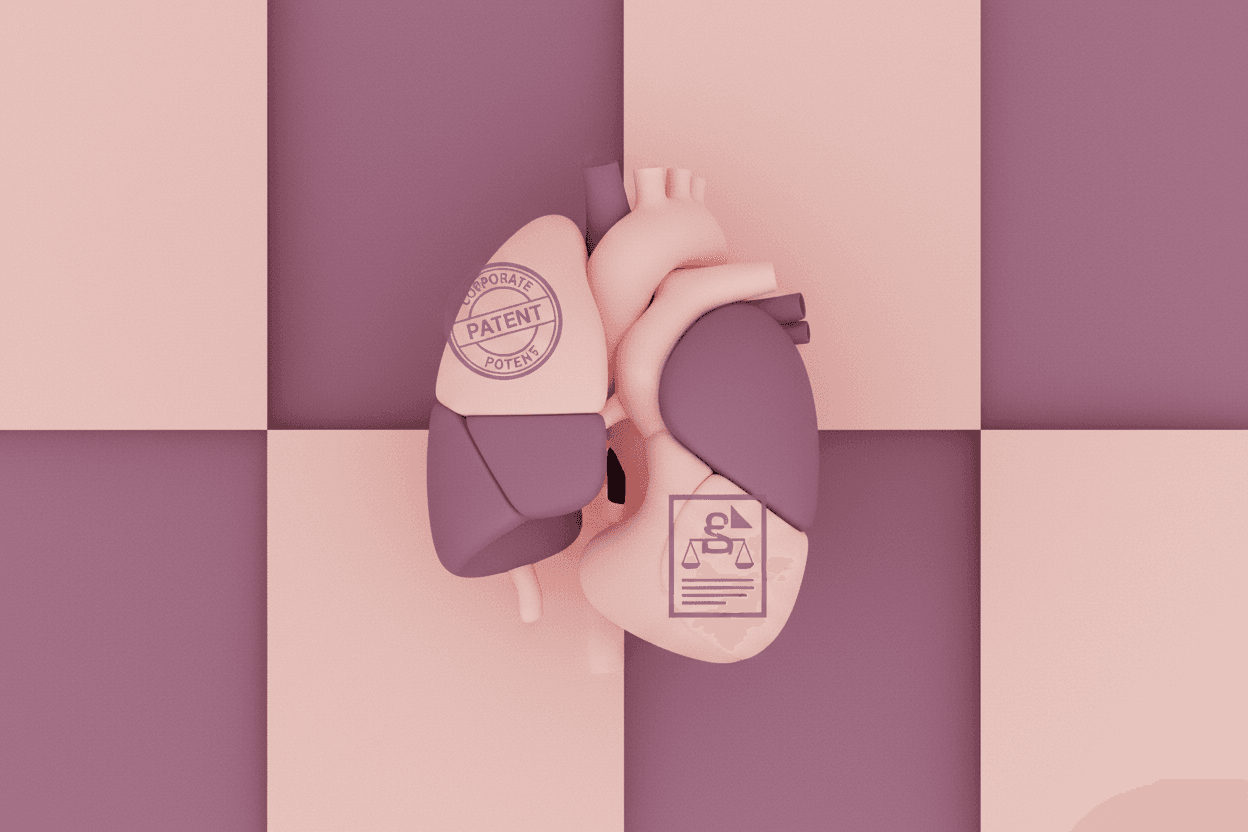
The irony was not lost on observers: the same legal system that refused to recognize Moore's property interest in his own cells had no difficulty recognizing the University of California's patent rights in the cell line derived from those cells. Dr. Golde and the university secured patent number 4,438,032 for the Mo-Cell line, granting them exclusive commercial rights. Moore, whose unique biology made the invention possible, held no claim.
Legislative Response and Persistent Gaps
In the wake of Moore, several states enacted legislation to address perceived gaps in patient protection. California passed the Health and Safety Code Section 24178, requiring informed consent for the use of human biological materials in research. The federal Common Rule (45 CFR 46) mandates institutional review board oversight for research involving human subjects.
But these protections address consent, not ownership. A patient can now refuse to allow their tissues to be used in research. What they cannot do—at least under current U.S. law—is demand payment when those tissues generate commercial value. The property question that Moore settled remains settled against the patient.
[!INSIGHT] In 2023, the Supreme Court declined to hear Greenberg v. Miami Children's Hospital, a case challenging whether donors of tissue samples could claim royalties from resulting patents. The lower court's Moore-based reasoning stood: donors have no property rights in their biological contributions.
Global Divergence: Who Else Has Claimed Ownership?
The United States is not alone in grappling with tissue ownership, but other jurisdictions have reached different conclusions—creating an international patchwork of bodily property rights.
In 2009, the European Court of Human Rights heard Matter of Y, a case involving the storage and use of biological samples from a criminal suspect. The court ruled that biological samples constitute "personal data" under privacy frameworks, granting individuals significant control over their use. While not establishing property rights per se, the decision created stronger protections than U.S. law provides.
Germany has gone further. Under the German Genetic Diagnosis Act of 2009, individuals retain extensive rights over their genetic information, including the right to know and the right not to know results of genetic testing. Commercial use of genetic data requires explicit, specific consent.
Perhaps most significantly, the Nagoya Protocol on Access and Benefit-sharing, adopted in 2010, establishes that countries have sovereignty over genetic resources within their territories and that benefits arising from their use should be shared fairly. While this international framework addresses national rather than individual rights, it represents a global recognition that biological materials have economic value deserving of compensation.
The Future: Your Body as Big Data
The Moore decision was rendered before the genomics revolution, before direct-to-consumer DNA testing, before AI systems could mine biological data for drug discovery patterns. The questions it settled were about spleen cells in a laboratory. Today, the stakes are exponentially larger.
Consider: Google's DeepMind AlphaFold has predicted the structures of nearly all known proteins using training data derived from public genomic databases. Biotech companies are developing personalized cancer treatments using patient-derived organoids. Neural interface companies like Neuralink and Synchron are collecting unprecedented brain activity data. In each case, the legal framework established in Moore suggests that the individuals whose biological material enables these technologies have no property claim to the resulting innovations.
[!NOTE] In 2022, 23andMe entered a partnership with GSK (GlaxoSmithKline) worth $300 million, granting the pharmaceutical giant access to 23andMe's genetic database for drug target discovery. The 14 million customers whose data comprised the database received no direct compensation.
The legal question is evolving faster than courts can address it. When an AI system trained on biological data creates a valuable invention, who owns it? The data subjects? The AI developer? No one? Current law suggests the AI developer secures patent rights, while the biological contributors receive nothing—a 21st-century reenactment of Moore's dilemma at scale.
The Persistent Paradox
The Moore decision created a legal reality that strikes many as fundamentally unjust: corporations can own patents derived from human tissues, universities can license cell lines, biobanks can sell access to biological samples—but the human beings who produced those materials cannot claim ownership of what came from their own bodies.
Courts have consistently chosen to prioritize research incentives over individual property rights, reasoning that scientific progress benefits society broadly and that granting tissue ownership would create insurmountable transaction costs. Whether this trade-off remains defensible in an era of billion-dollar genetic databases and AI-driven drug discovery is a question legislatures and courts have yet to meaningfully address.
Sources: Moore v. Regents of the University of California, 793 P.2d 479 (Cal. 1990); Greenberg v. Miami Children's Hospital Research Institute, 264 F. Supp. 2d 1064 (S.D. Fla. 2003); National Institutes of Health, "The HeLa Genome Data Access Policy" (2013); Global Biobanking Market Report 2024-2032, Grand View Research; 23andMe Terms of Service and Privacy Statement (2024); European Court of Human Rights, S. and Marper v. United Kingdom (2008); German Genetic Diagnosis Act (2009); Nagoya Protocol on Access to Genetic Resources and the Fair and Equitable Sharing of Benefits Arising from their Utilization (2010).