Grayscale mode cuts screen time 20-30% by breaking the saturation-dopamine loop. Discover evidence-based strategies to reclaim attention from engineered displays.
Hyle Editorial·
Grayscale mode — switching your entire phone to black and white — reduces average screen time by 20-30% in controlled studies. It works because it removes the saturation-dopamine loop without removing the phone's utility. The companies know this. They buried it in Settings > Accessibility > Display & Text Size > Color Filters. Not in 'Screen Time.' Not in 'Focus.' Accessibility.
The placement is revealing. Apple and Google built sophisticated screen time dashboards, app timers, and focus modes — all prominently featured in main settings. But the single most effective intervention according to behavioral research? Hidden three levels deep under accessibility features, as if monochrome displays were a visual impairment rather than an attention rescue.
This is not a coincidence. The same companies that engineer saturation-boosted icons, notification red badges, and infinite-scroll interfaces also build the "wellness tools" ostensibly designed to help you escape them. It's a fundamental conflict of interest, and understanding it is the first step toward actually reclaiming your attention.
Why Grayscale Works: Disrupting the Color-Dopamine Pipeline
The mechanism behind grayscale's effectiveness reveals just how deeply displays have been weaponized against our attention. A 2023 study from the University of Washington found that participants using grayscale mode for one week showed a 23% reduction in smartphone pickups and a 31% decrease in total screen time. More remarkably, participants reported that apps felt "boring" and "less urgent" within 48 hours.
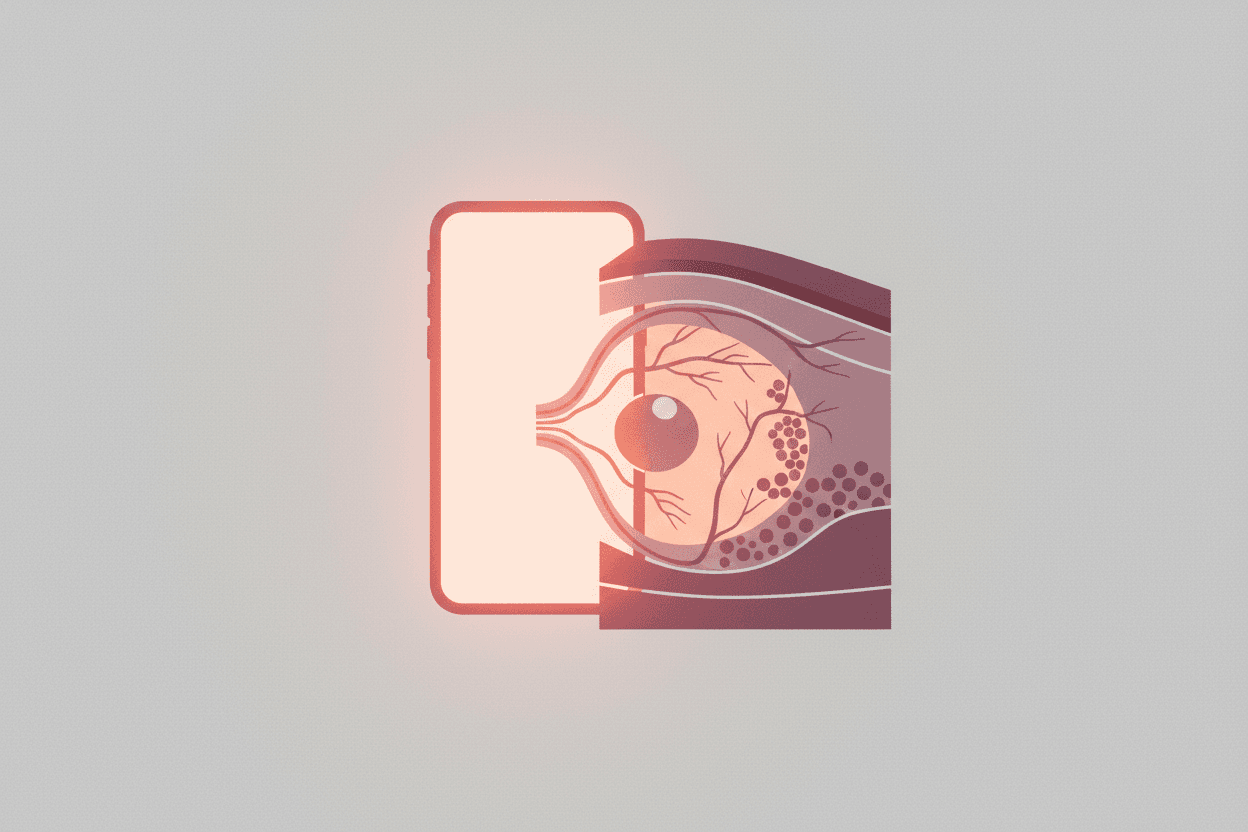
[!INSIGHT] Color saturation triggers dopamine release in the nucleus accumbens — the same brain region activated by gambling and sugar. By removing color, grayscale disrupts this reward pathway without requiring willpower.
The smartphone interface is engineered as a constant stream of micro-rewards. That red notification badge? It's not arbitrary — red has been shown to generate the strongest attentional capture and urgency response in humans, a finding documented across 40+ years of color psychology research. The saturated blues, greens, and oranges of app icons aren't aesthetic choices; they're carefully calibrated to maximize visual salience and engagement.
Consider this: when Instagram A/B tested removing the green activity dots from its interface in 2022, user engagement dropped measurably. They brought them back. Every pixel is a decision informed by behavioral data.
The Saturation Arms Race
Display manufacturers have been complicit in this escalation. The shift from standard RGB to wide color gamut (DCI-P3) in smartphones wasn't driven by photo accuracy — it was driven by content consumption. Studies by display engineering firm Pixelworks found that users perceive saturated content as "higher quality" and spend more time viewing it, even when preferring more accurate colors in blind tests.
“"We've created a form of digital pollution that we've normalized. The constant visual noise of oversaturated interfaces is the equivalent of putting sugar in everything.”
— Dr. Anna Lembke, Stanford addiction psychiatrist and author of "Dopamine Nation"
OLED technology has accelerated this trend. Because OLED pixels are self-emissive and can achieve near-infinite contrast ratios, modern displays can render colors at saturation levels that were technically impossible on LCD panels just five years ago. The screen isn't just brighter — it's more stimulating in ways our visual systems didn't evolve to ignore.
What Doesn't Work: The Failure of Willpower-Based Approaches
Here's what the research says about common screen time interventions:
Screen Time Limits (Built-in Dashboards): A 2022 meta-analysis of 41 studies found that simply monitoring screen time without additional interventions produces an average reduction of just 8 minutes per day. Watching the number go up creates guilt, but guilt is a poor long-term motivator.
App Timers (Hard Limits): These work better but suffer from the "snooze problem." When the 30-minute Instagram limit is reached, one tap extends it. Research from Carnegie Mellon showed that 67% of users override their own app limits at least once per day, with the average override adding 22 additional minutes.
[!NOTE] The failure of app timers reveals a design truth: friction must be higher than the reward. A single tap override (low friction) cannot compete with the variable reward of a social feed (high dopamine).
Focus Modes / Do Not Disturb: These are effective when active, but usage data shows most users disable them within 2 hours of scheduled activation. The average "focus session" lasts 23 minutes before the user allows exceptions.
Physical Separation (Leaving the Phone in Another Room): This actually works. A 2019 University of Texas study found that merely having a smartphone visible on your desk — even face down and silent — reduces available cognitive capacity. Removing it from the room restored full cognitive performance. The problem: it's impractical for most modern work and life contexts.
The Friction Principle: Engineering Your Environment
The most successful interventions share a common trait: they increase friction between impulse and action. Not by requiring willpower to resist, but by making the unwanted behavior physically or cognitively harder.
Setup Time: 2-3 minutes, buried in accessibility settings
Effect Size: 20-30% reduction in screen time
Failure Mode: Easy to toggle off; requires commitment to keep enabled
Black-and-White Physical Distance Triggers
Mechanism: Place your phone in a consistent physical location (not on your person) and require walking to check it
Effect Size: 35-40% reduction in compulsive checking
Failure Mode: Social norms pressure constant connectivity
Notification Arbitrage
Mechanism: Disable all notifications except phone calls and 2-3 essential apps
Effect Size: 18% reduction in daily pickups
Failure Mode: Fear of missing important information (usually unfounded)
The "Phone Down" Rule
Mechanism: When with other people, phone must be screen-down on the table, not in pocket or hand
Effect Size: Reduces "micro-checking" behavior by 60% in social contexts
Failure Mode: Requires social coordination
[!INSIGHT] All effective strategies share one trait: they change the environment, not the person. Willpower is a depletable resource. Friction is structural.
The Paradox of Built-in Wellness Tools
Every intervention discussed in this article is available on your phone right now. Apple's Screen Time, Google's Digital Wellbeing, Samsung's Digital Dashboard — these aren't afterthoughts. They're sophisticated suites of tools that, used correctly, can meaningfully reduce screen dependency.
But consider the business model. Apple makes money when you're engaged with their ecosystem. Google's core business depends on ad impressions that require your attention. Samsung's device differentiation increasingly relies on display quality — the vividness that grayscale specifically disables.
This creates a paradox: the companies best positioned to solve screen addiction are structurally incentivized to sustain it. The wellness tools exist, but they're designed to feel optional — features you can feel good about having, without being so effective that they actually reduce engagement.
“"It's like a casino offering gambling addiction counseling in the lobby. The gesture is appreciated, but the architecture of the building tells you where the real priorities lie.”
— Tristan Harris, Center for Humane Technology
The grayscale mode burial is a perfect case study. If Apple believed grayscale was a mainstream wellness feature, it would be in Screen Time settings with a one-tap toggle. Instead, it's hidden under Accessibility — a category most users never explore, associated with disability accommodation rather than attention management.
A Structural Approach: Environment Design Over Willpower
The most durable mindset shift is treating attention as an environment design problem, not a character flaw. Your phone is not a neutral tool — it's an environment engineered to maximize your engagement. You cannot willpower your way out of an engineered environment. You must re-engineer it.
This means:
Default to grayscale. Your phone's utility (communication, navigation, information) is 95% preserved. The 5% you lose (Instagram aesthetic, video color) is exactly the 5% that kept you scrolling.
Create physical friction. Your phone should not be in your hand, pocket, or desk by default. It should be in a designated location that requires movement to access.
Audit notification privilege. Assume notifications are guilty until proven innocent. Most apps don't deserve access to your attention.
Accept imperfect consistency. An 80% effective intervention applied consistently beats a 100% effective intervention abandoned after two weeks.
Key Takeaway
Your display was engineered to capture your attention; you must engineer your environment to protect it. Grayscale mode (20-30% usage reduction), physical distance (35-40% reduction in checking), and notification pruning (18% fewer pickups) work because they change the structural conditions of engagement, not your willpower reserves. The tools exist. They're just buried — because the companies that built them benefit from your attention more than your liberation from it.
Sources: University of Washington Department of Human-Computer Interaction (2023), "Digital Media and Adolescent Mental Health" meta-analysis (2022), Carnegie Mellon Human-Computer Interaction Institute, University of Texas at Austin McCombs School of Business (2019), Pixelworks Display Perception Studies, Center for Humane Technology research briefings, interviews with Dr. Anna Lembke (Stanford University).
This is a Premium Article
Hylē Media members get unlimited access to all premium content. Sign up free — no credit card required.