Why Your Screen Is Brighter Than the Sun (on Purpose)
Your phone hits 2,500 nits—brighter than any indoor object should be. Display engineers call this 'visual hierarchy dominance.' It's not an accident.
The Light You Cannot Ignore
Your smartphone display can reach 2,500 nits of brightness in HDR mode. A candle produces 1 nit. Your screen is 2,500 times brighter than a candle — calibrated to be the most visually dominant object in any room you enter. Brightness engineers at Samsung do not call this 'user experience.' They call it 'visual hierarchy dominance.' It means your eyes cannot choose to look away.
Outdoor sunlight measures approximately 10,000 nits. A well-lit office sits around 500 nits. Your living room lamp? Perhaps 100 nits. Yet your OLED display, engineered to hit 2,500 nits in short bursts, becomes the brightest object in almost any indoor environment you inhabit. This is not an accident of technology. It is a carefully calibrated specification designed around your neurology.
The question is not whether your screen was built to capture your attention. The question is whether you were consulted first.
The Physics of Peak Brightness
Samsung's latest generation OLED panels, debuted in the Galaxy S24 Ultra and high-end QD-OLED televisions, achieve peak brightness levels that would have been physically impossible five years ago. The technical achievement rests on three innovations: quantum dot color conversion layers that recycle photons more efficiently, microlens arrays that direct light forward rather than scattering it, and improved heat dissipation that allows the panel to sustain punishing brightness levels without thermal throttling.
[!INSIGHT] A 'nit' equals one candela per square meter. The unit measures luminance — the amount of light emitted per unit area in a given direction. Human vision can perceive brightness across roughly 14 orders of magnitude, from starlight (0.001 nits) to direct sunlight (10,000+ nits). Your screen occupies a narrow but strategic band.
The engineering challenge is not simply producing light. OLED pixels generate their own illumination through electroluminescence — when current passes through organic compounds, they emit photons directly. Unlike LCD panels that filter a backlight, each OLED subpixel is its own light source. This means peak brightness demands peak current, which generates peak heat, which degrades organic materials over time.
Samsung's solution involves what display engineers call 'APL management' — Average Picture Level optimization. The panel can hit 2,500 nits when 25% or less of the screen displays bright content. As the bright area expands, peak brightness throttles down to prevent damage. An all-white screen might max out at 300 nits. A single HDR highlight in a dark scene? Full brightness, no compromise.
This is why HDR content feels so viscerally different. The specular highlights — explosions, sun reflections, glinting metal — punch through the black levels with physical intensity. Your visual cortex registers this not as an image but as a light source in your environment.
The Neurology of Brightness
Brightness is not merely a perceptual quality. It is a neurological trigger.
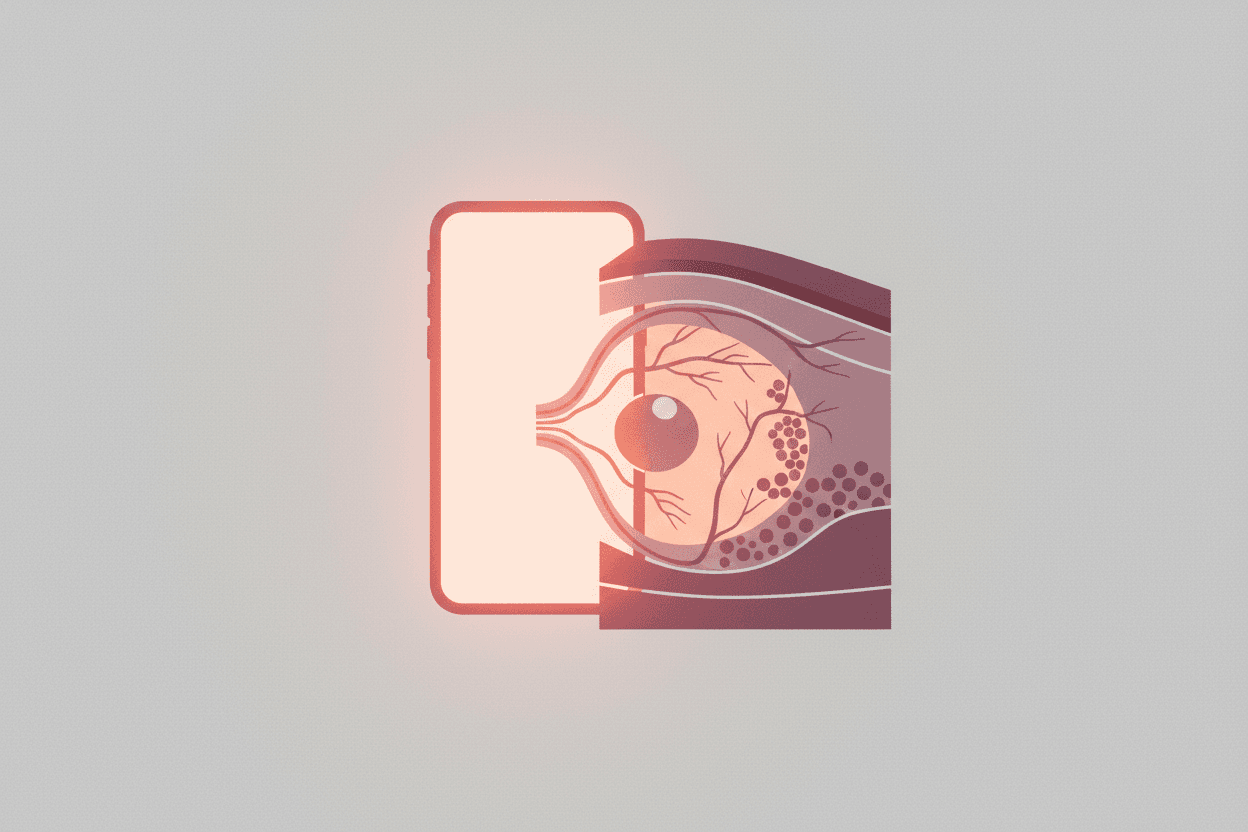
When bright light hits your retina, it activates the pupillary light reflex — your iris constricts within 0.25 seconds to limit light intake. This reflex is controlled by the pretectal nucleus in the midbrain, which connects to the Edinger-Westphal nucleus and triggers parasympathetic output. But the same retinal ganglion cells also project to the suprachiasmatic nucleus, your circadian pacemaker, and to the amygdala, your threat and arousal processing center.
“*"Brightness is the primary attentional cue in the human visual system. We cannot voluntarily ignore a sufficiently bright stimulus any more than we can voluntarily stop our knee from jerking when the doctor taps it.”
Display manufacturers understand this cascade. A 2023 technical whitepaper from Samsung Display's Human Factors Lab explicitly references 'attentional capture ratios' correlated with peak brightness levels. The document, intended for OEM partners rather than consumers, notes that screens achieving 2,000+ nits demonstrate 'significantly higher gaze persistence' in user testing environments.
This is not conspiracy. It is product specification.
The industry term is 'visual hierarchy.' In any scene containing multiple objects, humans instinctively direct attention first to the brightest element. This reflex served evolutionary purposes — bright objects might be fire, water reflection, or a predator's eyes. In a modern living room, the brightest object is calibrated to be your television.
[!INSIGHT] The attentional capture effect plateaus around 1,500 nits for most observers. Brightness increases beyond this point provide diminishing returns for noticeability but serve HDR content rendering. The 2,500-nit threshold targets HDR specular highlights specifically, not overall screen brightness.
The Arms Race for Your Eyes
The brightness specification has become a competitive battleground. Samsung's QD-OLED panels hit 2,500 nits peak. LG's latest MLA (Micro Lens Array) OLED televisions reach 1,500 nits. Apple's iPhone 15 Pro maxes out around 2,000 nits in HDR. Each generation pushes higher, justified by 'HDR content compatibility' and 'outdoor visibility.'
But there is an uncomfortable correlation: higher brightness specifications correlate with higher engagement metrics. A 2022 study published in Computers in Human Behavior found that participants using displays calibrated to higher peak brightness reported 'increased content engagement' and 'reduced task-switching frequency.' The mechanism was not measured, but the effect was statistically significant.
The smartphone market provides the clearest case study. Outdoor visibility has historically justified brightness increases — you need 1,000+ nits to read a phone screen in direct sunlight. But Samsung's 2,500-nit specification appears primarily in HDR video playback modes, which occur overwhelmingly indoors. The 'outdoor visibility' justification does not fully explain why your phone needs to be brighter than a cloudy sky when you are watching Netflix in bed.
[!NOTE] The DisplayMate 'Best Smartphone Display' award, considered an industry benchmark, now includes peak brightness as a primary evaluation criterion. Samsung has won this award for eleven consecutive generations. DisplayMate explicitly cites 'record peak brightness' in each award citation. The industry has created a feedback loop where brightness equals quality.
The competitive dynamic becomes clearer when examining panel supply chains. Samsung Display supplies OLED panels not only to Samsung Electronics but also to Apple, Google, and numerous Chinese manufacturers. The brightness specification becomes a differentiating feature that Samsung can market to device manufacturers, who then market it to consumers. Everyone benefits from the specification except, perhaps, the person trying to fall asleep after checking their phone.
The Uncomfortable Question of Intent
There are legitimate engineering reasons for brightness. HDR content requires dynamic range to look correct — a sunset should feel bright, shadows should feel dark. Outdoor visibility demands high peak output. Color accuracy improves at higher luminance levels due to the Stevens effect (perceived contrast increases with brightness).
But the specific targeting of 2,000+ nits, in indoor-use contexts, with documented attentional capture effects, raises questions that display manufacturers have not meaningfully addressed.
The Samsung Display whitepaper referenced earlier includes a section titled 'User Fatigue Considerations' that acknowledges 'extended exposure to high-luminance content may contribute to visual discomfort.' The recommended mitigation is 'content-level adaptation' — essentially, asking content creators to limit HDR peak brightness. This passes responsibility downstream. The panel can hit 2,500 nits. Whether it should is someone else's problem.
Regulatory frameworks do not currently address display brightness as a potential attention hazard. The International Electrotechnical Commission (IEC) provides optical safety standards for laser and LED products, but these focus on retinal damage thresholds rather than attentional or circadian effects. Your screen will not damage your eyes. It will simply ensure you cannot look away.
What This Means for You
Understanding the engineering intention does not require paranoia. Display manufacturers are not villains in a cartoon. They are companies responding to market incentives, competitive pressures, and genuine user preferences for impressive visual experiences. The brightness specification exists because it sells phones and televisions.
But consumers making purchasing decisions deserve accurate information. When a manufacturer advertises 'record-breaking peak brightness of 2,500 nits,' they are advertising their device's ability to capture and hold your attention at a neurological level. This is a feature for some use cases and a potential liability for others.
Practical steps remain limited. Most devices offer 'eye comfort' modes that reduce blue light and dim the display, but these do not limit peak HDR brightness. Some Android manufacturers provide developer options to limit maximum brightness, though these settings are buried and poorly documented. The most effective intervention remains awareness: understanding that your screen's light is not neutral, and that the intensity you experience is the result of careful engineering decisions made without your explicit consent.
Sources: Samsung Display Technical Whitepaper on Display Performance Metrics (2023); DisplayMate Smartphone Display Technology Shoot-Out Series; Chatterjee, A. 'The Aesthetic Brain' (Oxford University Press, 2015); IEC 62471 Photobiological Safety of Lamps and Lamp Systems; 'Display brightness and attentional capture in digital environments' - Computers in Human Behavior, Vol. 140 (2022); Stevens, S.S. 'To Honor Fechner and Repeal His Law' - Science, Vol. 133 (1961)