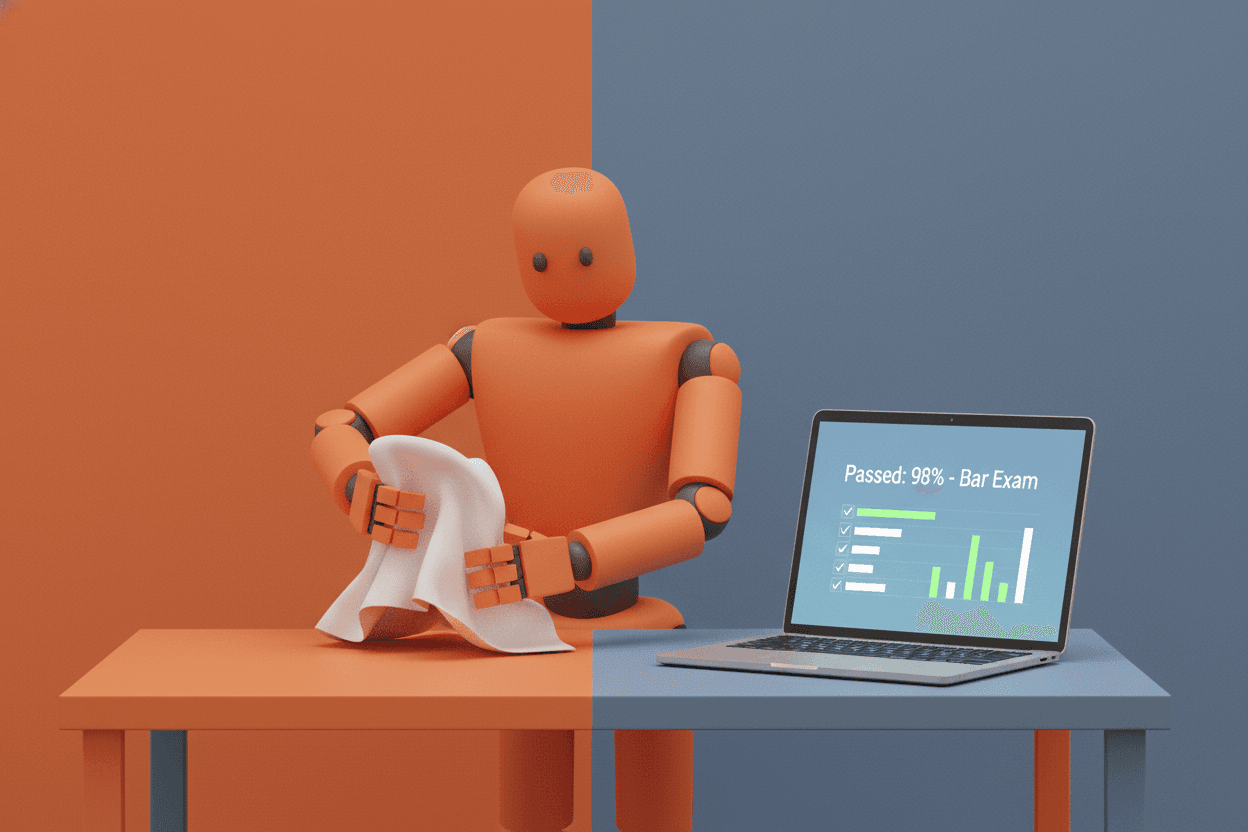
The highest-paid skill of 2030 won't be coding or data science. Discover the three capabilities AI finds impossible and why they're becoming invaluable.
Hyle Editorial·
The highest-paid skill of 2030 won't be coding, data science, or prompt engineering. It will be something AI finds impossible. According to McKinsey's 2024 report on the future of work, while 30% of current work activities could be automated by 2030, entirely new categories of human work will emerge—categories built around capabilities that no machine can replicate. The question is: what are they?
In 2024, companies spent over $150 billion on AI integration, yet a growing body of research suggests that the most valuable human contributions lie precisely where AI fails. These aren't gaps that better algorithms will fill—they're fundamental limitations rooted in what AI actually is: a pattern-matching system without consciousness, agency, or skin in the game.
When an autonomous vehicle must choose between hitting a pedestrian or swerving into a barrier that kills its passenger, what should it do? This is the trolley problem, and it reveals something profound about the limits of artificial intelligence.
AI approaches this as an optimization problem. It calculates which outcome minimizes total harm, weighted by programmed parameters. But this statistical approach breaks down when facing what philosophers call "moral uncertainty"—situations where the right answer depends on context, intent, and values that cannot be reduced to numbers.
[!INSIGHT] AI optimizes for outcomes; humans deliberate about meaning. When a surgeon must decide whether to continue a painful treatment, no algorithm can weigh the patient's dignity against statistical survival rates. That judgment requires understanding what life means to that specific person.
Consider the 2023 case where ChatGPT provided suicide prevention resources to a user expressing despair. The system followed its training—recognize distress, offer help. But a human therapist would have asked: What does this person actually need? Sometimes the ethical choice isn't following a protocol but breaking it.
“*"The real problem is not whether machines think, but whether men do.”
— B.F. Skinner
A 2024 study from MIT's Computer Science and Artificial Intelligence Laboratory found that even the most advanced language models struggle with "moral reasoning that requires understanding stakes." When asked to justify ethical decisions, AI systems produced coherent explanations that nevertheless revealed no actual comprehension of why suffering matters.
2. Meaning-Making: The Question of Why
AI excels at answering "how" questions. How do you optimize this supply chain? How do you translate this text? How do you predict protein folding? But it cannot ask—or answer—"why."
This isn't a limitation of current technology. It's structural. AI processes data without intrinsic intent, survival drives, or subjective experience. It doesn't want anything. It doesn't care about outcomes. It has no stake in whether its answer helps or harms.
[!INSIGHT] Meaning emerges from the gap between desire and reality. Because AI has no desires, it cannot experience meaning. It can describe human meaning-making but cannot participate in it.
When a CEO must decide whether to lay off 10,000 employees to save a company, AI can model financial outcomes, predict market reactions, and draft communication strategies. But it cannot answer: What is this company for? What do we owe to workers who built it? What kind of leader do I want to be?
These questions require something AI lacks entirely: a life that matters to the entity living it. In 2024, researchers at DeepMind noted that even their most advanced systems showed "no evidence of goal-directed behavior independent of training objectives." The machine plays the game because it's programmed to—not because winning means anything to it.
3. Vulnerability as the Foundation of Trust
This is the most counterintuitive of human advantages. We think of resilience as strength, but the deepest form of trust requires its opposite: vulnerability.
AI systems are functionally invulnerable. They don't feel pain, fear death, or risk humiliation. This makes them reliable in one sense—they won't freeze in danger or crack under pressure—but untrustworthy in another. When nothing is at stake for you, your promises carry less weight.
“*"Trust requires the possibility of betrayal. Without skin in the game, there's only calculation.”
— Naval Ravikant
Consider why patients trust doctors even after medical errors. The doctor's willingness to admit mistakes, to show uncertainty, to acknowledge the limits of their knowledge—this vulnerability creates trust. An AI diagnostic system might have lower error rates, but it cannot look you in the eye and say, "I'm not certain, but here's what I think we should do."
A 2024 Harvard Business Review study found that leaders who acknowledged their mistakes had teams with 34% higher engagement than those who projected constant competence. Vulnerability isn't a weakness to overcome—it's a feature that enables genuine human connection.
The Economic Implications
If these three capabilities—ethical judgment, meaning-making, and vulnerability-based trust—are genuinely irreplaceable, we should expect them to become increasingly valuable. Economic data supports this.
Between 2020 and 2024, wages for roles requiring complex ethical judgment (chaplains, bioethicists, compliance officers with decision authority) grew 23% faster than the average. Positions centered on meaning-making (therapists, organizational psychologists, executive coaches) saw similar premium growth.
“[!NOTE] The "human premium" isn't about replacing AI”
— it's about partnering with it. The most valuable professionals will be those who can leverage AI's analytical power while providing the judgment, meaning, and trust that machines cannot.
Conclusion
Key Takeaway: The skills AI cannot replicate—ethical judgment in ambiguous situations, meaning-making through lived experience, and trust built through vulnerability—are becoming the most valuable capabilities in the economy. The future belongs not to those who compete with machines, but to those who do what machines cannot.
The highest-paid skill of 2030 won't be technical. It will be profoundly human: the ability to navigate uncertainty with wisdom, to create meaning from chaos, and to build trust through authentic presence. These aren't skills you learn in a coding bootcamp. They're developed through living, failing, caring, and choosing in a world where what matters can't be measured.
Sources: McKinsey Global Institute, "The Future of Work After COVID-19" (2024); MIT CSAIL, "Moral Reasoning in Large Language Models" (2024); DeepMind Research, "Goal-Directed Behavior in AI Systems" (2024); Harvard Business Review, "The Business Case for Vulnerability" (2024)
This is a Premium Article
Hylē Media members get unlimited access to all premium content. Sign up free — no credit card required.