Will Guidara's philosophy of 'unreasonable hospitality' reveals how exceeding expectations transforms transactions into unforgettable experiences.
Hyle Editorial·
In 2015, Eleven Madison Park was named the best restaurant in the world—not because of its food, but because of a single strawberry. A server had overheard a guest mention missing strawberry rhubarb pie from her childhood in Ohio. The next day, that pie appeared at their table, flown in from a bakery in Columbus. That's unreasonable hospitality: doing what no rational business model would justify.
Here's what makes this remarkable: the restaurant industry operates on razor-thin 3-5% profit margins. Every unexpected gesture chips away at the bottom line. Yet Guidara argues that this "unreasonable" approach is precisely what creates exponential returns through loyalty, reputation, and pricing power. The question isn't whether you can afford to be unreasonable—it's whether you can afford not to be.
Will Guidara didn't start as a hospitality philosopher. He was a restaurateur who stumbled upon a radical insight while running one of New York's most acclaimed establishments. The insight? That technical excellence—the perfectly seared scallop, the flawlessly timed course—is merely the entry fee. What distinguishes the extraordinary from the merely excellent is something far less quantifiable.
Guidara distinguishes between service and hospitality with surgical precision. Service is the mechanic changing your oil correctly. Hospitality is the mechanic who notices your daughter's college sticker on the windshield and asks how she's doing. One is transactional; the other is transformational. The former fulfills a contract; the latter creates a connection.
[!INSIGHT] The etymology of "hospitality" traces back to the Latin hospes, meaning both "host" and "guest." This linguistic dualism captures something profound: genuine hospitality dissolves the boundary between giver and receiver, transforming both parties in the exchange.
The book argues that most businesses operate in what Guidara calls the "reasonable zone"—doing exactly what customers expect, no more, no less. This zone is comfortable. It's defensible in quarterly reviews. It's also where dreams of differentiation go to die.
The Strawberry Rhubarb Effect
The book's signature anecdote—now legendary in service circles—involves that strawberry rhubarb pie. A guest at Eleven Madison Park mentioned in passing that she missed the strawberry rhubarb pie from her grandmother's bakery in Ohio. The comment was casual, almost throwaway. A reasonable restaurant would have nodded sympathetically and continued service.
Guidara's team called a bakery in Columbus, arranged for a pie to be made, and had it shipped overnight to New York. The cost far exceeded any rational calculation of return on investment. But that guest didn't just return—she became an evangelist, telling the story to hundreds of people over the years. The pie cost $200. The lifetime value of her referrals? Easily fifty times that.
“"The goal isn't to satisfy customers. Satisfaction is a low bar. The goal is to make people feel seen, heard, and valued in ways they never expected.”
— Will Guidara
This principle extends far beyond restaurants. Every email you send, every client call you take, every product you ship contains hidden opportunities for unreasonable gestures. The question is whether you're trained to see them.
The Business Case for Being Unreasonable
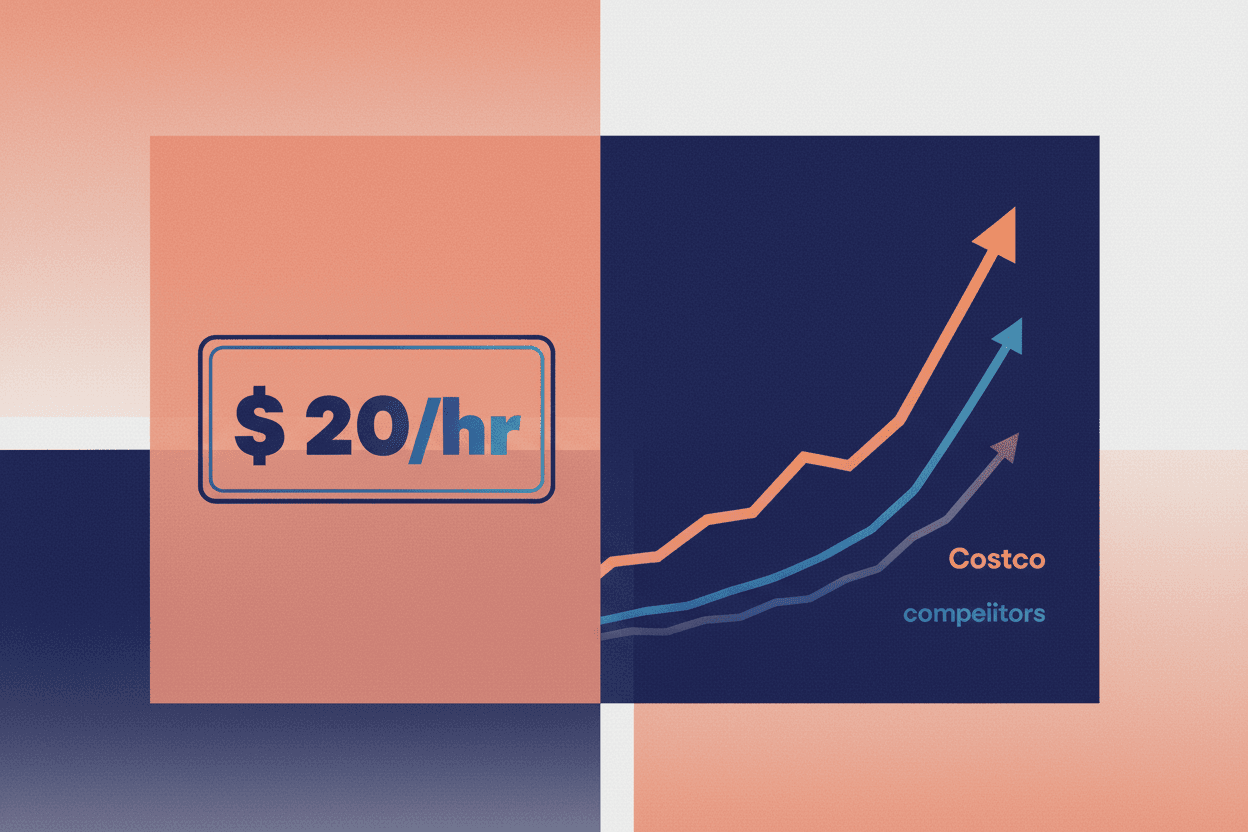
Critics might dismiss hospitality philosophy as soft sentiment unsuited to hard-nosed business realities. Guidara anticipates this objection with data. During his tenure, Eleven Madison Park didn't just win accolades—it achieved revenue growth that outpaced competitors by significant margins. The restaurant could charge premium prices because guests weren't paying for food; they were paying for experiences they couldn't get elsewhere.
Consider the economics: acquiring a new customer costs five to twenty-five times more than retaining an existing one. A 5% increase in customer retention can increase profits by 25-95%. These aren't hospitality statistics—they're from Bain & Company's research on customer loyalty. Guidara's approach simply provides a framework for activating these principles through deliberate, unreasonable acts of care.
The book introduces what Guidara calls the "hospitality mindset"—a systematic approach to identifying opportunities for unexpected delight. It begins with radical attention: noticing the unspoken, remembering the incidental, connecting dots that others miss. This isn't about grand gestures; it's about accumulated micro-moments that compound into something larger.
[!NOTE] The concept parallels findings from behavioral economics. Research by Nobel laureate Daniel Kahneman shows that peak moments and endings disproportionately shape how we remember experiences. Unreasonable hospitality targets precisely these inflection points, designing memorable peaks that reframe entire interactions.
From Transactions to Relationships
The deepest insight in Guidara's framework concerns the nature of commercial exchange itself. Every transaction, he argues, contains the seeds of a relationship. Most businesses prune these seeds before they germinate, optimizing for efficiency over connection. The result is a self-fulfilling prophecy: customers treat you transactionally because you've trained them to.
Guidara recounts a story about a regular diner whose wife had recently passed away. The staff noticed he'd started dining alone, seemed withdrawn, ordered the same meal each time. Instead of maintaining professional distance, the sommelier began leaving brief, handwritten notes with the wine selections. Nothing elaborate—observations about the wine, questions about his preferences. Over months, these notes became a lifeline. The diner later revealed that those small gestures helped him through the darkest period of his life.
This is the territory beyond service—the realm where business becomes genuinely human. It's also where the most durable competitive advantages are built. Competitors can copy your menu, your decor, your pricing. They cannot copy the accumulated weight of a thousand unreasonable gestures.
The Unreasonable Framework
Guidara doesn't leave readers with abstract philosophy. The book provides a practical framework for implementing unreasonable hospitality across contexts:
Listen Beyond Words: The most valuable information customers provide isn't what they say directly—it's what they mention in passing, what they hesitate over, what their body language reveals. Train yourself to hear the subtext.
Connect Unexpected Dots: The strawberry rhubarb intervention worked because someone connected a casual mention to a bakery in Ohio to the possibility of shipping pie overnight. Creativity in hospitality is fundamentally about connection-making.
Empower the Front Line: Unreasonable hospitality cannot be centralized. Every team member needs the authority—and the budget—to make decisions in the moment. Guidara gave servers discretion to comp meals, arrange special experiences, and deviate from protocol when they sensed opportunity.
Design for Peak Moments: Identify the natural arcs in your customer interactions and engineer unexpected high points. The peak-end rule from psychology tells us these moments will define how the entire experience is remembered.
Measure the Immeasurable: Traditional metrics miss the point. Guidara tracked stories, not just sales. How many times did guests share experiences with others? What moments became legends? These narrative metrics often predict financial outcomes better than quarterly reports.
Implications Beyond the Table
The principles in Unreasonable Hospitality extend far beyond restaurants. Technology companies can practice unreasonable hospitality by having engineers personally respond to complex support tickets. Consultants can send unexpected research relevant to clients' peripheral interests. Educators can remember details about students' lives and reference them months later.
In an era of automation and AI, the human touch becomes exponentially more valuable precisely because it's increasingly rare. ChatGPT can answer questions efficiently. It cannot remember that your daughter applied to college and ask how the decision turned out. This asymmetry represents the greatest opportunity for differentiation in the next decade.
“"In a world of infinite choice, people don't choose based on features or price alone. They choose based on how you make them feel.”
— Maya Angelou (as cited by Guidara)
The book's ultimate argument is that unreasonable hospitality isn't really about hospitality at all—it's about a stance toward other humans. It's a rejection of the algorithmic logic that reduces people to data points and interactions to transactions. In this sense, the philosophy is quietly radical, suggesting that the most successful businesses of the future will be those that remember how to be most human.
Key Takeaway
Unreasonable hospitality—doing what rational business models would deem unnecessary—creates the deepest competitive moats. In a world of efficient transactions, the willingness to be inefficiently human is your greatest advantage. The question isn't whether you can afford to exceed expectations; it's whether you can afford the invisibility that comes from meeting them.
Sources: Guidara, W. (2022). Unreasonable Hospitality: The Remarkable Power of Giving People More Than They Expect. Optimism Press. Bain & Company research on customer retention economics. Kahneman, D. (2011). Thinking, Fast and Slow. Farrar, Straus and Giroux.
This is a Premium Article
Hylē Media members get unlimited access to all premium content. Sign up free — no credit card required.