What Happens to Chile When Lithium Runs Out
Chile supplies 30% of global lithium, yet earns just 2% of GDP from it. Can it escape the resource curse, or will history repeat?

Chile has seen this movie before. It was called copper. The sequel is called lithium. The ending hasn't changed.
In 2023, Chile supplied approximately 30% of the world's lithium from the salt flats of the Atacama Desert. Yet lithium exports contributed a mere 2% to Chile's GDP—roughly $1.8 billion against a $95 billion national budget. The political dependence on this single commodity far exceeds its economic weight, creating a dangerous asymmetry that has haunted resource-rich nations for centuries.
The question haunting Santiago is not whether demand will disappear—it's what remains when the salt flats are exhausted.
The Numbers Behind the Mirage
Chile's lithium industry presents a paradox that defies conventional economic logic. While the country holds 36% of the world's economically extractable lithium reserves, the revenue generated tells a story of missed opportunity and structural weakness.
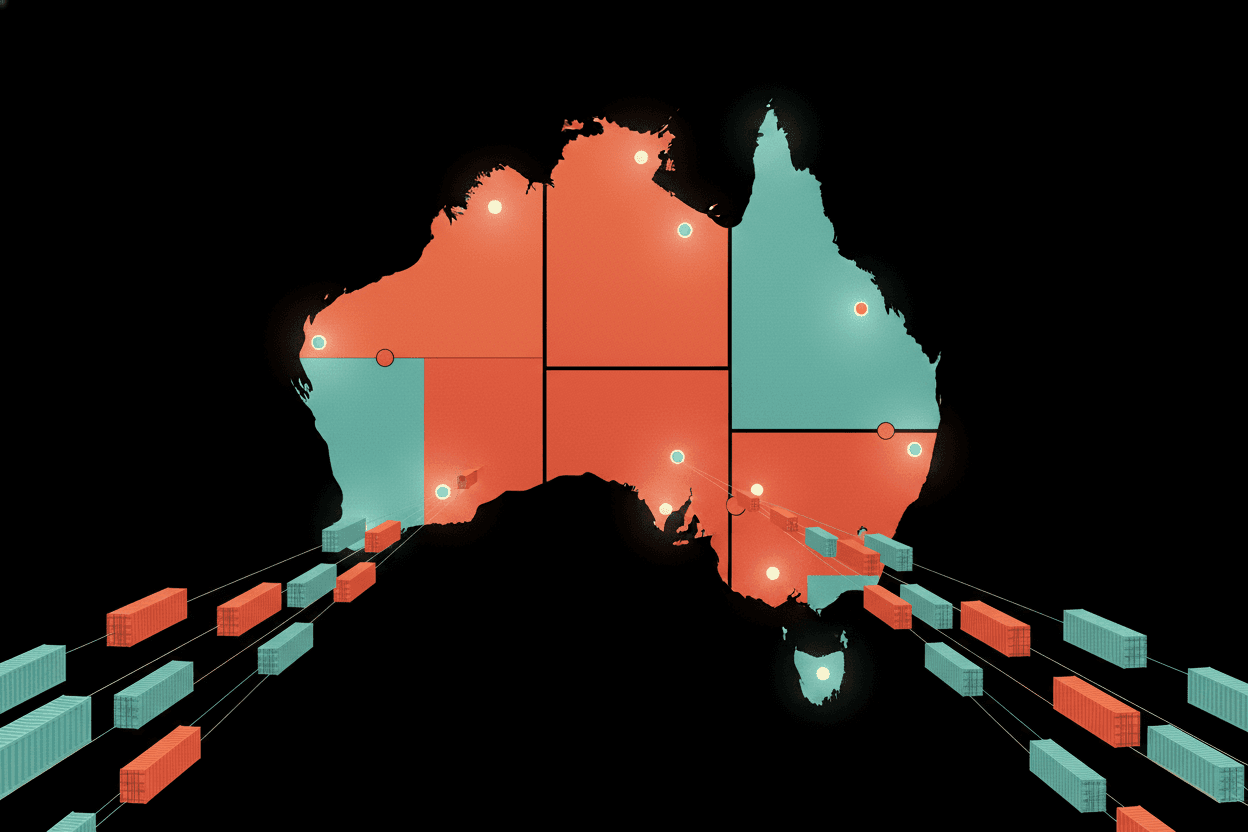
Consider the math: In 2023, Australia produced 47% of global lithium from hard-rock mining operations, while Chile contributed 24% from brine extraction. Yet Australia's lithium industry generated over $18 billion in export revenue, compared to Chile's $1.8 billion. The discrepancy stems from Chile's extraction model—brine evaporation takes 18-24 months and yields lower-grade product, while Australian spodumene mining produces higher-quality concentrate in weeks.
[!INSIGHT] Chile's lithium royalties hover around 6-12% of sales value, compared to Norway's 78% tax rate on oil profits. The state captures a fraction of the resource rent while multinational corporations—primarily SQM and Albemarle—remit profits to shareholders in the United States and Europe.
The Chilean government's 2023 budget allocated $4.2 billion to subsidies for lithium-producing regions in Antofagasta and Atacama. These payments, designed to maintain political stability in mining regions, essentially recycle resource revenue back into affected communities rather than building sovereign wealth or diversifying the economy.
The Norwegian Model: What Chile Could Have Been
Norway discovered oil in 1969. By 2024, the Government Pension Fund Global—commonly called the Oil Fund—held over $1.6 trillion in assets, amounting to roughly $300,000 per Norwegian citizen. The fund's founding principle was simple: oil revenue belongs to future generations, not current politicians.
“"We knew the oil would run out. We also knew that spending oil money like ordinary income would destroy our economy. So we decided to pretend the money didn't exist.”
Norway's success rested on three pillars:
-
Sovereign Wealth accumulation: 100% of net oil revenue flows into the Oil Fund, with a self-imposed 3% annual withdrawal limit for government spending.
-
Technological sovereignty: Statoil (now Equinor) was established as a state-owned champion to develop indigenous expertise, ensuring Norwegians controlled extraction technology.
-
Institutional transparency: The Oil Fund publishes every investment decision, creating accountability that prevents political capture.
Chile attempted none of these. Codelco, the state copper company, was excluded from lithium development in the 1980s under Pinochet-era privatization policies. The result: Chilean engineers mine copper, but lithium expertise belongs to American and Chinese corporations.
The Nigerian Model: What Chile Risks Becoming
Nigeria discovered oil in 1956. By 2024, the country had extracted over $1 trillion in oil revenue—yet 40% of Nigerians live in poverty, and the Niger Delta remains an environmental wasteland.
[!WARNING] The parallel is not as distant as Chileans would like to believe. Nigeria's oil revenue accounted for roughly 10% of GDP at peak production—similar to Chile's projected lithium contribution if extraction scales as planned.
Nigeria's failures followed a predictable pattern:
-
Dutch Disease: Oil exports strengthened the naira, making non-oil industries uncompetitive. Nigerian agriculture collapsed as imported food became cheaper than domestic production.
-
Political capture: Regional elites fought for control of oil revenue, leading to decades of corruption and insurgency in the Niger Delta.
-
Infrastructure neglect: Nigeria built pipelines but not refineries, remaining dependent on imported fuel despite being Africa's largest oil producer.
Chile shows early symptoms of the same disease. The peso appreciated 15% against the dollar between 2020 and 2023, partially driven by lithium export revenues. Non-mining exports—particularly agriculture and manufacturing—have stagnated as capital and labor flow toward extraction.
The Resource Depletion Timeline
The most sobering analysis comes from Chile's own National Geology and Mining Service (SERNAGEOMIN). Current proven reserves in the Salar de Atacama will support approximately 40-50 years of extraction at 2023 production rates. However, economically recoverable reserves—factoring in declining ore grades and rising extraction costs—may be exhausted in 25-30 years.
[!NOTE] The timeline accelerates dramatically if Chile implements its announced goal of doubling production by 2030. At that rate, economic exhaustion could arrive before 2050—a working lifetime away.
SQM and Albemarle's current contracts expire in 2030 and 2043 respectively. The Chilean government has signaled it will not renew them on similar terms. A new National Lithium Company was announced in 2023, but its charter remains vague, and opposition from existing operators has stalled implementation.
The result is a policy vacuum: neither the private sector nor the state is investing in post-lithium economic development. Capital that should be building Chilean technological capacity is instead being distributed as short-term political patronage.
The Diversification Deficit
Chile's economy remains dangerously concentrated. Mining accounts for 58% of exports and 11% of GDP—figures that have barely changed in three decades. Copper represents 45% of export value; lithium adds another 8%. Agriculture, despite employing 9% of the workforce, contributes just 4% of exports.
[!INSIGHT] The path to economic resilience runs through value addition, not extraction. South Korea has zero lithium reserves but produces 28% of the world's EV batteries. Chile has the world's best lithium deposits but exports raw carbonate and imports finished batteries.
The opportunity cost is staggering. Every ton of lithium carbonate exported at $15,000 represents a battery-grade product worth $75,000. Chile's lithium exports in 2023—if processed domestically—could have generated $9 billion rather than $1.8 billion.
What Post-Lithium Chile Could Look Like
Three scenarios emerge from current trajectories:
Scenario 1: Managed Transition (Probability: 15%) Chile establishes a sovereign wealth fund capturing 50%+ of resource rent, invests in battery-grade processing capacity, and develops a domestic EV ecosystem. By 2050, Chilean companies control 20% of South American battery production.
Scenario 2: Slow Decline (Probability: 55%) Lithium revenue continues flowing at current royalty rates, funding current consumption rather than future investment. As reserves deplete, production gradually shifts to newly discovered deposits in Mexico, Argentina, and Africa. Chile returns to copper dependence with minimal diversification.
Scenario 3: Crisis and Collapse (Probability: 30%) A combination of falling lithium prices, environmental protests, and political instability triggers capital flight. SQM and Albemarle accelerate extraction and exit early, leaving contaminated salt flats and unemployed miners. Regional unrest in Antofagasta spreads to Santiago.
“"Resource wealth is not a curse. The curse is the belief that resource wealth is permanent.”
The Policy Window Is Closing
Chile has perhaps 10-15 years to implement structural changes before lithium revenue begins its inevitable decline. The decisions made in Santiago between 2024 and 2030 will determine whether the country follows Norway's path of sovereign wealth accumulation or Nigeria's trajectory of squandered opportunity.
The most critical reforms—none of which are currently being implemented at scale:
-
Royalty reform: Increase state capture to 40-50% of resource rent, dedicating 100% of incremental revenue to a sovereign wealth fund.
-
Technology transfer: Mandate that foreign operators establish R&D centers in Chile and train Chilean engineers in advanced extraction and processing.
-
Value addition: Require that 30% of extracted lithium undergo domestic processing to battery-grade by 2030, rising to 60% by 2040.
-
Diversification bonds: Issue long-term debt backed by lithium revenue, with proceeds exclusively funding non-extraction industries.
None of these proposals are technically difficult. All of them face fierce opposition from SQM, Albemarle, and the political interests dependent on the current system.
Sources: Chilean National Geology and Mining Service (SERNAGEOMIN) 2023 Reserves Report; World Bank Commodity Markets Data; Norwegian Government Pension Fund Global Annual Report 2023; International Energy Agency Global Critical Minerals Outlook 2024; Dani Rodrik, "The Globalization Paradox" (2011); Chile Ministry of Mining Statistical Yearbook 2023
This is a Premium Article
Hylē Media members get unlimited access to all premium content. Sign up free — no credit card required.