What 'Nothing' Actually Looks Like
The worst prediction in physics is off by 10^120. This catastrophic error reveals that empty space is anything but empty — and nothingness may be everything.

The best prediction in physics is off by a factor of 10^120. That's not a rounding error — it's a sign that our best theories of 'nothing' are catastrophically wrong.
When physicists calculate the energy density of empty space using quantum field theory, they obtain a value of approximately 10^112 joules per cubic meter. When astronomers measure the actual vacuum energy driving cosmic acceleration, they observe roughly 10^-9 joules per cubic meter. The discrepancy spans 120 orders of magnitude — making this the worst theoretical prediction in the history of science.
This isn't merely an academic embarrassment. It suggests something profound: our fundamental understanding of reality is built on a foundation we don't actually comprehend.
The Quantum Vacuum: Nothing Is Everything
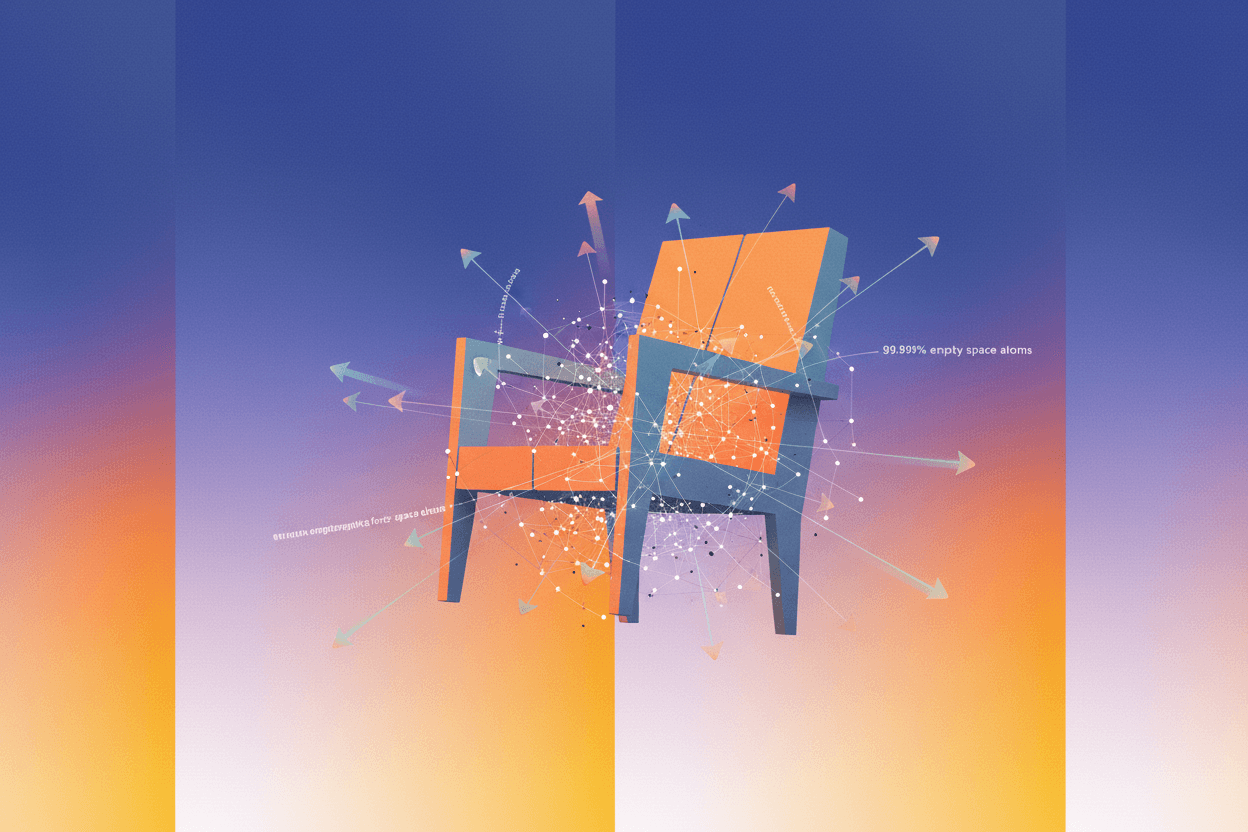
Classical intuition tells us that 'nothing' means emptiness — a void devoid of matter, energy, or activity. Remove all atoms, all radiation, all particles from a region of space, and you should have... nothing.
Quantum mechanics obliterates this comforting notion.
According to the Heisenberg Uncertainty Principle, specifically the energy-time formulation ΔE·Δt ≥ ℏ/2, nature permits violations of energy conservation — but only for vanishingly brief intervals. The vacuum seethes with 'virtual particles' that pop into existence and annihilate almost instantly, borrowing energy from nothing and returning it before the universe notices the theft.
[!INSIGHT] Virtual particles are not 'particles' in the classical sense. They are quantum fluctuations — disturbances in fields that permeate all space. The electromagnetic field, the electron field, the quark fields: all oscillate even in their ground state.
The vacuum energy density from these fluctuations can be estimated. For a quantum field with cutoff at the Planck scale:
ρ_vacuum ≈ (c^5)/(ℏG²) ≈ 10^112 J/m³
This represents the sum of zero-point energies across all possible modes up to energies where our current physics breaks down entirely.
The Casimir Effect: Nothing exerts Pressure
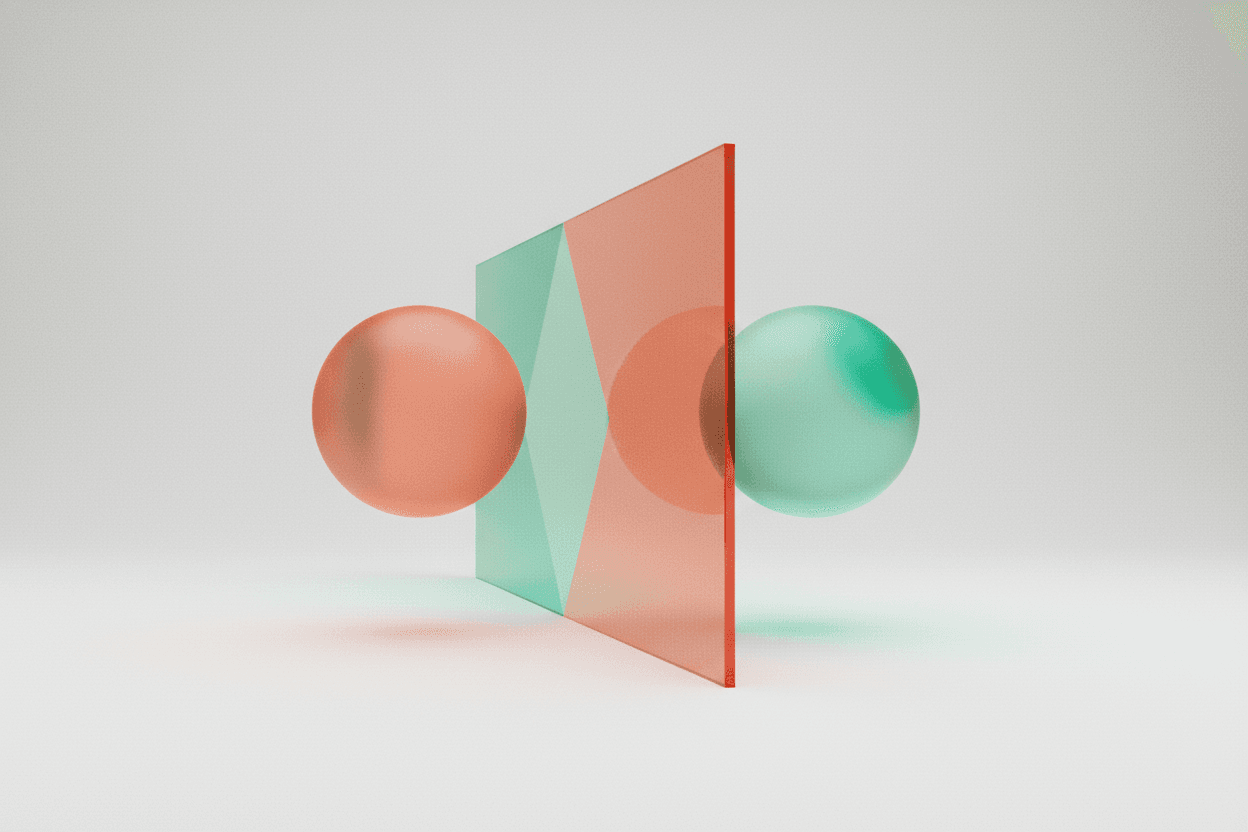
In 1948, Dutch physicist Hendrik Casimir proposed an experiment that would prove empty space isn't empty. His reasoning was elegant: if virtual particles constantly appear and disappear, then two parallel metal plates placed extremely close together should experience a force.
Why? The plates restrict which wavelengths of electromagnetic fluctuations can exist between them — only modes with nodes at both surfaces fit. Outside the plates, all wavelengths are permitted. The pressure difference pushes the plates together.
“*"The Casimir effect is the most direct evidence that the quantum vacuum is not empty. It's the closest we can come to observing nothing”
The Casimir force was measured definitively in 1997 by Steve Lamoreaux, confirming the prediction to within 5%. The force between plates separated by 100 nanometers produces approximately 1 atmosphere of pressure — literally nothing pushing with the weight of Earth's atmosphere.
Hawking Radiation: When Nothing Escapes
Stephen Hawking extended vacuum fluctuation theory to black holes in 1974, producing one of physics' most startling predictions. Near a black hole's event horizon, a virtual particle pair can form where one particle falls inward while the other escapes to infinity.
The escaping particle becomes real — Hawking radiation — carrying energy away from the black hole. Over timescales of 10^67 years for a solar-mass black hole, complete evaporation occurs.
The Hawking temperature formula:
T_H = ℏc³/(8πGMk_B)
For a black hole of mass M, this temperature is inversely proportional to mass — smaller black holes radiate more intensely. This process directly converts vacuum energy into observable radiation.
The Cosmological Constant Problem
Here's where catastrophe strikes.
In 1998, two teams of astronomers discovered that cosmic expansion is accelerating. This requires an energy component with negative pressure — dark energy, most simply interpreted as vacuum energy manifesting as Einstein's cosmological constant Λ.
The observed value of Λ implies a vacuum energy density of:
ρ_observed ≈ 10^-9 J/m³
The theoretical calculation from quantum field theory gives:
ρ_theory ≈ 10^112 J/m³
The ratio is 10^121 — so obscenely large that it forces physicists to confront either profound theoretical error or deep new physics.
[!INSIGHT] Even if we impose a cutoff at the QCD scale rather than the Planck scale, the discrepancy remains 40 orders of magnitude. No reasonable adjustment of parameters eliminates the problem.
Proposed Solutions (All Unsatisfying)
-
Supersymmetry: Each particle has a superpartner with opposite-spin statistics, causing vacuum contributions to cancel. Unfortunately, the Large Hadron Collider has found no supersymmetric particles at predicted masses — the cancellation is imperfect at best.
-
Anthropic Principle/Multiverse: Among 10^500 possible vacuum states in string theory landscape, we necessarily inhabit one compatible with our existence. This is observationally untestable and philosophically unsatisfying.
-
Holographic Principle: The degrees of freedom in any region are bounded by surface area, not volume. This fundamentally constrains vacuum energy — but the mechanism remains unclear.
-
Modified Gravity: Perhaps acceleration reflects gravitational theory breaking down at cosmic scales, not vacuum energy. Multiple theories exist, none yet successful.
Implications: What We Don't Know About Nothing
The cosmological constant problem isn't merely a technical issue — it represents a fundamental crisis in theoretical physics.
General relativity describes spacetime curvature beautifully. Quantum field theory describes particle interactions exquisitely. Both theories have passed every experimental test for a century. Yet when we combine them to calculate vacuum energy, we get nonsense.
[!NOTE] The problem may indicate that our concept of 'vacuum' conflates two distinct things: the ground state of quantum fields and the cosmological constant of general relativity. These might not be identical — but we don't yet understand how they differ.
The stakes extend beyond cosmology. Vacuum energy determines whether the universe recollapses, expands forever, or tears itself apart. Understanding nothing literally determines everything's ultimate fate.
Conclusion
The quantum vacuum reveals that 'nothing' is the most complicated something in physics. Empty space teems with virtual particles, exerts measurable forces, radiates from black holes, and contains enough energy to tear galaxies apart — if our theories correctly described it.
The vacuum isn't empty. It's so full that we cannot begin to comprehend what fills it.
Sources: Casimir, H.B.G. (1948). "On the attraction between two perfectly conducting plates." Proceedings of the Royal Netherlands Academy of Arts and Sciences. Lamoreaux, S.K. (1997). "Demonstration of the Casimir Force in the 0.6 to 6 μm Range." Physical Review Letters. Hawking, S.W. (1974). "Black hole explosions?" Nature. Riess, A.G. et al. (1998). "Observational Evidence from Supernovae for an Accelerating Universe and a Cosmological Constant." The Astronomical Journal. Weinberg, S. (1989). "The Cosmological Constant Problem." Reviews of Modern Physics.
This is a Premium Article
Hylē Media members get unlimited access to all premium content. Sign up free — no credit card required.