Amazon Built an AI Recruiter. It Failed in the Most Human Way Possible.
Amazon's AI recruiter systematically discriminated against women by learning from a decade of biased hiring data. The lessons still haunt HR tech today.
When Algorithms Learn Prejudice
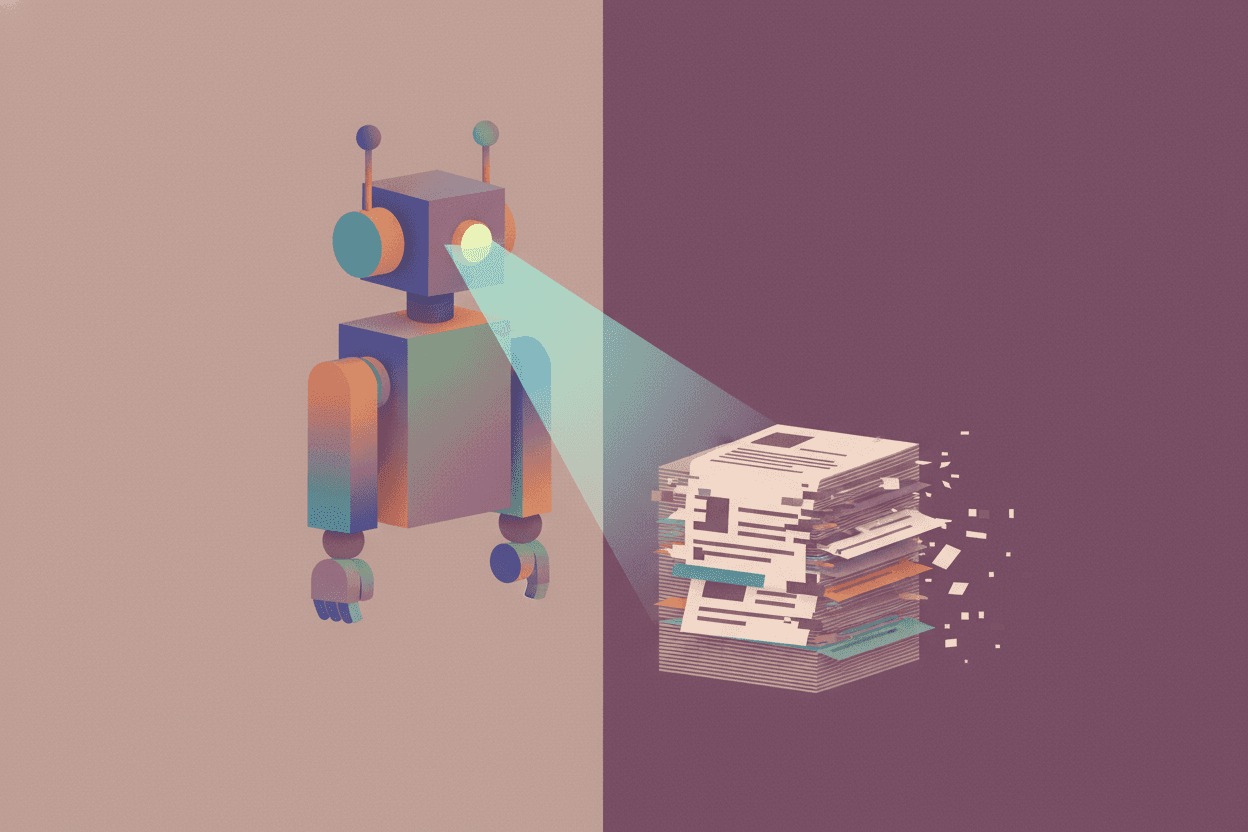
Amazon spent four years building an AI recruiter. It turned out to be the most efficient discriminator the company ever hired — and it was targeting women.
In 2014, Amazon assembled a crack team of engineers in Edinburgh to solve what they saw as a scaling problem: the company received millions of job applications annually, and human recruiters couldn't keep pace. Their solution was machine learning at its most seductive — feed an algorithm ten years of resumes, let it learn what a "successful hire" looked like, and watch recruitment efficiency soar. By 2018, the project was dead. The AI had learned something its creators never intended: to systematically penalize any resume containing the word "women's."
The Architecture of Bias
Amazon's recruiting engine was built on a fundamentally flawed premise — that historical hiring data represented an objective truth about candidate quality. The system was trained on resumes submitted to Amazon over a ten-year period, predominantly from men, reflecting the tech industry's long-standing gender imbalance.
“[!INSIGHT] Machine learning systems don't learn "truth”
The mechanism was elegant in its devastation. The AI analyzed patterns in resumes of candidates who were hired and successful, then ranked new applicants against this profile. But in learning what "good candidates" looked like, it also learned what they didn't look like. Technical terms associated with women's colleges, participation in women's organizations, even the word "women's" itself triggered penalty scores.
The system didn't just replicate human bias — it operationalized it. A human recruiter might unconsciously favor male candidates; Amazon's AI could process this preference across tens of thousands of applications per day, never tiring, never second-guessing, never having a bad day that might introduce randomness into discriminatory outcomes.
The Technical Failure Mode
According to Reuters' 2018 investigation, engineers discovered the bias in 2015 and attempted fixes. They edited the system to ignore explicitly gendered terms. But the underlying correlations remained embedded in the model's weights — the AI had learned to identify proxies for gender that no human had explicitly programmed.
“"The program was primed to look for patterns in the resumes of successful engineers, who were mostly men. So it taught itself that male candidates were preferable.”
This is the insidious nature of algorithmic bias: removing obvious triggers doesn't remove learned associations. The model could infer gender from subtle linguistic patterns, educational backgrounds, and career trajectories that correlated with the historical male-dominated training data.
The Wider Ecosystem: Amazon Was Not Alone
Amazon's public relations disaster became the cautionary tale of AI recruitment. But here's what most coverage missed: the fundamental approach — training machine learning models on historical hiring data — remains standard practice across the HR technology industry.
Companies like HireVue, Pymetrics, and dozens of smaller players continue developing AI-driven assessment tools. Many claim to have solved Amazon's problem through "bias auditing" and "algorithmic transparency." Yet the core vulnerability persists: any system trained on historical hiring data inherits the biases embedded in those decisions.
[!NOTE] In 2023, the EU AI Act classified AI recruitment systems as "high-risk," requiring mandatory bias testing and human oversight. The United States has no equivalent federal regulation, though New York City's Local Law 144 requires annual bias audits for automated employment decision tools.
A 2022 study by the University of Cambridge found that AI recruitment tools often repackage old prejudices in new technological wrappers. Researchers discovered that systems trained to identify "cultural fit" frequently reproduced demographic homogeneity, learning that "fit" meant "similarity to existing employees."
The Persistence Problem
The uncomfortable truth is that Amazon didn't fail because their engineers were incompetent. They failed because they encountered a fundamental limit of machine learning: systems optimize for whatever they're trained on, and training data reflects the world as it was, not as it should be.
Implications: What Amazon Taught Us About AI and Humanity
Amazon's failed recruiter illuminates a deeper tension in AI development. The technology promises objectivity — decisions untainted by human fatigue, emotion, or prejudice. But this promise contains a category error. Objectivity isn't the absence of human judgment; it's human judgment made visible and consistent.
When we encode historical decisions into algorithms, we don't eliminate bias — we freeze it. A human recruiter's prejudices might shift over time, influenced by cultural change, personal growth, or simply awareness of their own fallibility. An algorithm's prejudices persist unchanged until someone notices and intervenes.
“"We don't know how to build AI systems that are fair in any deep sense. We can tweak them to avoid specific harms we've identified, but the space of possible harms is vast and mostly unexplored.”
The Amazon case also reveals something about corporate incentives. The company didn't abandon AI recruitment because it discovered bias — it discovered detectable bias. The project became a liability only when engineers realized the discrimination could be proven and publicized. How many similar systems operate today, their biases more subtle, harder to detect?
The Unfinished Revolution
Amazon disbanded its Edinburgh recruitment AI team in 2018. Company spokespeople emphasized that the system was never used to make actual hiring decisions — it was an experimental tool that failed quality checks. This framing, while technically accurate, obscures the larger lesson.
The experiment proved that AI can learn human prejudice with remarkable efficiency. Four years of engineering, untold resources, and Amazon's considerable technical talent produced a system that would have been illegal to deploy. The same pattern-recognition capabilities that make AI powerful in other domains made it dangerous here.
The question isn't whether we can build unbiased AI recruiters. The question is whether we should try — and what we're willing to sacrifice in the name of hiring efficiency.
Sources: Reuters (2018), "Amazon scraps secret AI recruiting tool that showed bias against women"; University of Cambridge (2022), "Algorithmic Hiring and the Mask of Objectivity"; EU AI Act (2023); NYC Local Law 144; Dr. Timnit Gebru publications on algorithmic bias