Dopamine Doesn't Make You Happy — It Makes You Want
Dopamine isn't the pleasure molecule. Discover how neuroscience shattered the happiness myth—and why craving drives your brain.
The Pleasure Myth
Cocaine addicts who have their dopamine neurons destroyed stop craving the drug. They still enjoy it if you give it to them. Dopamine isn't about pleasure — it's about the hunt.
This finding, first documented in the 1990s, demolished decades of neuroscience orthodoxy. For years, researchers had equated dopamine with happiness, reward, and satisfaction. Yet here were patients who had lost nearly all their dopamine neurons — and they could still experience euphoria. What they couldn't do was want anything at all.
If dopamine doesn't make you happy, what is it actually doing in your brain? And why have we spent fifty years believing a lie?
The Great Dopamine Misunderstanding
The dopamine myth began with a simple experimental error. In 1954, James Olds and Peter Milner at McGill University discovered that rats would compulsively press a lever to receive electrical stimulation to certain brain regions. The researchers called these "pleasure centers" — and the dopamine system was born in the public imagination as the brain's happiness highway.
[!INSIGHT] The rats weren't feeling pleasure. They were experiencing craving. Subsequent research showed that animals with elevated dopamine would run themselves to exhaustion, ignore food, and cross painful electric grids — all without showing any signs of enjoyment.
The confusion persisted because wanting and feeling feel similar from the inside. When you desperately want something — a promotion, a romantic partner, that third slice of pizza — the sensation can feel like it's about the joy you'll experience. But the neural circuitry tells a different story.
By the 1980s, neuroscientists had mapped the mesolimbic pathway: dopamine-producing neurons in the ventral tegmental area project to the nucleus accumbens, creating what textbooks still call the "reward circuit." Yet careful experiments kept producing anomalous results. Rats with dopamine blocked would still consume sucrose if it was placed directly in their mouths. They just wouldn't work to get it.
Prediction Error: How Your Brain Learns to Want
In the mid-1990s, Cambridge neuroscientist Wolfram Schultz conducted a series of experiments that would transform our understanding of dopamine. He recorded dopamine neuron activity in monkeys while giving them unexpected rewards — drops of juice.
At first, the neurons fired vigorously when the monkey received juice. But something strange happened over time. As the monkey learned that a light flash predicted juice delivery, the dopamine neurons stopped firing at the reward itself. Instead, they fired at the prediction — the moment the light appeared.
“"Dopamine neurons report the difference between what you expected and what you got. They're not saying 'this is good.' They're saying 'this is better than I thought.'”
This is reward prediction error: dopamine signals not pleasure, but surprise. When outcomes exceed expectations, dopamine spikes. When they match expectations, nothing happens. When they fall short, dopamine drops below baseline.
The implications are profound. Your brain doesn't release dopamine when you get what you want — it releases dopamine to teach you to want things that predicted rewards in the past. The molecule is a learning signal, not a pleasure signal.
This explains why the first bite of chocolate is heavenly, and the tenth is merely fine. By the tenth bite, your brain has accurately predicted the reward. No prediction error, no dopamine surge, no feeling of excitement.
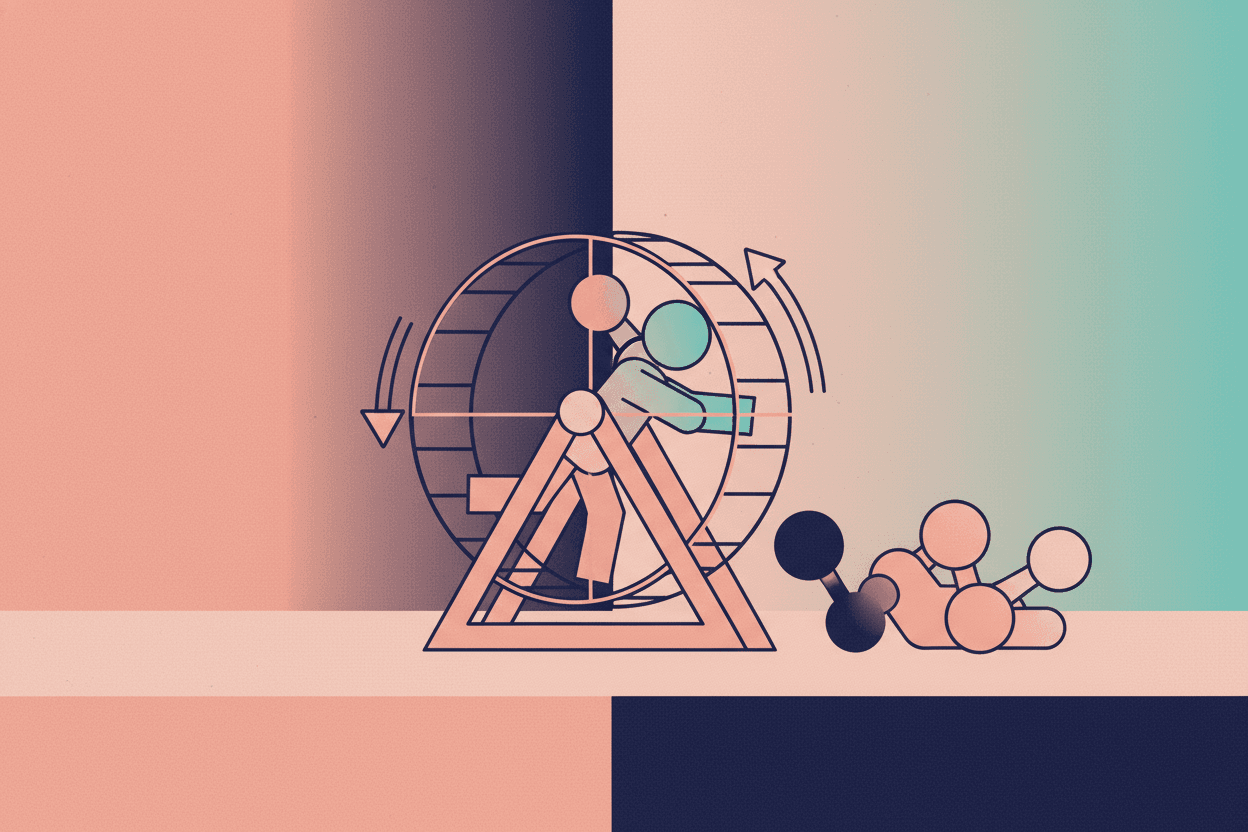
[!INSIGHT] This mechanism explains the hedonic treadmill. As achievements become expected, they stop generating dopamine response. Your brain constantly updates its predictions, leaving you chasing the next surprise.
Wanting vs. Liking: Two Separate Systems
The most dramatic evidence against the pleasure theory comes from the work of Kent Berridge at the University of Michigan. Starting in the late 1980s, Berridge developed methods to measure "liking" — actual hedonic pleasure — separately from "wanting." He discovered that they rely on entirely different neurochemicals and brain regions.
Liking — the actual experience of pleasure — depends on opioids and endocannabinoids concentrated in tiny "hedonic hotspots" within the nucleus accumbens and ventral pallidum. These regions are remarkably small, perhaps a cubic millimeter each. Damage them, and pleasure disappears.
Wanting — the drive to obtain something — depends on dopamine spread across a much larger network. Destroy an animal's dopamine system, and it will still show pleasure responses ("liking") when sugar touches its tongue. But it won't move across the cage to get it.
Berridge's most striking findings come from his studies of addiction:
-
Sensitized wanting: In addicted brains, the "wanting" system becomes hyperactive while "liking" remains flat or even decreases. Addicts don't enjoy drugs more than non-addicts — they crave them more.
-
Cue-triggered desire: Environmental cues associated with rewards can trigger dopamine spikes even in the absence of the reward itself. This explains why recovering addicts relapse when visiting old haunts, seeing drug paraphernalia, or experiencing stress.
-
Unconscious wanting: Brain-damaged patients with no conscious awareness of stimuli can still show dopamine-mediated wanting responses. The drive operates below awareness.
[!NOTE] This dissociation has profound implications for treating addiction. Traditional approaches focused on reducing pleasure from drugs miss the mark. The target should be the anticipatory system — the cues and predictions that trigger craving.
Why Your Phone Is More Addictive Than Cocaine
The dopamine prediction-error system evolved to help animals learn about food, water, and mates — unpredictable, irregular resources where learning was essential for survival. Modern technology has hacked this system with frightening efficiency.
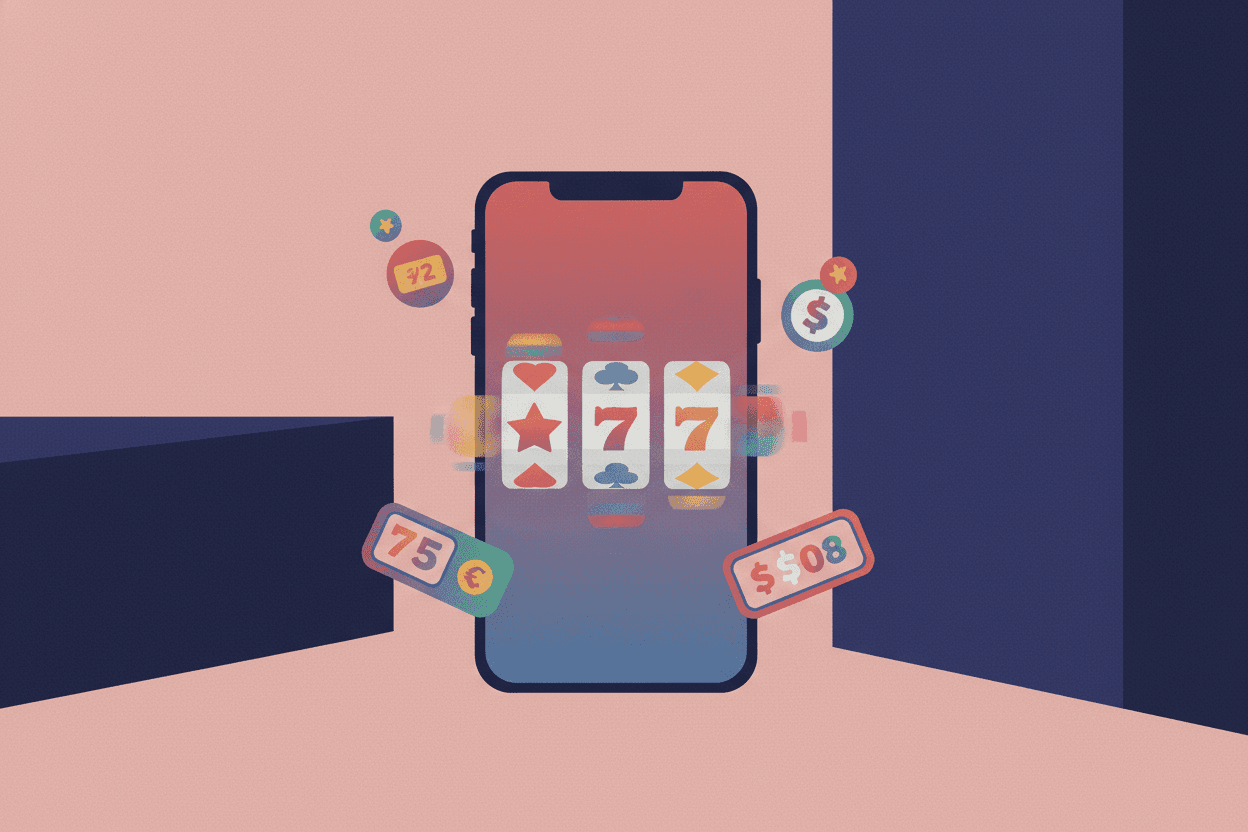
Consider social media. When you check your phone, the reward is variable — sometimes you get nothing, sometimes a like, sometimes a flood of engagement. This variability maximizes dopamine response. Slot machines use the same principle. The unpredictability is the addictive feature.
[!INSIGHT] The average person now checks their phone 144 times per day. Each check is a potential dopamine event. No wonder we feel compelled to look.
Push notifications are designed as prediction-error generators. The buzz in your pocket creates uncertainty. The swipe resolves it. Sometimes it's important, usually it isn't — and that variability keeps you checking.
The algorithmic feeds of TikTok, Instagram, and YouTube are even more sophisticated. They learn what captures your attention and serve increasingly targeted content. Your brain's prediction system is being trained by machine learning systems optimized to exploit it.
This isn't hyperbole. Internal research from Meta (reported in 2021) showed that Instagram made 32% of teen girls feel worse about their bodies — yet they kept using it. The wanting system had been decoupled from any genuine pleasure or wellbeing.
Implications: Rethinking Motivation and Desire
If dopamine is about wanting rather than liking, we need to fundamentally reconsider how we think about happiness, success, and the good life.
The goal-setting trap. We set goals believing achievement will bring lasting satisfaction. But the dopamine system is designed to move goalposts. Achievement eliminates prediction error — the signal stops precisely when you succeed. The solution may be to focus on processes rather than outcomes, maintaining novelty and engagement.
The addiction paradox. Addicts often report that they no longer enjoy their drug of choice — they simply can't stop seeking it. Treatment approaches that focus on enhancing life satisfaction may be missing the core problem: a sensitized wanting system that responds to cues independently of pleasure.
The consumer economy. Advertising is essentially a prediction-error manipulation industry. Products are associated with positive outcomes that exceed expectations. The purchase often fails to deliver — but by then, the transaction is complete.
[!NOTE] Understanding your own dopamine system doesn't automatically give you control over it. The wanting signal operates largely outside consciousness. However, awareness can help you recognize when you're being manipulated — by your own brain or by external actors.
Conclusion
Fifty years of neuroscience got dopamine wrong. It's not the pleasure molecule, the reward chemical, or the happiness hormone. It's a learning signal — a prediction-error detector that teaches you to want things that once surprised you.
The wanting system evolved to help us find food and mates in uncertain environments. In a world of engineered variability and algorithmic persuasion, that same system may be leading us astray. The first step to freedom is understanding what dopamine actually does.
It doesn't make you happy. It makes you hunt.
Sources: Schultz, W. (2016). "Dopamine reward prediction-error signalling: a two-component response." Nature Reviews Neuroscience. Berridge, K. C., & Robinson, T. E. (2016). "Liking, wanting, and the incentive-sensitization theory of addiction." American Psychologist. Olds, J., & Milner, P. (1954). "Positive reinforcement produced by electrical stimulation of septal area and other regions of rat brain." Journal of Comparative and Physiological Psychology. Wise, R. A. (2004). "Dopamine, learning and motivation." Nature Reviews Neuroscience.