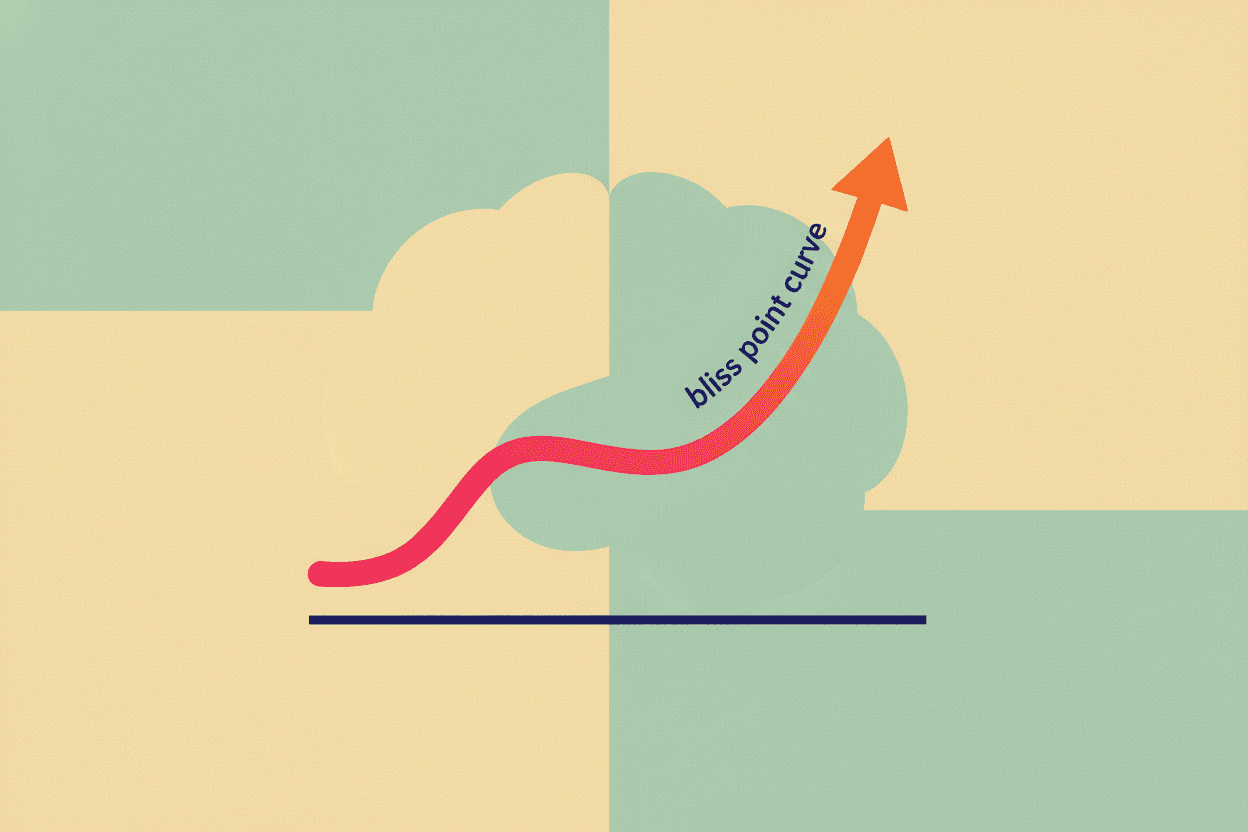
Food companies engineer products to override your brain's satiety signals. The bliss point concept reveals how sugar-fat-salt combinations hijack your dopamine.
Hyle Editorial·
Food companies employ neuroscientists. Their job is to find the 'bliss point' — the exact combination of sugar, fat, and salt that triggers maximum dopamine release and disables your satiety signal. This isn't hyperbole. Internal industry documents from the 1990s reveal that major food corporations systematically studied how to optimize their products for what they called "vanishing caloric density" — the phenomenon where a food melts in your mouth so quickly your brain doesn't register the calories consumed. In 2024, researchers at the National Institutes of Health confirmed that ultra-processed foods drive people to consume an average of 500 more calories per day than those eating unprocessed foods, even when matched for macronutrients. But here's the question that should keep you awake: if these products are engineered to bypass your brain's natural stopping mechanisms, are we still talking about food at all — or something closer to a pharmaceutical?
Howard Moskowitz, a Harvard-trained mathematician and psychophysicist, didn't set out to create a public health crisis. In the 1970s, he was hired by the U.S. Army to optimize the taste of MREs — Meals Ready-to-Eat — so soldiers would actually consume enough calories in combat situations. His methodology was elegant: systematically vary ingredients and measure subjective pleasure responses to find the optimal formulation.
[!INSIGHT] The bliss point isn't simply about making food taste good — it's about finding the specific concentration of sugar, fat, or salt that maximizes dopaminergic response without triggering satiety signals. This creates a neurochemical feedback loop that natural foods cannot produce.
When Moskowitz later applied these techniques to civilian products for companies like Campbell's Soup, General Foods, and Kraft, he discovered something unsettling. Each person had not one, but multiple bliss points depending on context. More critically, these combinations — particularly sugar combined with fat — activated reward circuitry in ways that single ingredients never could.
A 2018 study published in Appetite demonstrated that rats given simultaneous access to sugar, fat, and their combination showed dramatically different consumption patterns. The combination group consumed 40% more calories and showed behavioral patterns identical to those observed in drug addiction studies. The sugar-fat blend wasn't just pleasurable — it was, in the researchers' words, "synergistically hyperpalatable."
“*"We're not talking about willpower. We're talking about a product designed to bypass the biological mechanisms that evolved over millions of years to regulate consumption.”
— Dr. Ashley Gearhardt, University of Michigan Food and Addiction Science and Treatment Lab
The Vanishing Caloric Density Problem
Cheetos represent perhaps the most sophisticated application of neurogastronomy. Frito-Lay scientists discovered that when a snack dissolves rapidly on the tongue, the brain fails to register caloric intake. The sensation is interpreted as transient — like water — rather than substantive. This is why you can consume an entire bag without feeling full.
The technical term is "orosensory stimulation" — the sensory experience of eating that drives consumption independent of metabolic need. Ultra-processed foods maximize orosensory stimulation while minimizing satiety signaling. In effect, they uncouple pleasure from fullness.
The Yale Food Addiction Scale: Redefining the Debate
In 2009, Dr. Gearhardt and her colleague Kelly Brownell developed the Yale Food Addiction Scale (YFAS), adapting diagnostic criteria from substance use disorders to eating behavior. The results were striking: approximately 14% of adults meet criteria for food addiction, rising to over 25% in populations with obesity.
The YFAS doesn't claim that food is a drug. Rather, it identifies that certain foods — specifically ultra-processed products with refined carbohydrates and added fats — can trigger the same neural pathways as substances of abuse.
[!NOTE] The 14% figure likely underestimates the true prevalence. Food addiction criteria were designed for clinical diagnosis, not population screening. Many more people exhibit subclinical patterns of compulsive consumption that don't meet full diagnostic thresholds but still represent significant dysregulation.
Brain imaging studies support this classification. When individuals with high YFAS scores view images of ultra-processed foods, fMRI scans show:
Hyperactivation of the nucleus accumbens — the brain's primary reward center, identical to patterns seen in cocaine users viewing drug cues
Reduced activation in prefrontal regions — the areas responsible for impulse control and long-term planning
Heightened amygdala response — emotional reactivity that can drive compulsive consumption
These aren't subtle differences. A 2023 meta-analysis in JAMA Psychiatry found that the effect sizes for ultra-processed food cues were comparable to those observed in moderate alcohol use disorder.
Internal Documents: What the Industry Knew
The tobacco industry isn't the only one with incriminating internal documents. In 2021, researchers at the University of Kansas Medical Center obtained previously sealed documents from major food corporations through litigation discovery. The findings were damning.
A 1999 memo from a senior food scientist at a leading manufacturer stated: "The combination of sugar, fat, and salt in our core products produces a hedonic impact that no natural food can match. This is our competitive advantage and our ethical burden."
Another document from 2004 explicitly discussed the "bliss point" optimization strategy: "We target the maximum tolerable sweetness without triggering avoidance. The goal is persistent consumption, not satisfaction."
[!INSIGHT] The food industry's own research identified that certain product formulations could produce tolerance (requiring more for the same pleasure), withdrawal symptoms upon cessation, and continued use despite negative consequences — the classical criteria for addiction potential.
Perhaps most troubling: companies discovered they could use marketing to prime the dopaminergic response. Children exposed to branded food packaging showed significantly elevated nucleus accumbens activation compared to unbranded packaging of identical products. The brand itself had become a conditioned cue — a trigger for craving.
Implications: Obesity as a Neurological Condition
If ultra-processed foods are engineered to override satiety signals and hijack reward circuitry, the standard approach to obesity — emphasizing personal responsibility and caloric restriction — becomes scientifically incoherent. You cannot willpower your way past a hijacked dopamine system.
This reframing has profound implications:
Clinical Treatment: Bariatric surgery works partly because it alters gut-brain signaling, not just stomach capacity. GLP-1 agonists like semaglutide function by directly modulating the mesolimbic reward pathway. Both treatments succeed because they address the neurological dimension.
Policy Framework: If certain foods are designed to produce compulsive consumption, regulations might need to address formulation, not just labeling. The UK's sugar tax reduced sugar content in beverages by 35% without reducing sales — suggesting that industry can reformulate when incentivized.
Legal Liability: The tobacco precedent haunts the food industry. If internal documents show deliberate engineering of addictive properties, class action litigation becomes inevitable.
“*"We assumed for decades that obesity was a failure of character. We were wrong. It's a failure of regulation”
— both cellular and political."
Conclusion
The classification of ultra-processed foods as addictive substances remains controversial. Critics argue that food cannot be addictive because it's necessary for survival — unlike alcohol or heroin. But this misses the point entirely. Natural foods — apples, salmon, spinach — don't trigger compulsive consumption. Only the engineered formulations do.
Key Takeaway The distinction isn't between food and drug. It's between nutrition that supports homeostasis and products designed to exploit it. Ultra-processed foods are sophisticated delivery systems for hedonic compounds that bypass the evolved mechanisms regulating consumption. When a product employs neuroscientists to find the bliss point, engineers vanishing caloric density, and optimizes for persistent consumption over satisfaction, we are no longer talking about food in any meaningful sense. We are talking about something that requires a new category entirely — and a new approach to the public health crisis it has created.
Sources: Hall KD et al. (2019). Ultra-Processed Diets Cause Excess Calorie Intake and Weight Gain. Cell Metabolism. Gearhardt AN et al. (2009). Preliminary validation of the Yale Food Addiction Scale. Appetite. DiFeliceantonio AG et al. (2018). Supra-additive effects of combining fat and sugar. Appetite. Moss M. (2013). Salt Sugar Fat: How the Food Giants Hooked Us. Random House. University of Kansas Medical Center (2021). Food Industry Internal Documents Archive.
This is a Premium Article
Hylē Media members get unlimited access to all premium content. Sign up free — no credit card required.