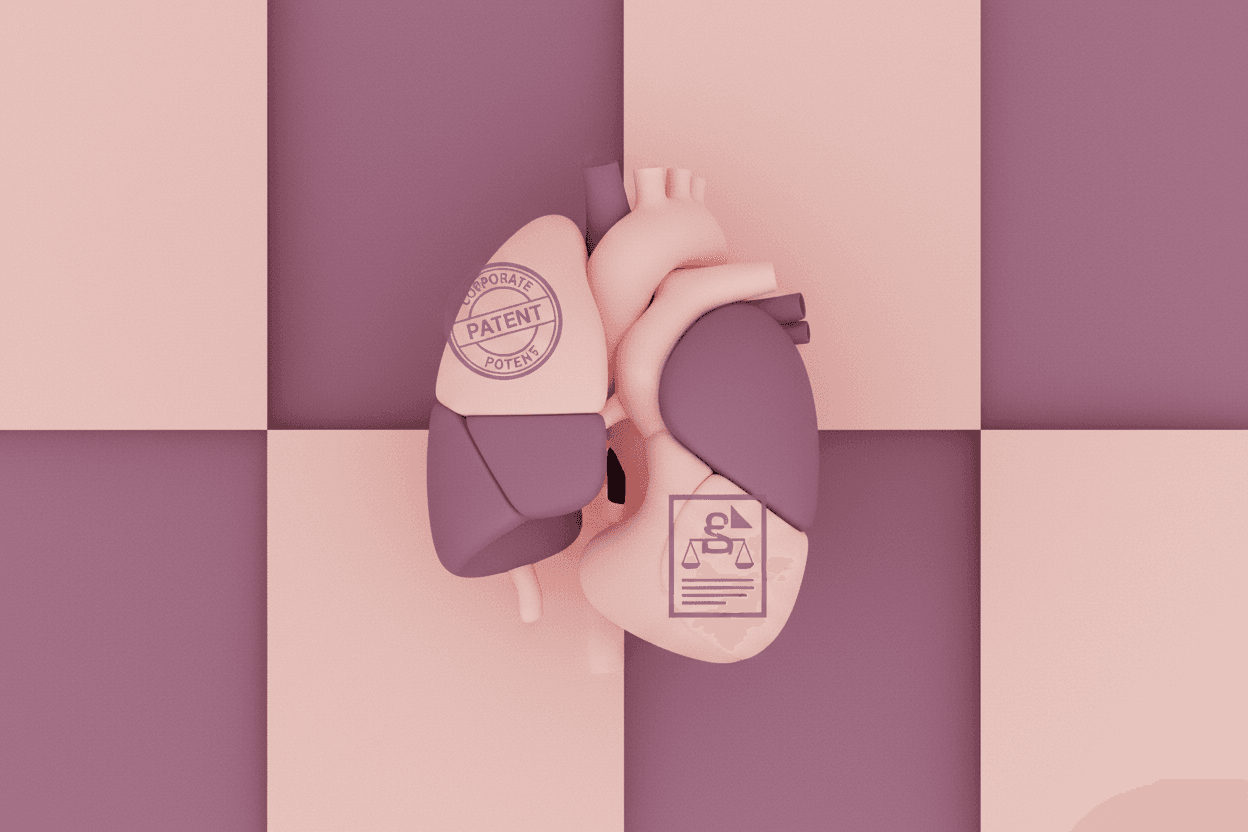
Myriad Genetics Owned the BRCA Gene — And Charged $4,000 to Read It
For 20 years, one company held patents on human genes. A legal battle upended biotech—and cut testing costs by 80%. The story of who owns your DNA.
Hyle Editorial·
A company owned the patent on two genes in your body. If you wanted to know whether you had mutations that cause breast cancer, you had to pay them $4,000. There was no alternative. They owned the only legal right to look. Between 1994 and 2013, Myriad Genetics held exclusive patents on the BRCA1 and BRCA2 genes—sequences of DNA that exist in every human cell. Their legal monopoly meant that researchers couldn't study these genes without permission, and patients couldn't seek second opinions. The company's market capitalization peaked at $1.7 billion on the back of these patents.
The breaking point came in 2013, when actress Angelina Jolie revealed in a New York Times op-ed that she had undergone a preventive double mastectomy after testing positive for a BRCA1 mutation. Her disclosure sparked global conversation about genetic testing—but also highlighted an uncomfortable truth: in much of the world, that same test would have cost a fraction of the American price. In Europe, BRCA testing cost roughly $500. In the United States? Four thousand dollars, payable to a single company.
The story begins in 1990, when researchers at the University of Utah, working with funding from the National Institutes of Health, identified the BRCA1 gene's location. Myriad Genetics, a company founded by one of those researchers, secured the patent rights and developed a commercial test. By 1994, they held exclusive rights to BRCA1; BRCA2 followed in 1995.
The legal theory was audacious: while genes in their natural state inside your body were not patentable, genes that had been "isolated" and "purified" in a laboratory counted as human inventions. The U.S. Patent and Trademark Office had been granting such patents since 1980, when the Supreme Court's Diamond v. Chakrabarty decision allowed patents on a genetically modified bacterium. The ruling had opened a door that biotechnology companies rushed through.
[!INSIGHT] By 2005, the U.S. government had granted patents on approximately 20% of known human genes—roughly 4,000 distinct genetic sequences were legally owned by private entities.
Myriad enforced its patents aggressively. When researchers at the University of Pennsylvania tried to offer free BRCA testing to study participants, Myriad threatened legal action. When Yale University sought to develop its own test, they received cease-and-desist letters. Scientists published papers about BRCA genes only after securing Myriad's blessing.
“"They were saying that because they were the first to find the gene and isolate it, they owned it. But that's like saying if you're the first to find a planet, you own the planet.”
— Lori Andrews, Professor of Law, Illinois Institute of Technology
The consequences extended beyond academic freedom. Patients who received ambiguous results from Myriad's test had nowhere to turn for a second opinion. Those who couldn't afford the $4,000 fee simply went without testing. And when Myriad's scientists discovered new correlations between specific mutations and cancer risk, they didn't always share that information publicly—competition, not collaboration, drove their business model.
The Case That Changed Everything
In 2009, the American Civil Liberties Union and the Public Patent Foundation filed a lawsuit challenging Myriad's BRCA patents. The plaintiffs included researchers, genetic counselors, patients, and medical organizations—twenty plaintiffs in total, representing a coalition that spanned science, medicine, and civil rights.
The legal question was deceptively simple: Is a naturally occurring gene a product of nature, or can it be considered a human invention when isolated from the body?
The case worked its way through the federal courts with surprising results. A district court judge invalidated Myriad's patents entirely, ruling that genes—whether isolated or not—were products of nature. The Court of Appeals for the Federal Circuit reversed, siding with Myriad and the biotechnology industry. The Supreme Court agreed to hear the case in 2013.
[!NOTE] The biotechnology industry warned that invalidating gene patents would destroy investment incentives. The Biotechnology Industry Organization (now BIO) filed an amicus brief arguing that $2.4 billion in annual research funding depended on patent protection for genetic discoveries.
On June 13, 2013, the Supreme Court issued its ruling in Association for Molecular Pathology v. Myriad Genetics. In a unanimous 9-0 decision written by Justice Clarence Thomas, the Court held that "a naturally occurring DNA segment is a product of nature and not patent eligible merely because it has been isolated."
The Court distinguished between two types of DNA. Genomic DNA—the sequences found in nature—could not be patented, regardless of the effort required to isolate them. But complementary DNA, or cDNA, which is synthesized in laboratories and does not exist in nature, remained patent-eligible. The decision invalidated Myriad's core patents while preserving some intellectual property protections for the biotechnology industry.
“"Myriad did not create anything. To be sure, it found an important and useful gene, but separating that gene from its surrounding genetic material is not an act of invention.”
— Justice Clarence Thomas, writing for a unanimous Court
The Aftermath: What Happened When Genes Became Free
Within hours of the Supreme Court's decision, competing laboratories announced that they would offer BRCA testing. GeneDx, Ambry Genetics, and Quest Diagnostics all entered the market within weeks. The price of BRCA testing dropped immediately—from Myriad's $4,000 to roughly $1,000 or less. Today, comprehensive genetic testing panels that include BRCA1 and BRCA2 among dozens of other genes often cost under $300.
[!INSIGHT] Research productivity exploded after the decision. A 2018 study found that scientific publications about BRCA genes increased by 50% in the three years following the Supreme Court ruling, as researchers were freed from Myriad's enforcement actions.
The clinical benefits proved equally significant. With multiple laboratories now offering testing, patients could seek second opinions on ambiguous results. Researchers could correlate specific mutations with cancer risk across diverse populations—something Myriad's predominantly European-American database had failed to capture for women of color. Genetic counselors reported improved ability to guide patients through testing decisions.
Myriad Genetics adapted. The company shifted its business model toward proprietary testing algorithms and drug development. Their stock price, which had dropped 20% on the day of the decision, recovered within months. The company's experience suggested that patent protection was less central to biotechnology innovation than industry advocates had claimed.
The Broader Implications: Who Owns Your Biology?
The Myriad case established a principle that now governs genetic research: nature cannot be patented, no matter how difficult it was to discover. But questions about ownership of human biology persist.
Cell lines derived from patients' tissue, synthetic DNA sequences, and genetically modified organisms all remain patent-eligible under current law. Companies can still own intellectual property related to your genes—they just can't own the genes themselves. The biotechnology industry continues to argue that strong patent protection drives innovation; patient advocates counter that monopolies on medical knowledge cost lives.
[!NOTE] The CRISPR gene-editing technology has sparked its own patent battles, with multiple institutions claiming ownership of different aspects of the technology. These disputes have delayed research and raised costs, echoing the Myriad controversy.
The global landscape remains fragmented. While the European Union generally followed the U.S. lead in restricting gene patents, other jurisdictions maintain broader patent protections. Genetic testing costs vary dramatically worldwide, shaped not just by healthcare systems but by intellectual property regimes.
The question the Myriad case settled—can a company own your genes?—has been replaced by newer, harder questions. Who owns the data generated by genetic testing? Can companies patent synthetic genes they design? Should genetic information be treated as a public good or private property?
Conclusion
For twenty years, Myriad Genetics held a legal monopoly on reading two sequences of DNA that exist in every human body. The company built a billion-dollar business on patents that claimed ownership of natural phenomena. The Supreme Court's 2013 decision ended that monopoly, and the consequences proved the skeptics right: competition increased, prices dropped by 80%, research accelerated, and patients gained access to better care.
Key Takeaway: The Myriad case demonstrates that intellectual property rights in biotechnology must balance innovation incentives against the fundamental principle that nature belongs to everyone. When patents claim ownership of naturally occurring genes, they don't just protect inventions—they restrict access to the very code that makes us human.
The gene is yours again. The battle over who profits from it continues.
Sources: Association for Molecular Pathology v. Myriad Genetics, Inc., 569 U.S. 576 (2013); American Civil Liberties Union case records; Jolie, Angelina. "My Medical Choice." New York Times, May 14, 2013; Cook-Deegan, Robert et al. "The Impact of Gene Patents on Breast Cancer Research and Practice." Nature Reviews Cancer, 2018; Andrews, Lori and Paradise, Jordan. "Gene Patents: The Need for Bioethics Intervention." The American Journal of Bioethics, 2005.
This is a Premium Article
Hylē Media members get unlimited access to all premium content. Sign up free — no credit card required.