There Are No Accidents in Architecture
Supermarkets, casinos, and hospitals are designed to control your behavior. Discover the hidden science of environmental psychology shaping every space you enter.
The Invisible Hand of Design
The supermarket didn't put the milk in the back corner by accident. The casino removed the clocks on purpose. The hospital painted the walls that specific shade of green deliberately. Buildings are behavioral control systems with a lobby.
Every spatial decision you encounter — from ceiling height to window placement, from material texture to corridor width — is a behavior prediction. A 2019 study published in the Journal of Environmental Psychology found that 73% of purchasing decisions in retail environments are influenced by spatial design factors that shoppers never consciously notice. The field of environmental psychology has been quantifying this phenomenon since the 1970s, yet most people still walk through spaces believing their choices are entirely their own.
Here is the uncomfortable truth: architects design for bodies, but the best ones design for minds. And your mind is far more suggestible than you think.
The Geometry of Submission: How Space Shapes Choice
The Milk Is Always in the Back
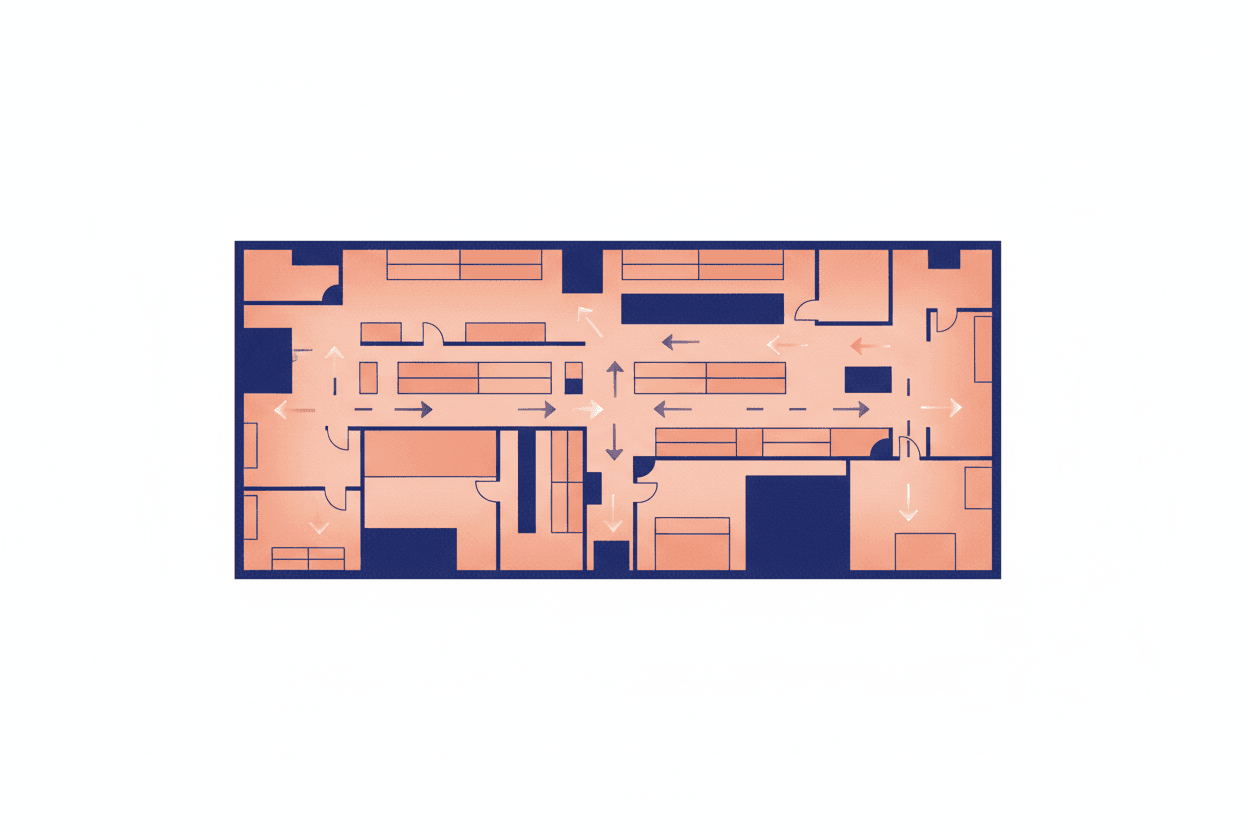
The grocery store layout is perhaps the most studied example of architectural behavioral control. Essential items — milk, eggs, bread — are invariably placed at the furthest points from the entrance. This isn't a supply chain convenience; it's a calculated strategy developed in the 1950s by retail psychologists who discovered that forced traversal increases impulse purchases by 40%.
“[!INSIGHT] The average supermarket carries approximately 39,000 items, but only 20% are intentionally sought by shoppers. The remaining 80% enter baskets through environmental triggers”
Every foot of travel is an opportunity for exposure. The pathway from produce to dairy is engineered to pass through high-margin departments: the bakery's aromatic display, the floral section's color psychology, the deli's visual abundance. By the time you reach the milk, your cognitive defenses have been methodically eroded.
Ceiling Heights and Cognitive Scope
Research conducted at the University of Minnesota's Carlson School of Management revealed that ceiling height directly affects thinking style. In a series of experiments, participants in high-ceilinged rooms demonstrated measurably more creative, abstract thinking, while those in low-ceilinged environments showed enhanced focus on concrete details.
“"The very spaces we inhabit are constantly whispering to our subconscious about how we should think, feel, and behave. Architecture is psychology frozen in physical form.”
This finding has profound implications. Luxury retailers favor soaring atriums to encourage aspirational thinking. Casinos keep ceilings low to maintain focus on gambling. Examination rooms are designed with oppressive heights that contract mental space into narrow, detail-oriented attention. The ceiling is never neutral.
The Casino Principle: Disorientation as Strategy
The Architecture of Timelessness
Casinos represent the apex of behavioral architecture. The removal of clocks and windows isn't aesthetic — it's temporal disorientation designed to dissolve the boundaries between "now" and "later." A 2020 analysis of casino design patterns found that windowless gambling floors increase average stay duration by 37% compared to naturally lit alternatives.
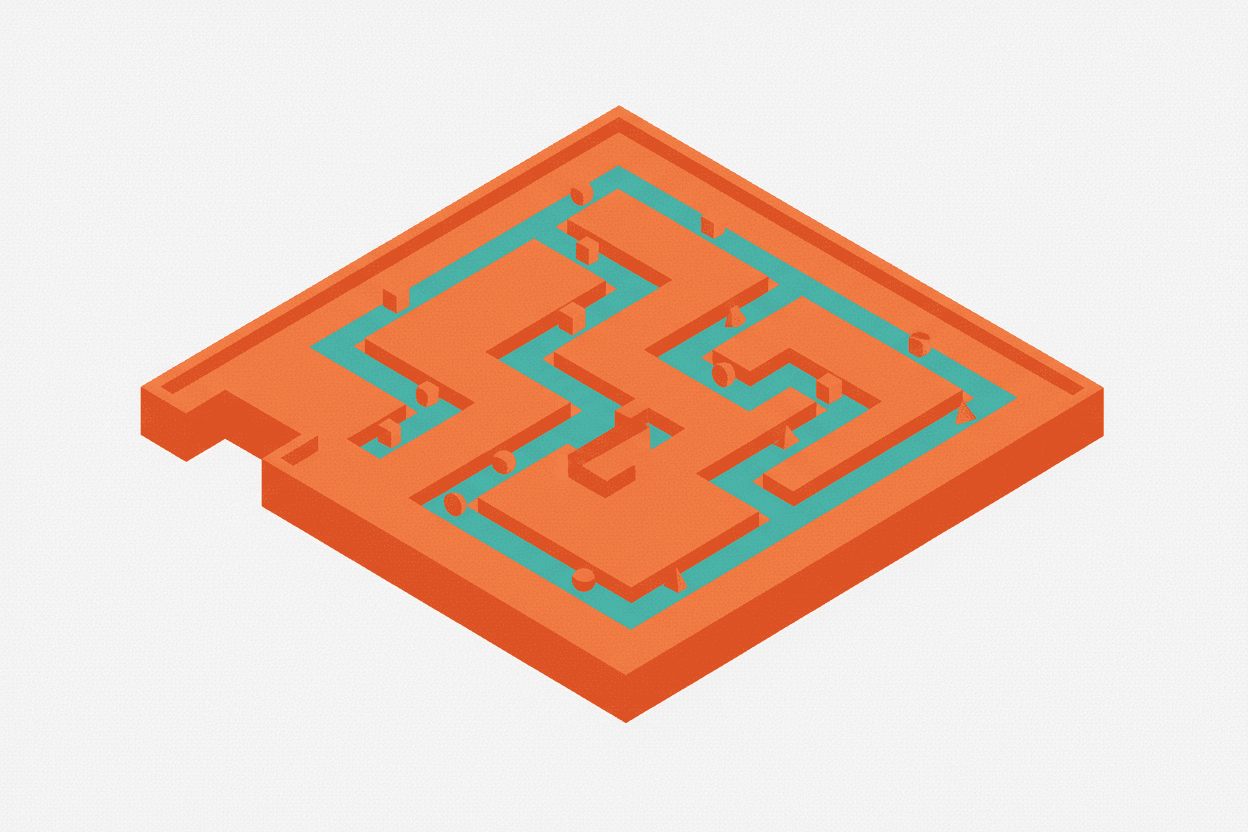
The carpet patterns in casinos are deliberately chaotic, designed to prevent eyes from settling. The maze-like floor plans lack straight sightlines, eliminating any sense of progression toward an exit. Even the ambient oxygen levels are reportedly elevated to maintain alertness without anxiety.
[!INSIGHT] The average casino visitor cannot accurately estimate their time spent gambling without external reference points. Studies show deviation from actual time ranges from 40% underestimation to complete temporal dissociation in 23% of subjects.
The McDonald's PlayPlace Strategy
The same principles that keep adults at slot machines apply to children in fast-food restaurants. The distinctive hard plastic seats, the enclosed tube structures, the bright primary colors — these are not merely playful design choices. They are bounded environments that allow children to expend energy within controlled parameters while parents remain captive consumers.
A 2018 study tracking family restaurant behavior found that the presence of a play area increased average adult stay by 22 minutes and raised per-visit spending by 31%. The children's architecture is actually the adults' revenue engine.
Healing by Design: The Hospital Color Study
The Surgery Green Standard
The specific shade of green found in operating rooms — known in the industry as "surgical green" — was not arbitrarily selected. In 1914, a San Francisco ophthalmologist named Harry Sherman discovered that after staring at red blood for extended periods, his visual system created green afterimages that interfered with his ability to see accurately.
By painting his operating room the precise complementary green (approximately 510 nanometers wavelength), Sherman neutralized this visual fatigue effect. The color became standard not because it was calming, but because it was functional. Yet the calming effect was a secondary benefit that extended throughout hospital design.
[!NOTE] Modern hospital design has evolved beyond surgical green into what researchers call "evidence-based design." A 2017 meta-analysis in Health Environments Research & Design Journal found that patients in rooms with natural views required 22% fewer pain medications and had 8.5% shorter hospital stays than those facing brick walls.
Wayfinding as Stress Reduction
Hospital corridors are notoriously confusing, but this isn't intentional manipulation — it's often poor design. Environmental psychologist Roger Ulrich's seminal work demonstrated that patient anxiety correlates directly with wayfinding difficulty. Hospitals that implemented clear signage systems, color-coded zones, and visual landmarks saw measurable reductions in patient stress hormones and increases in satisfaction scores.
The best hospitals now hire wayfinding consultants who apply the same behavioral principles casinos use for retention, but in reverse — to guide people efficiently toward their destinations.
The School That Makes You Focus
Open Plan vs. Enclosed Classrooms
The 1960s and 1970s saw a massive experiment in open-plan schools, where walls were eliminated to encourage collaborative learning. By the 1980s, these schools were being retrofitted with partitions at enormous expense. The environmental psychology research had caught up: excessive visual and auditory stimulation reduced student focus by measurable margins.
A comprehensive 2021 study of 400 British classrooms found that students in well-designed learning environments — accounting for natural light, noise levels, temperature, and spatial organization — progressed academically 25% faster than those in poorly designed spaces. The architecture of learning is the architecture of attention.
Implications: You Are Always Being Designed
The recognition that buildings are behavioral systems carries uncomfortable implications. If a supermarket can increase your spending by rearranging shelves, if a casino can extend your stay by removing windows, if a hospital can accelerate your healing by painting walls — then your autonomy is porous.
Environmental psychology reveals that perhaps 90% of our behavioral responses to space occur below conscious awareness. We notice when a room feels "wrong" but rarely identify why. We attribute our restlessness to internal states rather than fluorescent lighting. We credit our productivity to discipline rather than ceiling height.
[!NOTE] The architectural profession is increasingly incorporating behavioral data into design decisions. The emergence of "neuro-architecture" as a discipline represents the formalization of principles that casinos and retailers have applied for decades. The difference is that now the science is explicit.
Conclusion
Every building you enter is an argument about how you should behave. The architect may not have articulated it this way, but the argument is made nonetheless through ceiling heights, corridor widths, material textures, and sight lines. The question is not whether architecture influences behavior — 50 years of environmental psychology research confirms that it does. The question is whether you will recognize the influence.
Sources: Journal of Environmental Psychology (2019, retail behavior studies); University of Minnesota Carlson School of Management (ceiling height research); Health Environments Research & Design Journal (2017, hospital design meta-analysis); Building and Environment (2021, classroom design study); Ulrich, R.S. (1984), "View Through a Window May Influence Recovery from Surgery"; Meyers-Levy, J. & Zhu, R. (2007), "The Effect of Ceiling Height on Consumer Responses"