The Space Cleanup Race Nobody Is Funding
Removing one piece of space debris costs $100 million. With 27,000 trackable objects and no economic model, the orbital cleanup race faces financial collapse.
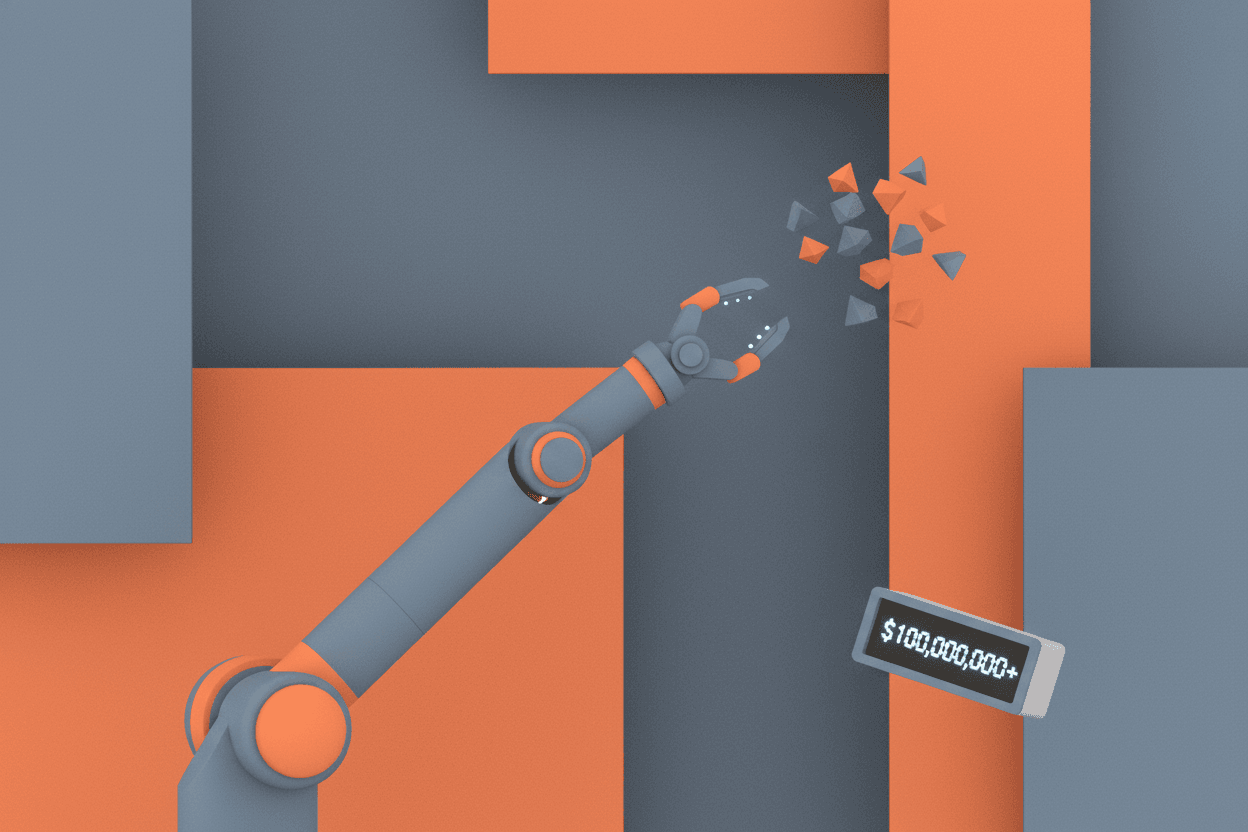
Removing one piece of large space debris costs an estimated $100 million. There are 27,000 trackable pieces. The math does not work. We are planning to clean up a landfill one piece of trash at a time — while everyone keeps throwing more in.
In 2024, the European Space Agency awarded ClearSpace a €100 million contract to remove a single Vega rocket payload adapter weighing just 112 kilograms. Meanwhile, satellite operators launched over 2,800 new objects into orbit that same year. The ratio of removal to addition is approximately 1:2,800. At this pace, clearing low Earth orbit would take roughly 75,000 years and cost $2.7 trillion — assuming nobody launches anything else.
The uncomfortable truth is that the space industry has built a business model around externalizing debris costs, and no amount of entrepreneurial innovation can overcome physics married to bad economics.
The Technology Race: Four Approaches, Zero Profit
ClearSpace-1: The Claw Strategy
The European Space Agency's ClearSpace-1 mission, now delayed to 2026, represents the most high-profile debris removal attempt. The Swiss-Japanese venture ClearSpace designed a four-armed robotic claw to capture the Vega Secondary Payload Adapter — a 112-kilogram piece of junk orbiting at 500 kilometers altitude.
The technology is elegant. The spacecraft approaches its target, deploys articulated arms, grabs the debris, and then performs a controlled deorbit burn. Both the chaser and the captured object burn up in Earth's atmosphere.
[!INSIGHT] ClearSpace-1's €100 million price tag covers a single removal. To make the business case work, the company would need to bring per-object costs below $10 million while securing a pipeline of at least 100 removals annually — a volume that would require regulatory mandates that do not exist.
The mission has faced repeated delays due to secondary payload constraints and technical refinements. More critically, ClearSpace has not announced a second paying customer beyond ESA.
Astroscale ELSA-d: Magnetic Capture
Japanese startup Astroscale completed a landmark demonstration in 2021 with its ELSA-d mission. The spacecraft successfully deployed a client satellite, tracked it, and captured it using magnetic docking technology. The test validated rendezvous and proximity operations — the delicate dance of approaching uncooperative objects in orbit.
“"We proved the technology works. What we haven't proved is who pays for it.”
Astroscale's approach requires target objects to have magnetic docking plates — viable for future satellites but useless for the 27,000 pieces of existing debris. This creates a paradox: the technology works best for debris that hasn't been created yet.
D-Orbit: The Italian Contender
Italian company D-Orbit has pursued a different angle with its ION Orbital Transfer Vehicle. Rather than dedicated debris removal, D-Orbit focuses on satellite servicing and last-mile delivery — building the infrastructure for orbital logistics that could eventually support cleanup operations.
The company completed its first commercial mission in 2021 and has since launched multiple ION vehicles. But debris removal remains a future service, not a current revenue stream. D-Orbit's public filings show the company deriving income from satellite deployment and hosted payloads, with cleanup remaining in the R&D phase.
DARPA's Laser Gambit
The United States Defense Advanced Research Projects Agency has explored ground-based and space-based laser systems for debris manipulation. The concept involves using photon pressure to gradually alter debris orbits, nudging objects toward atmospheric reentry over weeks or months.
A 2023 DARPA study estimated that a space-based laser system could handle small debris (1-10 centimeters) at approximately $1,000 per object — a dramatic cost reduction. However, the same technology could disable enemy satellites, raising arms control concerns that have stalled international cooperation.
[!NOTE] Laser debris removal faces dual-use scrutiny. The same systems that nudge space junk could blind reconnaissance satellites, making international agreements essential — and currently nonexistent.
The Economic Impossibility
The fundamental problem is not technological but financial. Current estimates suggest:
- Large debris removal (robotic capture): $50-150 million per object
- Small debris mitigation (laser/light sails): $1,000-10,000 per object (theoretical)
- Annual new debris creation: 2,500-3,000 tracked objects
- Annual debris removal capacity (current): 1-2 objects
[!INSIGHT] The space industry operates under a tragedy of the commons dynamic. Satellite operators pay $50-100 million to launch but face no debris disposal fees. Without cost internalization, the economic incentive for cleanup is zero.
A 2022 study by the Organization for Economic Cooperation and Development calculated that debris removal costs would need to fall below $1 million per object to achieve market-driven remediation. Current costs are 50-150 times higher.
Why Nobody Is Writing Checks
Three structural barriers prevent meaningful funding:
1. No Liability Trigger. Under the 1972 Liability Convention, launching states bear responsibility for debris damage. However, proving causation is nearly impossible. When two satellites collide, attributing fault requires tracking each fragment's origin — a forensic capability that does not exist.
2. No Disposal Mandates. The FCC and other regulators now require satellites to deorbit within five years of mission end. But this applies only to new spacecraft. The 27,000 existing objects face no removal requirement, and their operators — many defunct — bear no ongoing obligation.
3. No Insurance Leverage. Space insurance covers launch and operational failures, not debris liability. Premiums do not reflect debris risk, removing the market mechanism that drives safety in other industries.
“"We've created a system where everyone owns the problem and no one pays for it. That's not a market failure”
The Consequence of Inaction
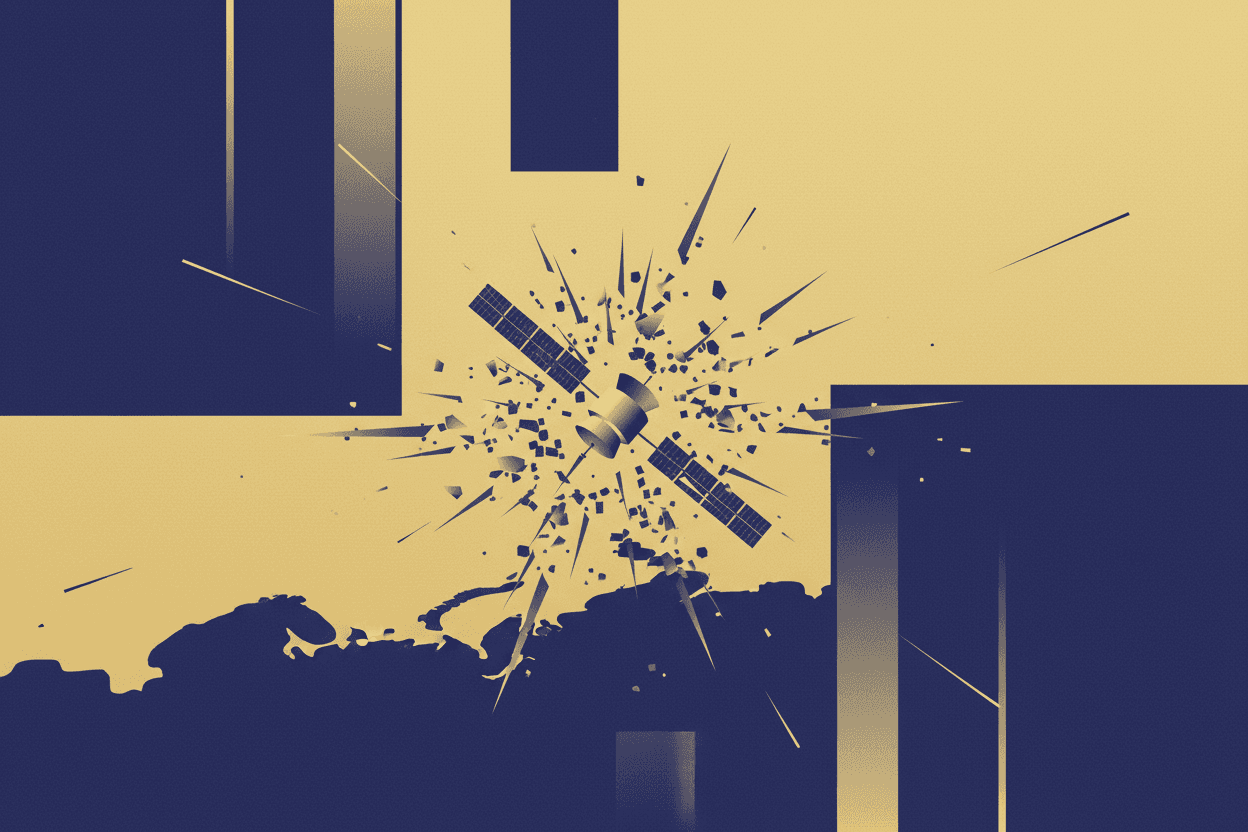
The Kessler Syndrome — a cascading collision cascade that renders entire orbital shells unusable — is no longer theoretical. In February 2009, an Iridium communications satellite collided with a defunct Russian Cosmos satellite, creating over 2,000 pieces of trackable debris. In March 2021, a Chinese satellite shattered into 3,500 fragments.
Each collision increases collision probability for remaining objects. The feedback loop is exponential.
[!NOTE] Current tracking systems monitor objects larger than 10 centimeters. An estimated 1 million objects between 1-10 centimeters orbit untracked — each traveling at 28,000 kilometers per hour with kinetic energy equivalent to a hand grenade.
The economic stakes are substantial. A 2021 study by the European Space Agency estimated that a Kessler Syndrome event in low Earth orbit would destroy $1 trillion in satellite assets and eliminate services from GPS to climate monitoring for decades.
What Would Actually Work
Solving the space debris problem requires confronting the economic structure, not just launching better robots:
Orbital Fees. Charging satellite operators an annual fee based on collision probability would internalize debris costs. A $100,000 annual fee on the 6,000 operational satellites would generate $600 million — enough to fund 6-10 removal missions yearly.
** Salvage Rights.** Adapting maritime law to space would allow companies to claim ownership of abandoned debris, creating property rights where none exist. Salvage operators could sell removal services to the original owners or harvest valuable materials.
Mandatory Insurance. Requiring debris liability coverage would force insurers to price collision risk, creating market pressure for safer orbits. Satellites in crowded shells would face higher premiums, encouraging dispersal and deorbiting.
Sources: European Space Agency Space Debris Office Annual Report 2024; OECD Space Forum Working Paper on Orbital Debris Remediation; ClearSpace SA mission documentation; Astroscale Holdings investor presentations; DARPA Tactical Technology Office debris mitigation studies; Journal of Space Safety Engineering, Vol. 9, Issue 3; United Nations Office for Outer Space Affairs Liability Convention archives; ESA Space Environment Report 2023.
This is a Premium Article
Hylē Media members get unlimited access to all premium content. Sign up free — no credit card required.