The Dutch Machine That Runs the World
One Dutch company holds a global monopoly on the machines that make advanced chips. No ASML, no AI, no smartphones. Here is how they built the impossible.
The Invisible Giant
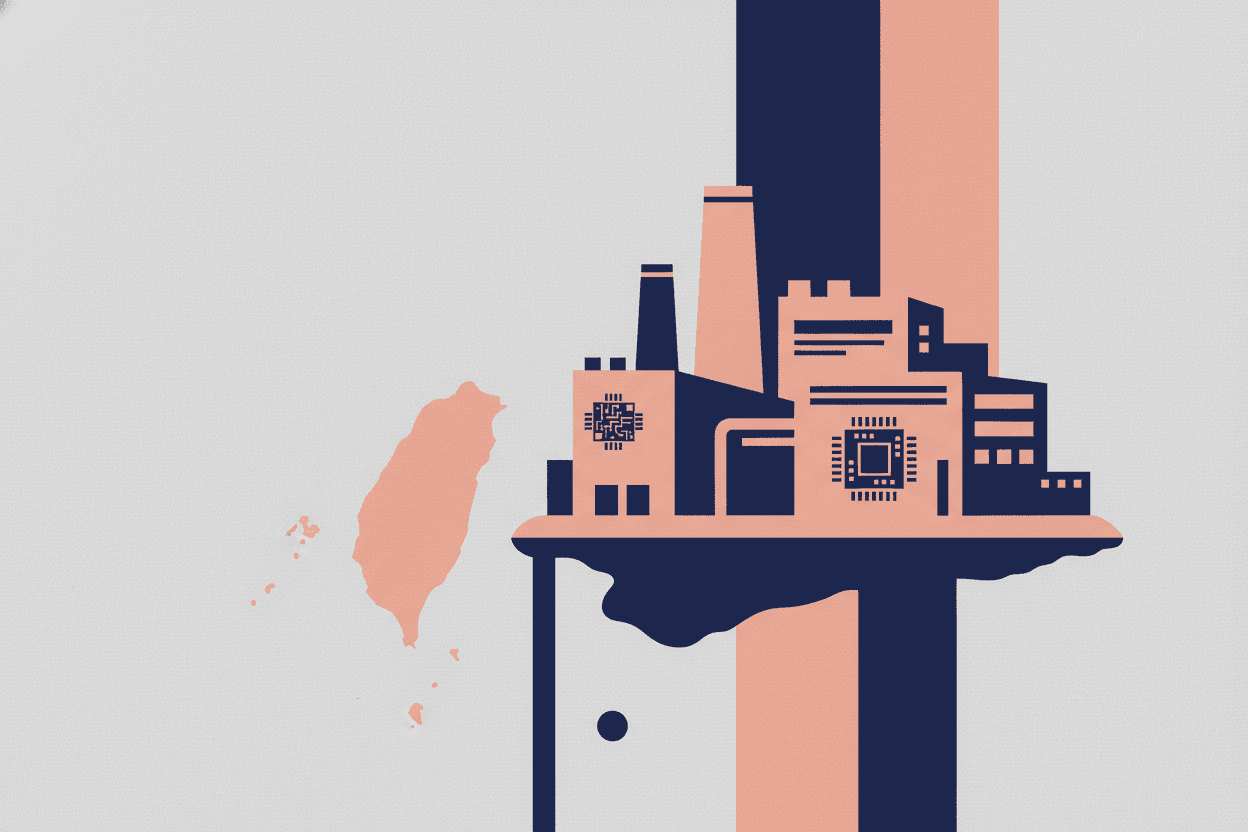
There is one company on earth that makes the machines used to make advanced semiconductors. It is based in the Netherlands, employs 42,000 people, and has a market cap larger than Goldman Sachs. You have almost certainly never heard of ASML. You use its product every 30 seconds.
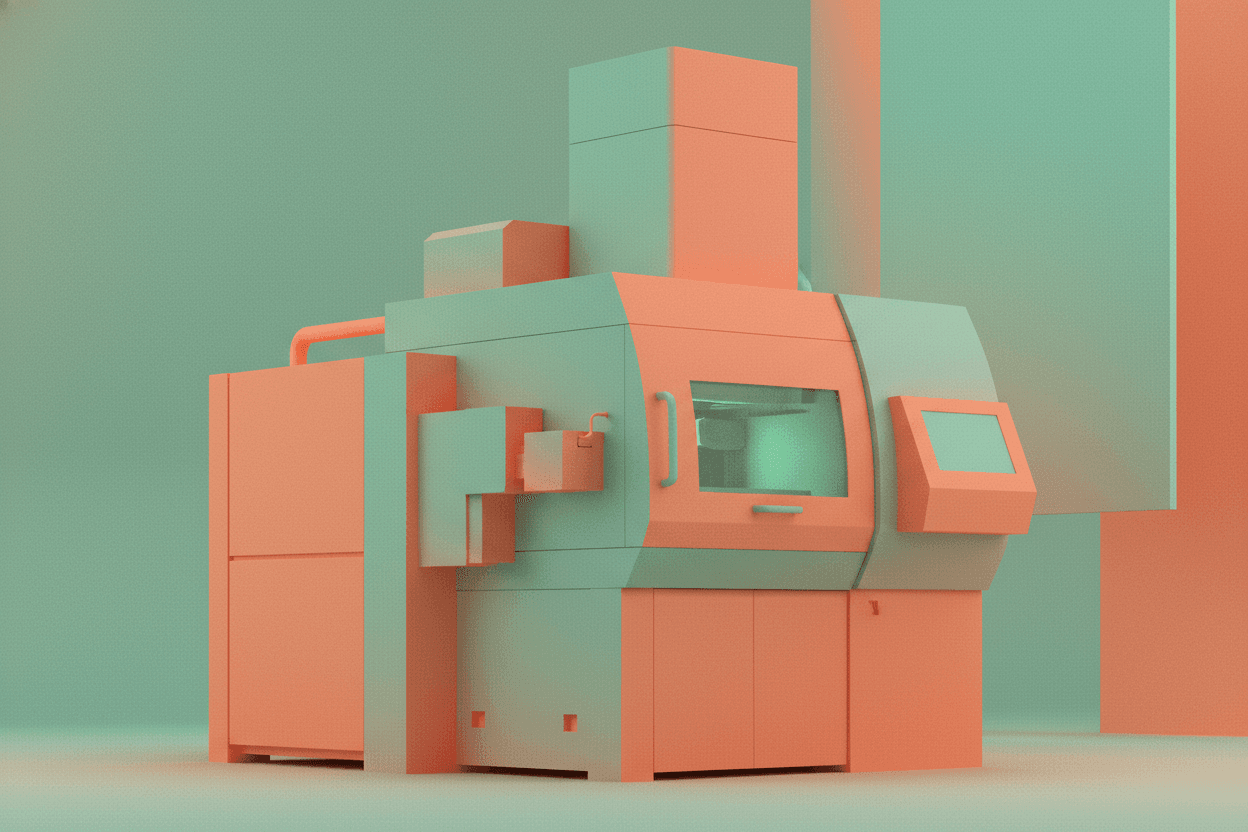
Consider this: a single ASML extreme ultraviolet (EUV) lithography machine costs $380 million, requires 13 months to assemble, arrives in 40 shipping containers, and contains over 100,000 individual components sourced from dozens of countries. As of 2024, ASML holds a 100% market share for EUV lithography systems worldwide. No other company on Earth can build one. Without these machines, nothing below a 7-nanometer chip can be manufactured at scale—and that means no NVIDIA H100 GPUs, no Apple A17 processors, no modern defense systems, and certainly no artificial intelligence revolution.
The question that should keep geopolitical strategists awake at night: What happens when a single company in a small European nation effectively controls the technological ceiling of human progress?
The Physics of Impossible Precision
To understand why ASML has no competitors, you first need to understand what EUV lithography actually demands. Traditional lithography uses deep ultraviolet light with a wavelength of 193 nanometers to etch circuit patterns onto silicon wafers. But as transistors shrank below 7 nanometers, that wavelength became too blunt—a painter trying to draw eyelashes with a house paintbrush.
EUV light operates at 13.5 nanometers, roughly one-fourteenth the wavelength of its predecessor. This is where physics turns into a nightmare. EUV light does not occur naturally in any useful quantity. ASML had to engineer a way to generate it artificially.
[!INSIGHT] To produce EUV light, ASML fires a carbon dioxide laser at tiny droplets of molten tin 50,000 times per second. Each droplet is hit twice—first to flatten it into a pancake shape, then to vaporize it into plasma that emits 13.5nm light. The precision required exceeds anything in manufacturing history.
The result is a machine that operates at the boundaries of quantum mechanics. The EUV light travels through a near-vacuum because air itself would absorb it. The mirrors inside the machine are the flattest objects ever manufactured—if scaled to the size of Germany, their largest imperfection would be less than a millimeter.
“*"This is the most complex machine humanity has ever built. There is no close second.”
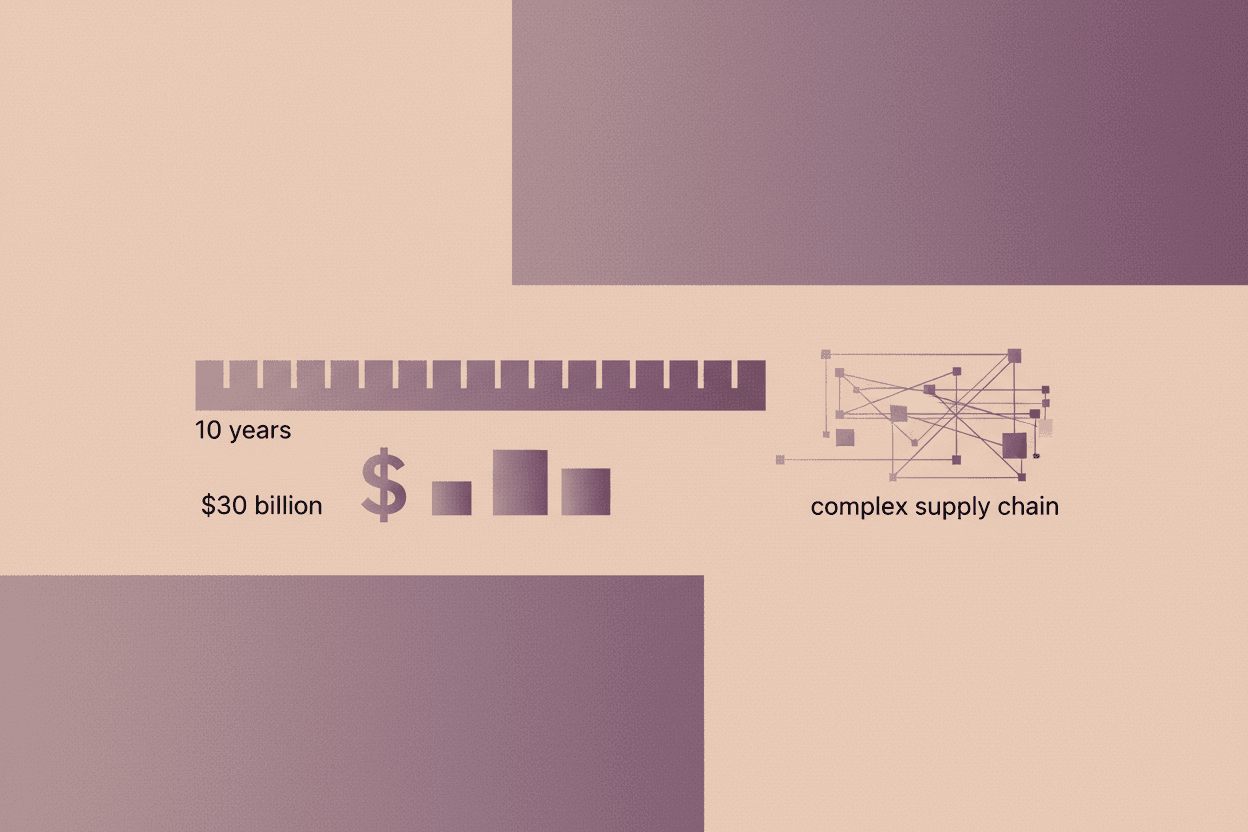
ASML spent $9 billion and 17 years developing EUV technology before shipping its first commercial system in 2017. The R&D timeline alone represents a moat that no competitor has proven capable of crossing.
The Accidental Monopoly
ASML did not set out to become a monopoly. The company was spun out of Philips in 1984, a time when Japanese firms like Nikon and Canon dominated lithography. For two decades, ASML was an underdog scrambling for market share.
Three strategic decisions created today's concentration of power:
-
The EUV Bet (1997-2017): When Intel, Samsung, and TSMC formed the EUV LLC consortium to develop next-generation lithography, ASML committed resources its competitors would not match. Nikon and Canon pursued incremental improvements to existing technology instead.
-
The Cymer Acquisition (2013): ASML spent $2.6 billion to acquire its primary light source supplier, vertically integrating the most difficult component of EUV systems.
-
The Customer Partnership Model: ASML allowed its largest customers—TSMC, Samsung, and Intel—to buy equity stakes in the company, aligning incentives and locking in demand before the technology even worked.
[!NOTE] Today, TSMC operates approximately 70% of the world's EUV machines. The symbiotic relationship between ASML and TSMC means that nearly every advanced chip manufactured passes through both companies' hands.
The result is a concentration of capability with no historical precedent. In 2023, ASML shipped 53 EUV systems. Every single one was manufactured in Veldhoven, Netherlands. There is no backup. There is no alternative supplier. There is no "Plan B."
The Geopolitical Chokepoint
The United States government understands what most people do not: whoever controls ASML's EUV machines controls the future of computing.
In 2019, the Trump administration pressured the Dutch government to block ASML from shipping its most advanced EUV systems to China. The Biden administration expanded these restrictions in 2022 and again in 2023, effectively freezing China's domestic chip manufacturing capability at the 7nm node.
[!INSIGHT] China has invested over $150 billion in semiconductor self-sufficiency since 2014. Despite this, domestic manufacturers like SMIC still cannot produce EUV lithography systems. The 17-year head start ASML enjoys cannot be purchased or accelerated.
The implications extend beyond commerce. Modern military systems—from F-35 fighter jets to missile guidance computers to encrypted communications—depend on advanced semiconductors. A nation without access to sub-7nm chips cannot build state-of-the-art defense systems. It cannot compete in artificial intelligence. It cannot operate at the technological frontier.
This is why export controls on ASML machines represent one of the most significant economic sanctions in history, even if the public rarely discusses them.
The Fragile Single Point of Failure
ASML's monopoly creates unprecedented efficiency for the semiconductor industry, but it also creates unprecedented risk.
A single factory in Veldhoven produces every EUV machine on Earth. A single supply chain disruption—whether from natural disaster, geopolitical conflict, or corporate mismanagement—could halt the advancement of global computing for years. You cannot simply build another factory. The institutional knowledge embedded in ASML's workforce of 42,000 people represents irreplaceable human capital.
“*"If ASML disappeared tomorrow, the world would run out of advanced chips in about 18 months. After that, we would be back to 2015 technology levels for a decade or more.”
The company itself acknowledges the strange position it occupies. CEO Peter Wennink noted in his final shareholder letter before retirement: "We are a company that nobody knows, but everybody needs."
Sources: ASML Annual Reports 2020-2024, Congressional Research Service Semiconductor Supply Chain Analysis, MIT Technology Review EUV Investigation, Bloomberg Semiconductor Industry Database, Center for Strategic and International Studies Technology Reports