Why Boredom Is the Most Underrated Cognitive State
Your brain's creative network only activates during downtime. Discover why constant stimulation may be starving your most innovative thinking.
The Hidden Cost of Constant Stimulation
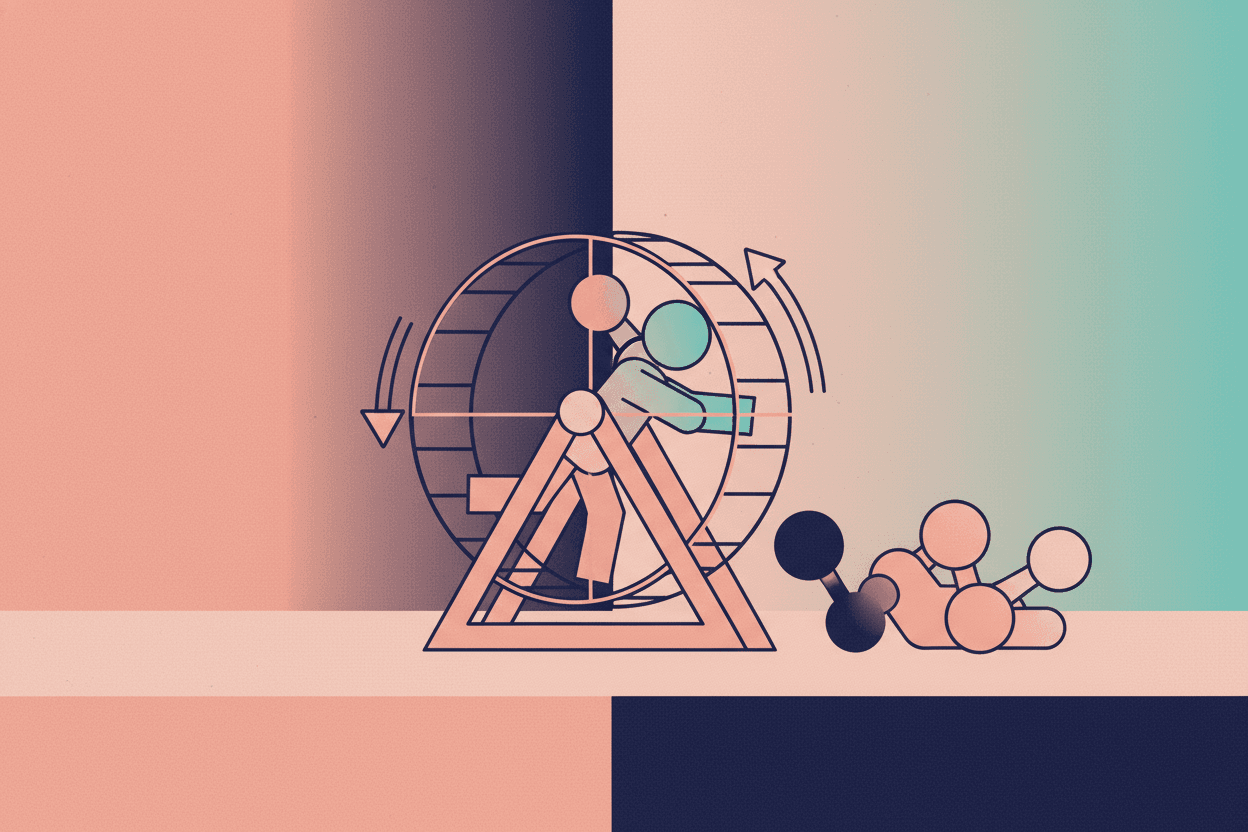
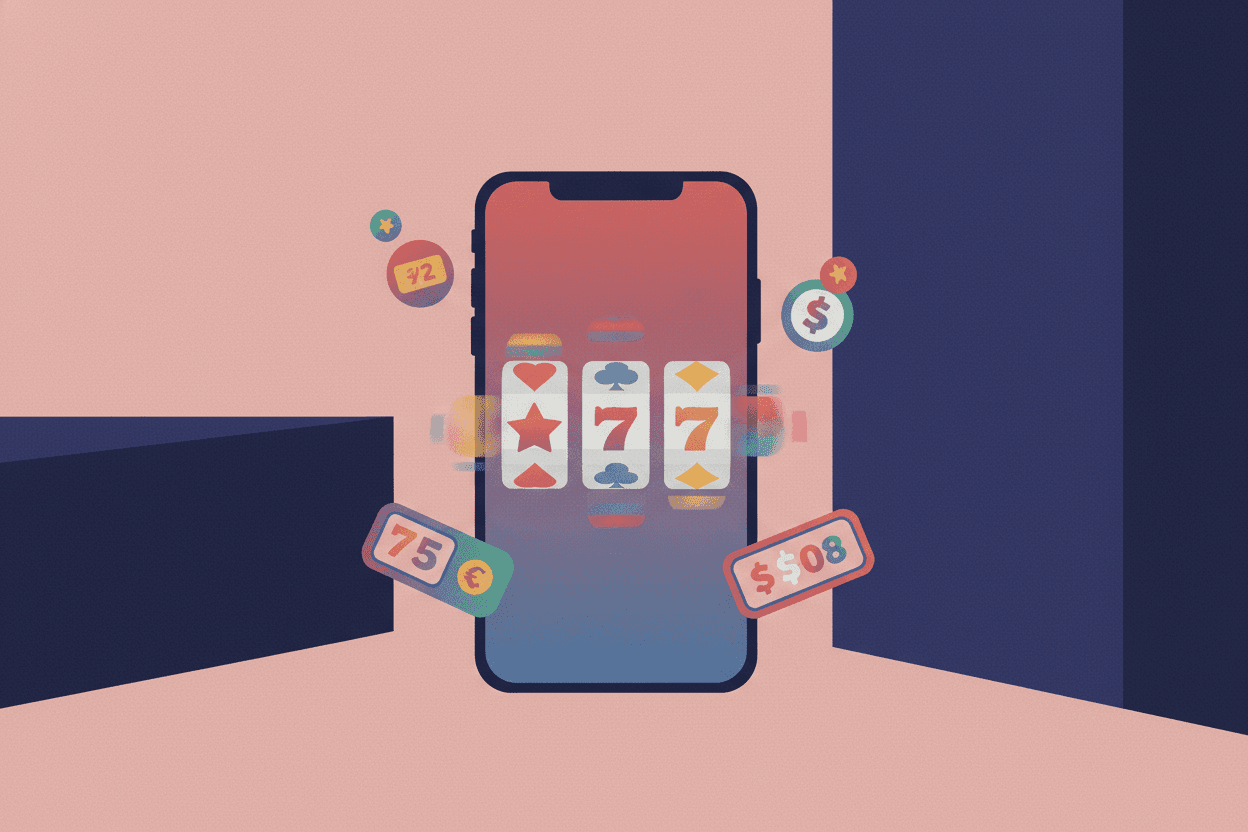
Your brain's most creative network only activates when you're bored. Constant stimulation doesn't fuel creativity — it starves it. In 2024, the average American spends over 7 hours daily on screens, with the typical person checking their phone 144 times per day. Yet neuroscientists have discovered that this perpetual engagement comes at a devastating cognitive cost: we are systematically suppressing the very brain network responsible for our most original ideas.
The Default Mode Network: Your Brain's Creative Engine
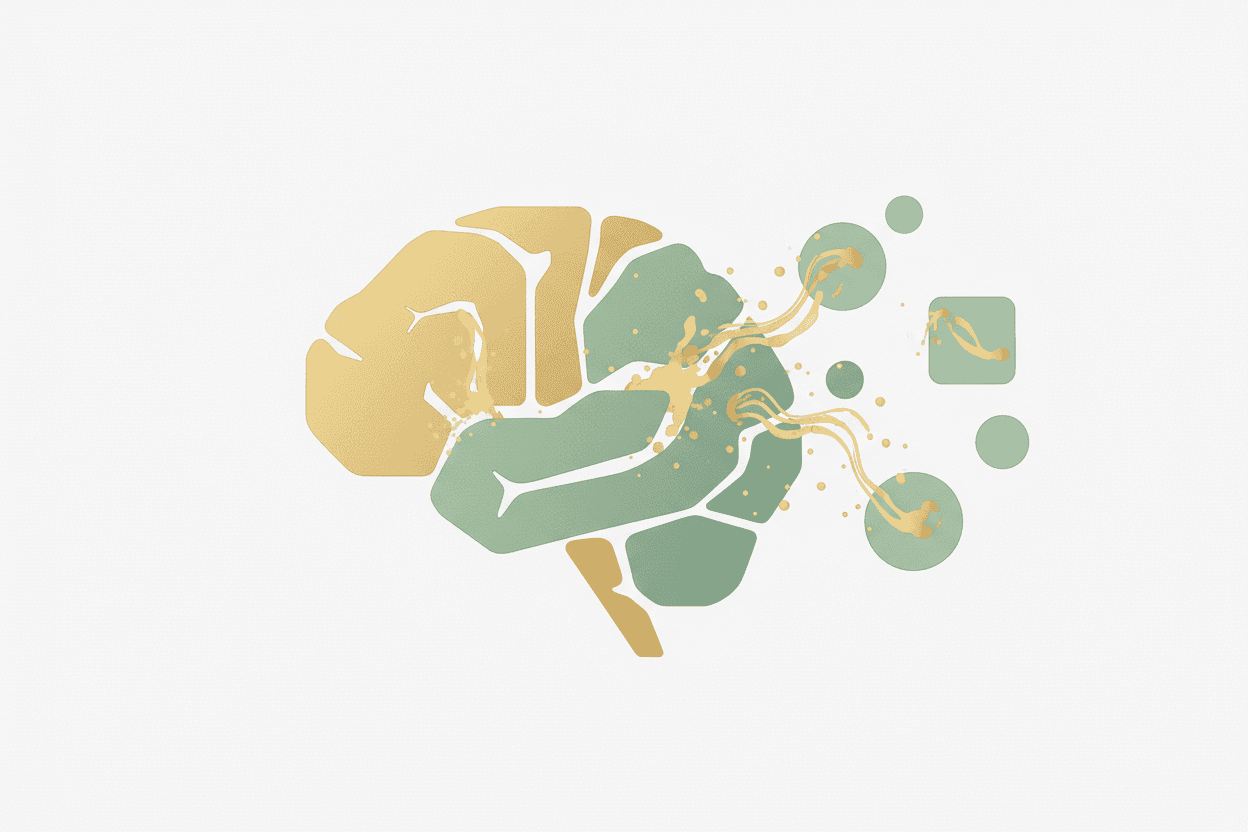
Beneath the surface of conscious thought lies a sophisticated neural architecture that neuroscientists call the Default Mode Network, or DMN. First identified by neurologist Marcus Raichle at Washington University in 2001, this network comprises interconnected regions including the medial prefrontal cortex, the posterior cingulate cortex, and the angular gyrus. These areas share a curious property: they become most active precisely when we appear to be doing nothing.
[!INSIGHT] The DMN consumes approximately 20% of the brain's total energy budget despite representing a network that activates primarily during rest. This massive metabolic investment suggests evolution has endowed this system with critical survival functions.
When you sit in a quiet room, stare out a window, or walk without headphones, your DMN springs into action. It engages in what researchers call "self-generated cognition" — mental activities like autobiographical memory retrieval, imagining future scenarios, considering others' perspectives, and generating spontaneous ideas. A landmark 2022 study published in Nature Communications found that participants who experienced controlled boredom for just 10 minutes subsequently demonstrated 41% higher scores on divergent thinking tests compared to those who had been continuously entertained.
The mechanism works through a phenomenon neuroscientists term "stimulus-independent thought." When external inputs flood our senses, the brain's attention networks — particularly the dorsal attention system — suppress DMN activity to focus on processing incoming information. This suppression is adaptive when genuine threats or opportunities demand our focus, but becomes maladaptive when constant digital stimulation keeps these attention networks permanently engaged.
“*"The DMN is not a passive state. It is an active, metabolically expensive process that appears essential for constructing coherent narratives about ourselves and generating novel solutions to complex problems.”
How Chronic Overstimulation Silences Your Inner Voice
The neuroscience reveals a troubling picture of modern cognitive habits. Functional MRI studies demonstrate that heavy media multitaskers show reduced connectivity within the DMN and weaker coupling between the DMN and executive control networks. A 2023 investigation in Cerebral Cortex found that participants who reported higher daily smartphone use exhibited significant thinning in cortical regions associated with the DMN, particularly in areas linked to self-referential processing and episodic memory construction.
The implications extend beyond individual creativity. The DMN plays a crucial role in what psychologists call "self-projection" — the capacity to imagine alternative versions of oneself and potential futures. When this network remains chronically suppressed, people report feeling stuck, purposeless, and disconnected from their core values. Research from Harvard's Daniel Schacter has shown that the same neural mechanisms we use to remember the past are employed to simulate possible futures. Diminished DMN function doesn't just impair creativity; it impairs our ability to envision paths forward in our lives.
The Boredom Recovery Protocol
Understanding the neuroscience allows us to design interventions that restore healthy DMN function. The evidence suggests a counterintuitive approach: deliberately cultivating boredom as a cognitive resource rather than avoiding it.
1. Create Daily Unstimulated Windows
Schedule 15-30 minute periods with no screens, music, podcasts, or reading. Walking without headphones, sitting with morning coffee without checking notifications, or commuting in silence all qualify. The key is removing external input while remaining awake and alert.
2. Practice Resistive Patience
When waiting in line, sitting in traffic, or experiencing a lull in activity, resist the urge to fill the gap with your phone. Studies show that the initial discomfort of boredom typically subsides within 2-3 minutes, after which DMN activation increases significantly.
3. Protect Transitions
The moments between activities — finishing work and starting dinner, ending one meeting and beginning another — are prime opportunities for DMN engagement. Instead of checking email during these transitions, allow your mind to wander naturally.
[!NOTE] Research from the University of Central Lancashire found that participants who engaged in boring tasks (copying phone numbers from a directory) subsequently outperformed control groups on creative idea generation tasks by nearly 35%. The boring activity appears to prime the DMN for productive mind-wandering.
Reclaiming the Lost Art of Doing Nothing
The cultural devaluation of boredom represents a profound misunderstanding of cognitive architecture. Every creative breakthrough, every moment of self-insight, every carefully constructed life plan emerges from the same neural source: a brain network that requires quiet to function. By treating every spare moment as an opportunity for consumption, we inadvertently silence our most generative cognitive capacity.
This is not an argument against technology or stimulation in all forms. Directed attention and focused engagement remain essential for executing plans and learning new information. The problem lies in imbalance — in the systematic elimination of the cognitive rest periods that allow the DMN to perform its essential functions.
Sources: Raichle, M.E. et al. (2001). "A default mode of brain function." PNAS; Immordino-Yang, M.H. et al. (2012). "Rest is not idleness." Perspectives on Psychological Science; Mann, S. & Cadman, R. (2014). "Does being bored make us more creative?" Creativity Research Journal; Harvard University Center on the Developing Child; Nature Communications (2022). "Spontaneous thought and the default network."