Your Brain on Fire: The Inflammation Hypothesis
Groundbreaking research reveals depression may be an inflammatory disorder. Patients receiving anti-inflammatory treatment report dramatic mood improvements.
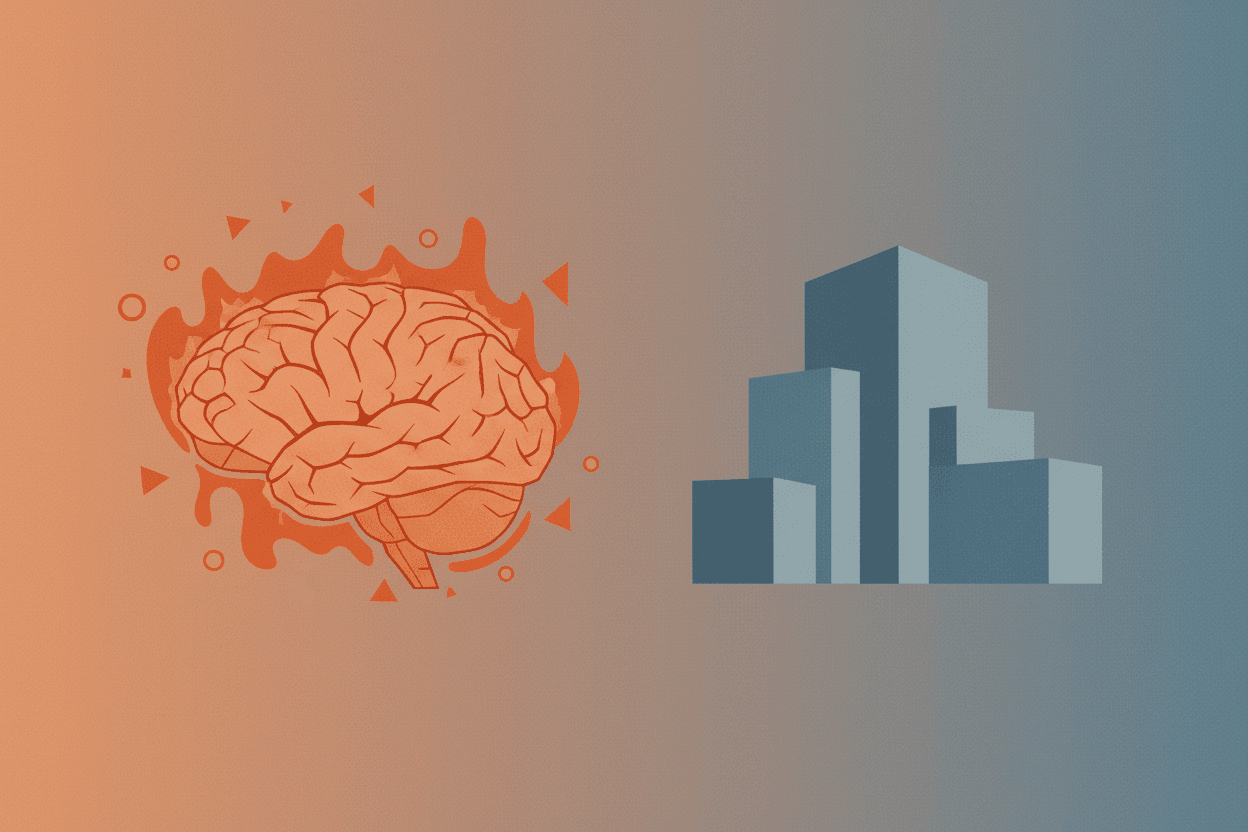
Patients with rheumatoid arthritis who receive anti-inflammatory biologics report dramatic mood improvements — even when they weren't being treated for depression. This unexpected finding, first documented in a 2016 clinical trial, has sparked a revolutionary shift in how researchers understand mental illness: what if depression isn't primarily a chemical imbalance, but an inflammatory condition?
Consider the numbers: meta-analyses now show that depressed patients have, on average, 30-50% higher levels of inflammatory markers like C-reactive protein (CRP) and interleukin-6 (IL-6) compared to healthy controls. Even more striking, approximately 45% of treatment-resistant depression patients show elevated inflammation — suggesting nearly half of those who don't respond to standard antidepressants may be fighting a fundamentally different biological battle.
The question that haunts psychiatry: has mainstream medicine been treating the wrong target for decades?
The Cytokine Signature of Suffering
The inflammation hypothesis of depression didn't emerge overnight. It began with a curious observation in the 1980s: cancer patients receiving interferon therapy frequently developed severe depressive symptoms — sometimes within hours of their first injection. These weren't psychological reactions to a cancer diagnosis; they were direct neurobiological effects of inflammatory cytokines crossing the blood-brain barrier.
The Molecular Culprits
Three key inflammatory markers consistently appear in depression research:
Interleukin-6 (IL-6): This cytokine serves as both a marker and mechanism. Studies show that directly injecting IL-6 into healthy volunteers induces fatigue, social withdrawal, and depressive cognition within hours. In depressed patients, IL-6 levels correlate with symptom severity and predict treatment resistance.
C-Reactive Protein (CRP): This acute-phase protein reflects systemic inflammation. A landmark 2021 study of 14,000 patients found that CRP levels above 3 mg/L were associated with a 67% higher risk of suicide attempts. Critically, high-CRP depression presents differently: more physical symptoms, more psychomotor retardation, and markedly poorer response to SSRIs.
Tumor Necrosis Factor-alpha (TNF-α): Originally discovered as a cancer-fighting molecule, TNF-α now appears central to mood regulation. Elevated TNF-α reduces serotonin synthesis, damages hippocampal neurons, and activates the brain's microglia — the neural immune cells that can turn from protectors into attackers.
[!INSIGHT] The direction of causality appears to run both ways. Psychological stress triggers inflammatory responses through the sympathetic nervous system, creating a vicious cycle where inflammation worsens mood, which increases stress, which amplifies inflammation.
The Autoimmune Connection
The comorbidity data is unambiguous. Patients with autoimmune conditions experience depression at rates 2-3 times higher than the general population:
| Condition | Depression Prevalence |
|---|---|
| Rheumatoid Arthritis | 38-42% |
| Lupus (SLE) | 30-50% |
| Inflammatory Bowel Disease | 25-35% |
| Multiple Sclerosis | 36-54% |
This isn't simply the psychological burden of chronic illness. When researchers control for pain, disability, and quality of life, the inflammatory component still independently predicts depression risk. The immune system itself appears to be generating depressive symptoms.
“"When we block inflammation, we see mood improve in ways that traditional antidepressants cannot achieve. This tells us we're hitting a different target”
From Theory to Treatment: The Anti-Cytokine Revolution
The most compelling evidence for the inflammation hypothesis comes from intervention studies. If inflammation causes depression, then reducing inflammation should treat it.
The Infliximab Breakthrough
In a pivotal 2013 study, researchers administered infliximab — a TNF-α blocker typically used for rheumatoid arthritis and Crohn's disease — to treatment-resistant depression patients. The overall results showed no significant benefit compared to placebo. But when researchers examined the subgroup with elevated baseline CRP (above 5 mg/L), the results were striking: infliximab produced rapid, significant improvement in depressive symptoms.
This wasn't a failure — it was precision medicine in action. The treatment worked, but only for the patients with the inflammatory phenotype.
Minocycline and the Microglial Mind
Minocycline, an antibiotic that crosses the blood-brain barrier and suppresses microglial activation, has shown promise in multiple depression trials. A 2020 meta-analysis found moderate-to-large effect sizes for depressive symptom reduction, particularly in patients with markers of neuroinflammation.
The implications extend beyond depression. Minocycline is now being investigated for:
- Schizophrenia negative symptoms
- Bipolar depression
- Obsessive-compulsive disorder
- Post-traumatic stress disorder
Omega-3 and the Inflammation Balance
Not all anti-inflammatory approaches require pharmaceuticals. Omega-3 fatty acids, particularly EPA, demonstrate consistent antidepressant effects in meta-analyses — but only at doses exceeding 1 gram daily and primarily in patients with elevated inflammatory markers.
The mechanism involves shifting the body's production from pro-inflammatory to anti-inflammatory eicosanoids. High-EPA supplementation effectively competes with arachidonic acid, reducing the substrate for inflammatory prostaglandins and leukotrienes.
[!NOTE] NSAIDs like ibuprofen have shown mixed results in depression trials. One theory: these drugs may reduce beneficial inflammation in the gut microbiome while failing to adequately penetrate the blood-brain barrier where neuroinflammation occurs.
The Stress-Inflammation Spiral
Why would the immune system generate depressive symptoms at all? The evolutionary logic becomes clearer when we consider sickness behavior.
When early humans faced infection, withdrawal from social activity, reduced energy, and loss of appetite served protective functions — conserving resources for immune function and preventing disease spread. Depression, in this framework, may represent a maladaptive activation of an ancient defensive program.
Modern stressors trigger the same pathways. The HPA axis, when chronically activated by psychological stress, releases cortisol. Paradoxically, chronic cortisol exposure can desensitize glucocorticoid receptors on immune cells, causing inflammation to rage unchecked — a state researchers call "cortisol resistance."
The Brain's Immune Awakening
Microglia comprise 10-15% of all brain cells. Long considered passive structural support, these cells are now recognized as dynamic agents of neuroplasticity — for better and worse.
Activated microglia:
- Prune synapses excessively, reducing neural connectivity
- Release reactive oxygen species that damage neurons
- Produce quinolinic acid, a neurotoxin that agonizes NMDA receptors
- Reduce production of BDNF, the protein essential for neurogenesis
PET imaging using microglial activation markers now allows researchers to visualize neuroinflammation in living patients. Studies consistently show elevated microglial activity in the prefrontal cortex and anterior cingulate of depressed patients — regions critical for motivation, pleasure, and emotional regulation.
Clinical Implications: A New Diagnostic Era
The inflammation hypothesis demands a fundamental restructuring of psychiatric diagnosis and treatment.
Stratified Psychiatry
The term "depression" likely encompasses multiple biological conditions with overlapping symptoms. Inflammatory depression may represent one distinct subtype, characterized by:
- Elevated CRP, IL-6, or TNF-α
- Somatic symptom dominance (fatigue, psychomotor slowing)
- Anhedonia out of proportion to mood sadness
- Poor response to first-line SSRIs
- Comorbid inflammatory conditions or high-stress exposure
For these patients, anti-inflammatory interventions — whether biologics, minocycline, omega-3s, or lifestyle modifications — may prove more effective than traditional antidepressants.
Lifestyle as Immunomodulation
The inflammation framework also validates lifestyle interventions that have long resisted easy explanation:
Exercise: A single exercise session increases anti-inflammatory myokine release. Regular exercise reduces baseline CRP by 30-40%.
Sleep: Sleep deprivation increases IL-6 and TNF-α by 40-60%. Chronic insomnia is associated with persistent low-grade inflammation.
Meditation: An 8-week mindfulness program reduced pro-inflammatory gene expression in a controlled trial, with effects persisting at one-year follow-up.
Diet: The Mediterranean diet — high in omega-3s, polyphenols, and fiber — reduces CRP by approximately 25% and shows consistent antidepressant effects in observational studies.
Sources: Miller AH, et al. (2016). Inflammation and its discontents: the role of cytokines in the pathophysiology of major depression. Biological Psychiatry. Raison CL, et al. (2013). A randomized controlled trial of the tumor necrosis factor antagonist infliximab for treatment-resistant depression. JAMA Psychiatry. Enache D, et al. (2019). depressive symptoms and CRP: A meta-analysis of longitudinal studies. Molecular Psychiatry. Köhler CA, et al. (2018). Peripheral cytokine and chemokine alterations in depression: a meta-analysis of 82 studies. Acta Psychiatrica Scandinavica.
This is a Premium Article
Hylē Media members get unlimited access to all premium content. Sign up free — no credit card required.