Your Children's DNA Will Be a Choice
By 2030, editing embryos won't just prevent disease—it'll offer enhancement. The ethical firestorm of designer babies starts with a simple question.
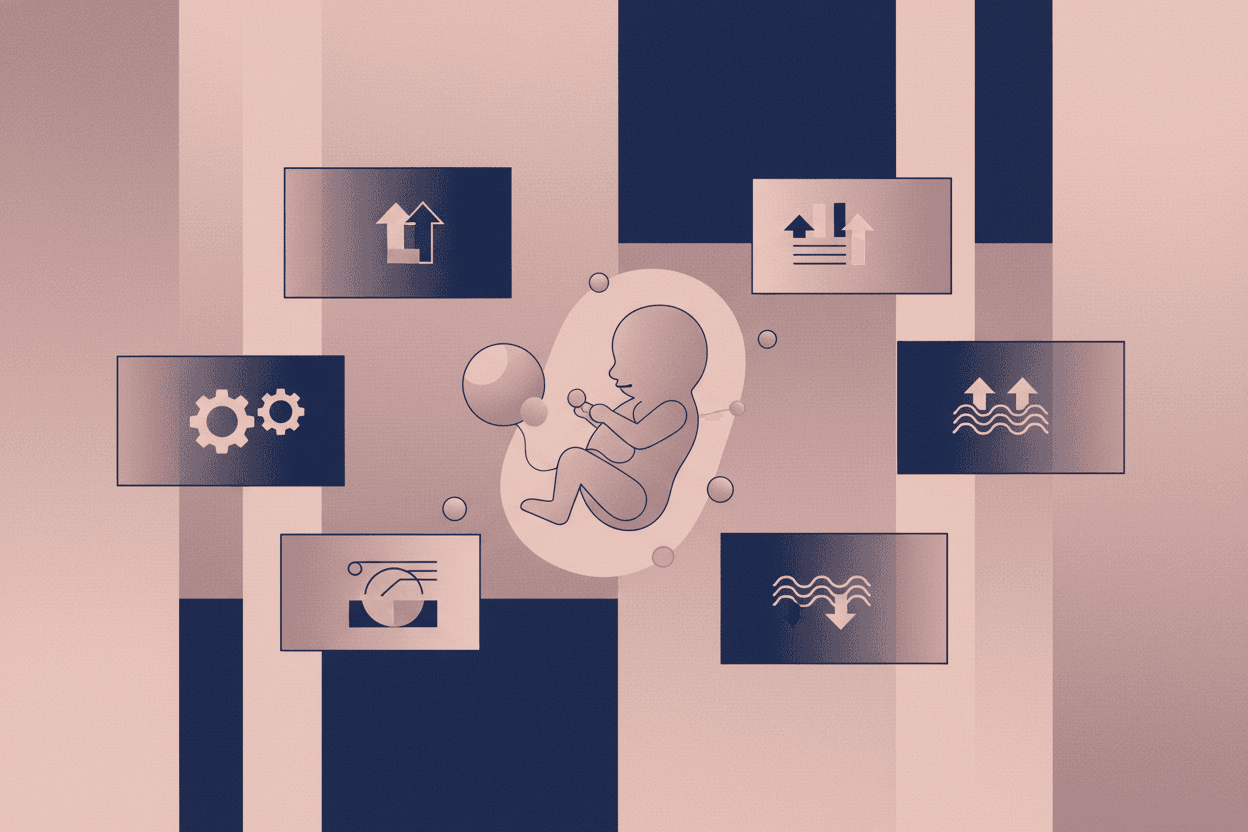
Within your lifetime, choosing your child's eye color will be as routine as choosing their name. The question is: should you?
In 2023, the global preimplantation genetic testing market reached $5.2 billion and is projected to exceed $12 billion by 2030. Clinics in the United States, China, and Cyprus already offer embryo selection for over 600 genetic conditions. But here's what the brochures don't emphasize: the same technology that eliminates Tay-Sachs disease can theoretically select for height, cognitive aptitude, and facial symmetry.
The regulatory frameworks governing this power vary wildly between nations. By the time you finish reading this, somewhere in the world, a embryo will be selected—or discarded—based on its polygenic risk score for conditions that may never actually manifest.
From Disease Prevention to Enhancement: The Slippery Slope Is Real
Preimplantation Genetic Testing (PGT) was originally developed for a noble purpose: preventing families from passing on devastating monogenic disorders like cystic fibrosis, Huntington's disease, and sickle cell anemia. The logic was unassailable. If you could identify embryos carrying fatal mutations before implantation, why wouldn't you?
[!INSIGHT] The technical term for what clinics now offer is polygenic embryo screening (PES). Unlike single-gene testing, PES aggregates thousands of genetic variants to calculate probabilities for complex traits—including intelligence, height, and disease susceptibility.
The slide from therapeutic to elective began almost immediately. Fertility clinics discovered that parents undergoing IVF wanted more than disease-free embryos—they wanted the "best" embryos. In 2020, Genomic Prediction became the first company to offer commercial PES, scoring embryos on health indices that included predispositions to conditions like diabetes and heart disease.
By 2024, the company had screened over 100,000 embryos. Their service costs approximately $400 per embryo, making it accessible to middle-class families in developed nations.
The Mathematics of Selection
Here's where the quantitative reality becomes unsettling. A typical IVF cycle produces 5-15 viable embryos. Each embryo carries a unique genetic lottery:
Expected height variation among siblings: ±5 cm
Expected IQ variation among siblings: ±12 points
Expected disease risk variation: 2-10x difference
If you can test all embryos and select the one with the most favorable polygenic profile, you're not editing genes—you're curating a child from nature's menu. This is selection, not modification, which makes it largely unregulated in most jurisdictions.
“"We are at a point where we can read the genetic future of an embryo with reasonable accuracy. The question is no longer 'can we?' but 'what do we want to know?' and 'what do we do with that information?'”
The Intelligence Problem: Can We Select for Smarter Children?
The most controversial frontier in embryo selection isn't health—it's cognitive enhancement. In 2018, a landmark genome-wide association study (GWAS) identified over 1,000 genetic variants associated with educational attainment, a proxy for intelligence.
The predictive power of these polygenic scores is modest but meaningful:
- Current PES can explain approximately 10-15% of variance in IQ
- Top-scoring embryos average 5-8 IQ points higher than bottom-scoring siblings
- This gap is larger than the average difference between first-born and second-born children
[!WARNING] The scientific consensus is clear: intelligence is highly polygenic and heavily influenced by environment. Selecting for IQ-related variants doesn't guarantee intelligence—it merely shifts probabilities.
Yet probability shifts are compelling to prospective parents. A 2022 survey found that 38% of Americans would consider genetic selection to improve their child's intelligence if the technology were safe and available. Among parents who had already used IVF, that number rose to 52%.
The Cautionary Tale of Height Selection
Height selection offers a preview of what happens when genetic selection moves from disease to enhancement. The trait is:
- Highly heritable: Approximately 80% of height variation is genetic
- Polygenic but predictable: Over 3,000 variants contribute, yet scores can predict adult height within ±5 cm
- Socially valued: Taller individuals earn more, are perceived as more competent, and have advantages in dating markets
Clinics in Mexico and Cyprus now openly advertise height selection as part of their PES services. The cost: $1,500-$3,000 per embryo batch. The result: parents can effectively choose whether their child will be in the 25th or 75th percentile for height.
The Three-Stage Future: What 2030 Actually Looks Like
The trajectory of embryo selection technology points toward a three-stage evolution, each stage expanding parental choice while deepening ethical complications.
Stage 1: Disease Elimination (2015-2025)
This stage is already mature. Parents can screen for:
- Chromosomal abnormalities (Down syndrome, Patau syndrome)
- Monogenic disorders (cystic fibrosis, spinal muscular atrophy)
- Late-onset disease predispositions (BRCA mutations, Alzheimer's risk)
The ethical consensus here is relatively stable. Most bioethicists and religious institutions accept disease prevention as legitimate medical intervention.
Stage 2: Trait Optimization (2025-2035)
We are entering this stage now. Selection expands to:
- Physical characteristics: height, eye color, hair texture, body composition
- Cognitive profiles: learning aptitude, memory capacity, attention regulation
- Temperament traits: risk tolerance, emotional stability, social confidence
[!NOTE] The American Society for Reproductive Medicine maintains that selecting embryos for non-medical traits is ethically unacceptable. However, their guidelines carry no legal force, and international clinics operate outside their jurisdiction.
Stage 3: Enhancement Modification (2035+)
This stage moves beyond selection to active editing:
- CRISPR-based insertion of advantageous alleles
- Synthetic biology integration for novel capabilities
- Germline modifications that become heritable across generations
The 2018 case of He Jiankui—the Chinese scientist who created the first CRISPR-edited babies—demonstrated both the technical feasibility and the global condemnation that follows. Yet technical feasibility rarely remains unused forever.
The Inequality Multiplier: When Genetics Becomes a Luxury Good
The most significant implication of widespread embryo selection isn't individual—it's societal. When genetic advantages become purchasable, we risk creating a biological caste system.
Consider the economics:
| Service | Cost (2024) | Accessibility |
|---|---|---|
| IVF cycle | $12,000-$20,000 | Top 30% income |
| Basic PGT | $3,000-$5,000 | Top 20% income |
| Polygenic screening | $400-$1,000/embryo | Top 15% income |
| Comprehensive PES | $5,000-$15,000 | Top 10% income |
A child born to wealthy, informed parents could start life with:
- 5-8 IQ point advantage
- Reduced risk of 12 major diseases
- Height in the upper quartile
- Favorable metabolic and cardiovascular profiles
“"If genetic advantages become market goods, the gap between rich and poor will no longer be just about money, education, and opportunity. It will be written into the DNA of the next generation.”
This isn't hypothetical. Studies of IVF-conceived children already show modest advantages in cognitive testing—not because IVF creates smarter babies, but because IVF parents tend to be wealthier, more educated, and more invested in early childhood development.
The Regulatory Vacuum: Who Decides What's Acceptable?
The global regulatory landscape for embryo selection resembles a patchwork quilt where each nation has stitched together its own ethical framework.
Most Permissive: United States
- No federal restrictions on PGT or PES
- Clinics self-regulate based on professional guidelines
- Market-driven expansion of services
Moderately Restrictive: United Kingdom, Australia, Canada
- PGT permitted for serious medical conditions
- PES for non-medical traits generally prohibited
- Strong regulatory oversight through HFEA-equivalent bodies
Most Restrictive: Germany, Switzerland (historically), China (post-He Jiankui)
- Strict limits on embryo testing
- Germline modification criminalized
- Strong cultural resistance to "eugenics-adjacent" technologies
“[!INSIGHT] The term "eugenics" is unavoidable in this conversation. While modern embryo selection differs fundamentally from state-mandated sterilization, the underlying logic”
The problem? Reproductive tourism exists. A British couple can fly to Cyprus, pay $15,000 for comprehensive embryo screening, and return home with a legally conceived, genetically optimized child. National regulations cannot control what happens in permissive jurisdictions.
The Question No One Can Answer for You
The technology of embryo selection forces a confrontation between two deeply held values: parental autonomy and human equality.
On one hand, parents have always sought advantages for their children—good schools, safe neighborhoods, enriching experiences. Genetic selection can be framed as the ultimate extension of loving parental investment. If you would pay for piano lessons to enhance your child's mind, why not pay for genetic optimization?
On the other hand, cumulative genetic advantages across generations could create permanent stratification. When the children of the genetically enhanced themselves have access to further enhancement, the gap between enhanced and natural-born humans may become unbridgeable.
Sources: Global Preimplantation Genetic Testing Market Report 2023, MarketsandMarkets; Genomic Prediction company data; GWAS Catalog, NHGRI-EBI; American Society for Reproductive Medicine Ethics Committee Guidelines; Center for Genetics and Society; Hercher L. et al., "Prenatal and Preimplantation Genetic Testing," Journal of Genetic Counseling, 2022; Hsu S. et al., "Prediction of Complex Traits Using Polygenic Risk Scores," Nature Genetics, 2021.
This is a Premium Article
Hylē Media members get unlimited access to all premium content. Sign up free — no credit card required.