The 1979 Promise We're Still Waiting On
In 1979, Japan's robot boom spawned a prediction: robots in every home by 2000. Forty years later, we're still waiting. The physics problem explains why.
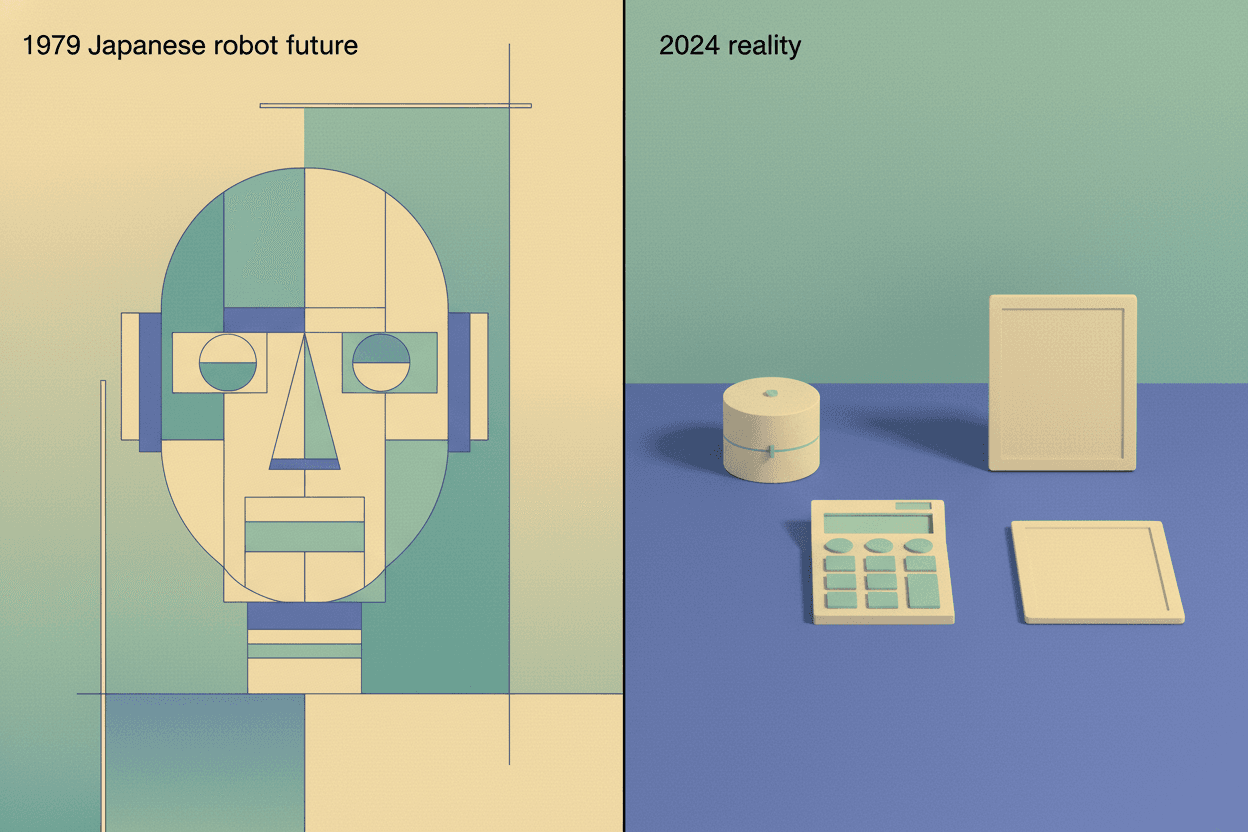
In 1979, experts predicted that household robots would be as common as washing machines by 2000. They were wrong. Here's the exact physics problem that stopped them. That year, Japan's Ministry of International Trade and Industry declared the coming decade the "Robot Age," and manufacturers like Honda and Sony poured billions into humanoid development. The future seemed inevitable.
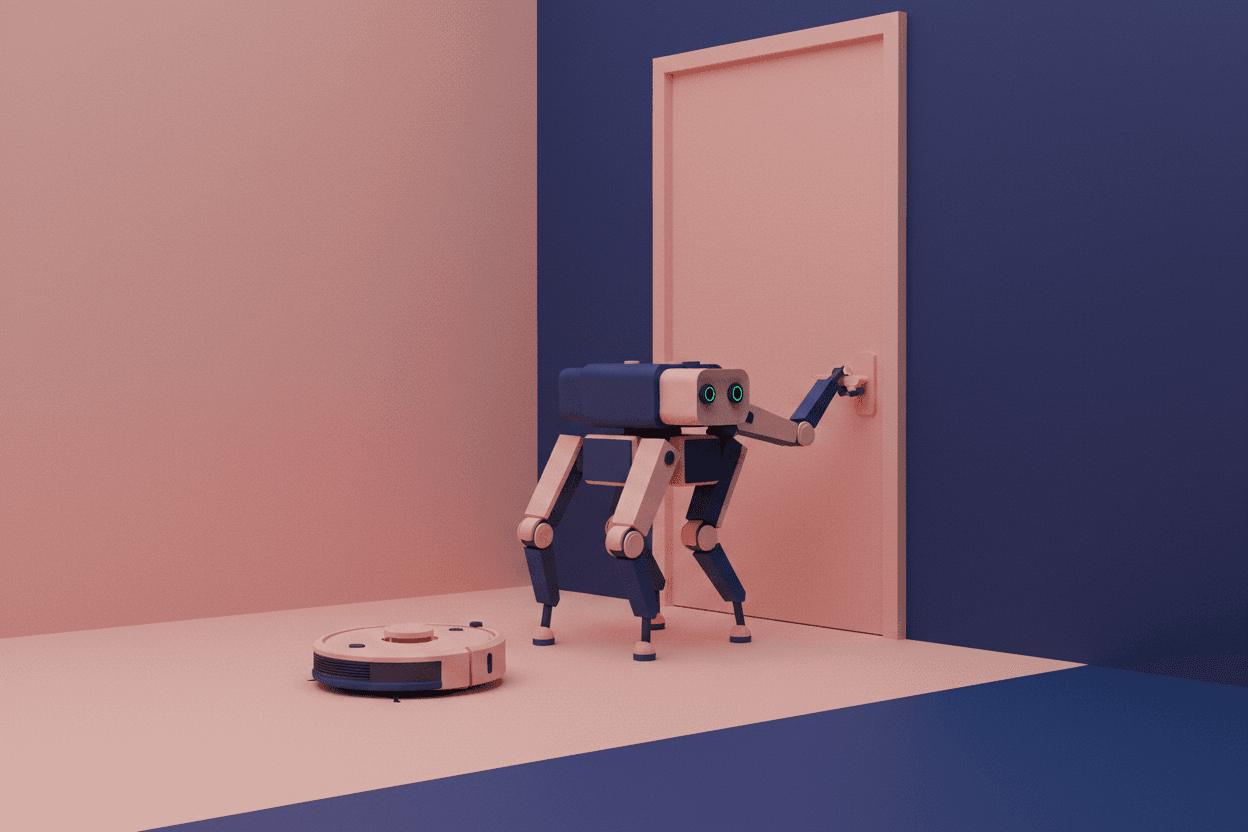
Yet walk into any home in 2024, and you won't find a robot folding laundry or loading dishwashers. You'll find Roombas bumping into chair legs and Alexa speakers responding to voice commands—but nothing resembling the butlers science fiction promised. The global market for industrial robots reached $16.5 billion in 2023, while household service robots barely scratched $8 billion, mostly limited to vacuum cleaners.
The gap between factory success and domestic failure isn't a software problem. It's a physics problem—one that reveals something fundamental about intelligence itself.
The Factory Floor: Where Robots Thrive
To understand why household robots failed, we first need to understand where they succeeded. In 1980, Japan operated approximately 32,000 industrial robots—more than the rest of the world combined. By 1990, that number had exploded to 274,000 units. These machines welded car frames, assembled electronics, and painted components with sub-millimeter precision.
The Secret Ingredient: Predictability
Industrial robots succeeded because factories are engineered environments. Every object has a designated position. Every motion follows a programmed path. Every variable is controlled.
“[!INSIGHT] A factory robot doesn't "see" or "understand" its environment”
Consider a welding robot on an automotive assembly line. The car chassis arrives at position X. The robot arm moves to coordinates (A, B, C), activates its welder for exactly 2.3 seconds, then returns to rest. The chassis position is guaranteed by fixtures. The metal thickness is guaranteed by quality control. The robot doesn't need to think because the environment has been tamed.
This predictability enabled the 1980s robot explosion. Japanese manufacturers achieved productivity gains of 300-500% in some sectors. The robots worked 24 hours a day, never took breaks, and produced consistent quality. They were, in a sense, the perfect workers—provided the world remained perfectly arranged around them.
The Closed-Loop Exception
By the late 1980s, advanced industrial robots began incorporating sensors. Vision systems could verify part placement. Force sensors could adjust grip pressure. These innovations added feedback loops, but the fundamental principle remained: the robot operated in a constrained environment with limited variability.
“*"The factory is a designed world. Every variable is bounded. The real world has no bounds.”
The Living Room: Where Physics Breaks Down
When researchers tried to move robots from factories to homes, they encountered what roboticists call "unstructured environments"—spaces where nothing is guaranteed.
The Variability Problem
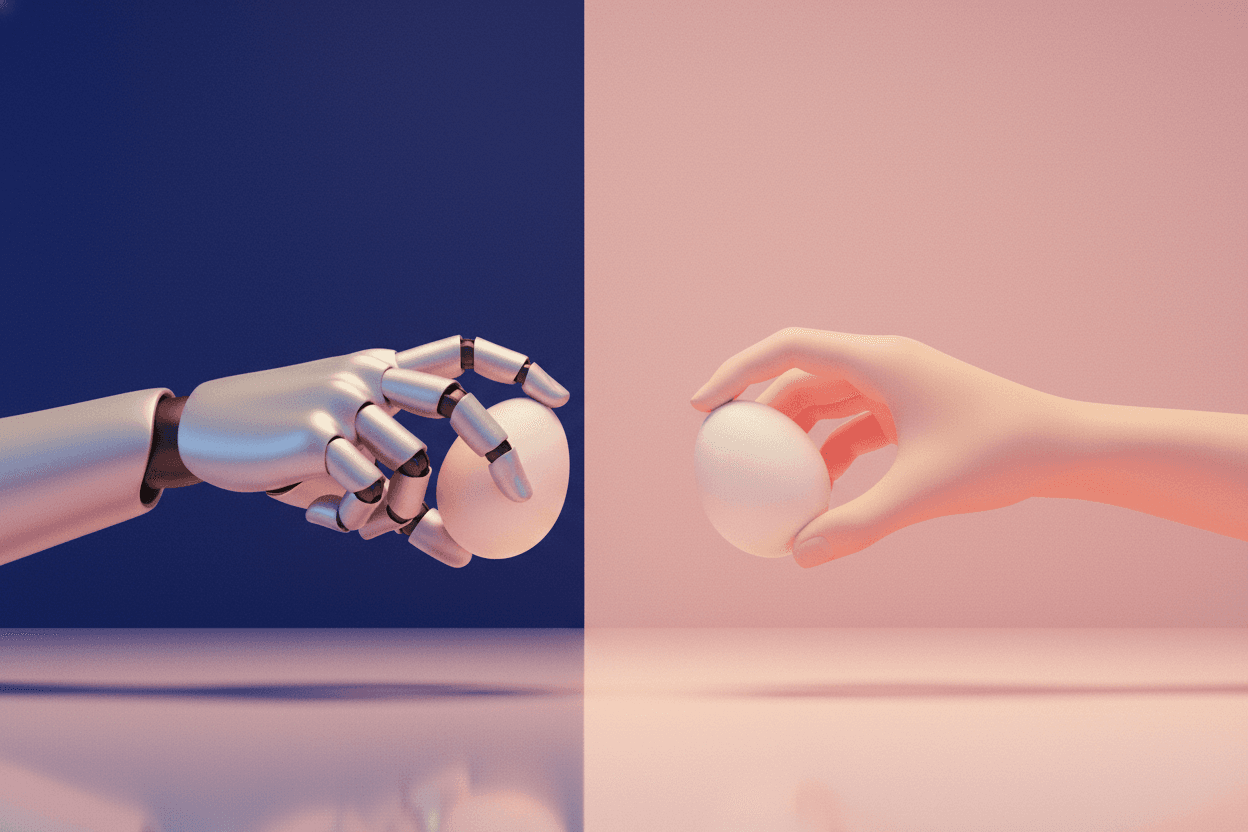
Consider a seemingly simple task: picking up a coffee cup from a kitchen counter. In a factory, this would be trivial. The cup would be at known coordinates, oriented in a known direction, with known dimensions.
In a home:
- The cup could be anywhere on the counter—or not on the counter at all
- It could be partially hidden behind a cereal box
- It could contain liquid, or be empty, or be upside down
- It could be ceramic, glass, plastic, or paper
- The lighting could vary from bright sunlight to dim evening
- A cat could walk across the counter mid-reach
[!INSIGHT] The number of possible configurations in a typical kitchen exceeds 10^12—a trillion different states a robot would need to recognize and respond to. No amount of pre-programming can cover this variability.
The Moravec's Paradox
In 1988, Hans Moravec, Rodney Brooks, and Marvin Minsky articulated a counterintuitive observation: high-level reasoning requires relatively little computation, but low-level sensorimotor skills require enormous computational resources.
A robot can be programmed to play chess at a grandmaster level. But that same robot cannot reliably pick up a chess piece without knocking over the board. The reason lies in evolutionary history: abstract reasoning is a recent human capability, while sensorimotor coordination represents hundreds of millions of years of evolutionary refinement.
The Contact Problem
Perhaps the deepest physics challenge is contact. When a robot gripper touches an object, the interaction involves:
- Friction: Variable and surface-dependent
- Deformation: Soft objects compress; hard objects don't
- Dynamics: Objects can slip, rotate, or topple
- Force control: Too little force drops the object; too much crushes it
[!NOTE] The mathematics of contact mechanics—the physics of how bodies interact when they touch—remains partially unsolved. The equations for two deformable objects making contact involve non-linear partial differential equations that resist closed-form solutions. Modern robots use approximations and machine learning to compensate, but the underlying physics remains computationally intensive.
In a factory, engineers solve the contact problem by standardizing everything: use identical parts, identical orientations, identical grippers. In a home, every object is different, and no standardization exists.
The 40-Year Gap: What Changed?
If the physics problems were understood in the 1980s, why did experts predict household robots by 2000? The answer reveals a persistent failure in technological forecasting.
The Software Assumption
In 1979, robotics researchers assumed that hardware limitations were the primary barrier. Robot arms were heavy, motors were weak, batteries died quickly. But these were engineering problems with visible solutions: better materials, stronger actuators, higher energy density.
The assumption was that once hardware improved, software would follow naturally. Artificial intelligence would provide the "brain" to match the improved "body."
[!INSIGHT] What researchers underestimated was the computational complexity of perception and control in unstructured environments. A robot needs to process approximately 30 million pixels per second from cameras, integrate data from multiple sensors, plan motions in real-time, and execute precise movements—all while handling unexpected events. This requires computational power that exceeded 1980s capabilities by orders of magnitude.
The Sensor Revolution (That Took 30 Years)
The sensors needed for household robots—compact, low-power, high-resolution cameras and tactile arrays—didn't become affordable until the smartphone era. The smartphone industry's massive scale drove down costs of:
- CMOS image sensors (from $100+ in 1990 to under $5 today)
- Accelerometers and gyroscopes (MEMS technology)
- High-capacity lithium-ion batteries
- Powerful mobile processors
Without this hardware ecosystem, household robots were economically impossible regardless of algorithmic advances.
The Learning Revolution
Even with better hardware, the software problem remained intractable until machine learning transformed robotics. Traditional robotics relied on explicit programming: engineers wrote code specifying every behavior. This approach cannot scale to unstructured environments.
Neural networks enabled robots to learn from examples rather than follow explicit rules. A modern robot can train on thousands of grasping attempts, building intuition about which approaches work for which objects. This is how humans learn—and it's the only approach that can handle infinite variability.
“*"We used to program robots. Now we let them learn. It's the difference between telling a child exactly how to walk and letting them figure it out through trial and error.”
Why We Still Don't Have Robot Butlers
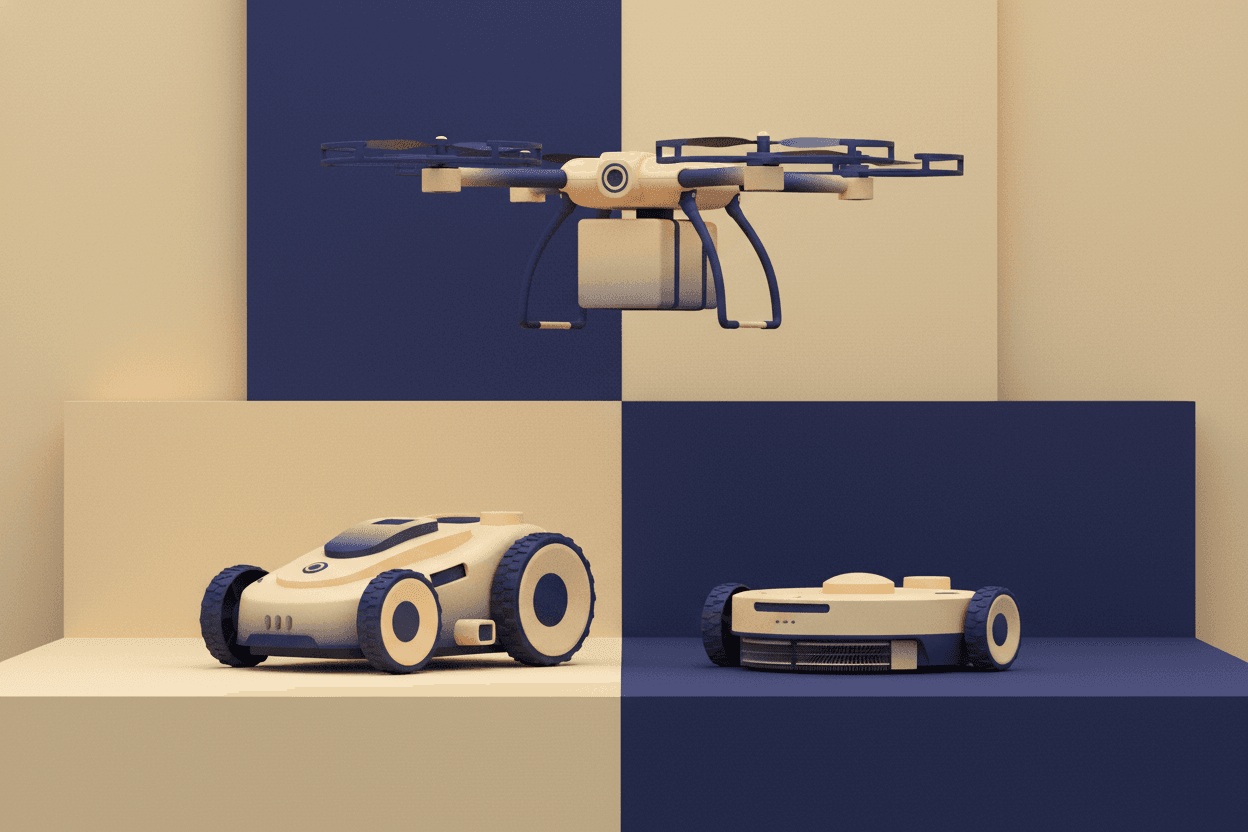
Understanding the physics and computation challenges explains why, in 2024, household robots remain limited to single-purpose devices like vacuum cleaners and lawn mowers. These machines succeed precisely because they simplify the problem:
- Roomba doesn't "clean"—it randomly traverses the floor and activates brushes
- Robotic lawn mowers don't "garden"—they stay within wire boundaries and cut whatever grows
- Neither robot manipulates objects; both only move through space
The Manipulation Barrier
True household robots would need manipulation: the ability to pick things up, move them, arrange them, clean them. Manipulation in unstructured environments remains the grand challenge of robotics.
Progress is accelerating. In 2022, Google DeepMind demonstrated robots that could learn new tasks from a handful of demonstrations. In 2023, Tesla showed Optimus, a humanoid capable of basic household manipulation. Boston Dynamics' Atlas can now perform parkour.
[!NOTE] Current household robot prototypes can reliably complete approximately 60-70% of attempted manipulation tasks in laboratory settings. This sounds impressive until you realize that failing one-third of the time makes a robot worse than useless in a home—it becomes a liability. A robot that drops every third dish or knocks over every third vase will not be adopted.
The Economic Threshold
For household robots to achieve mass adoption, they need to cross a reliability threshold—perhaps 99% success rate on common tasks—and a cost threshold—perhaps under $10,000 for a multi-purpose system. Neither threshold has been reached.
The Coming Decade: Promise Renewed
The 1979 prediction wasn't wrong—just early. The physics problems that blocked household robots are yielding to advances in:
- Sim-to-real transfer: Robots can now train in simulated environments at scale, then transfer learning to physical machines
- Foundation models: Large language and vision models provide common-sense reasoning that was impossible with explicit programming
- Soft robotics: Compliant materials and grippers handle variability more gracefully than rigid systems
- Dense sensing: Modern robots incorporate dozens of sensors, providing rich feedback for adaptation
The convergence of these technologies suggests that the robot butler may finally arrive—not by 2000, but perhaps by 2035.
Sources: International Federation of Robotics World Robotics Report 2023; Japan Robot Association Historical Data; Moravec, H. (1988). Mind Children: Harvard University Press; Brooks, R. (2002). Flesh and Machines: Pantheon; Berkeley Robot Learning Lab Research Publications; Google DeepMind Robotics Research 2022-2024.
This is a Premium Article
Hylē Media members get unlimited access to all premium content. Sign up free — no credit card required.