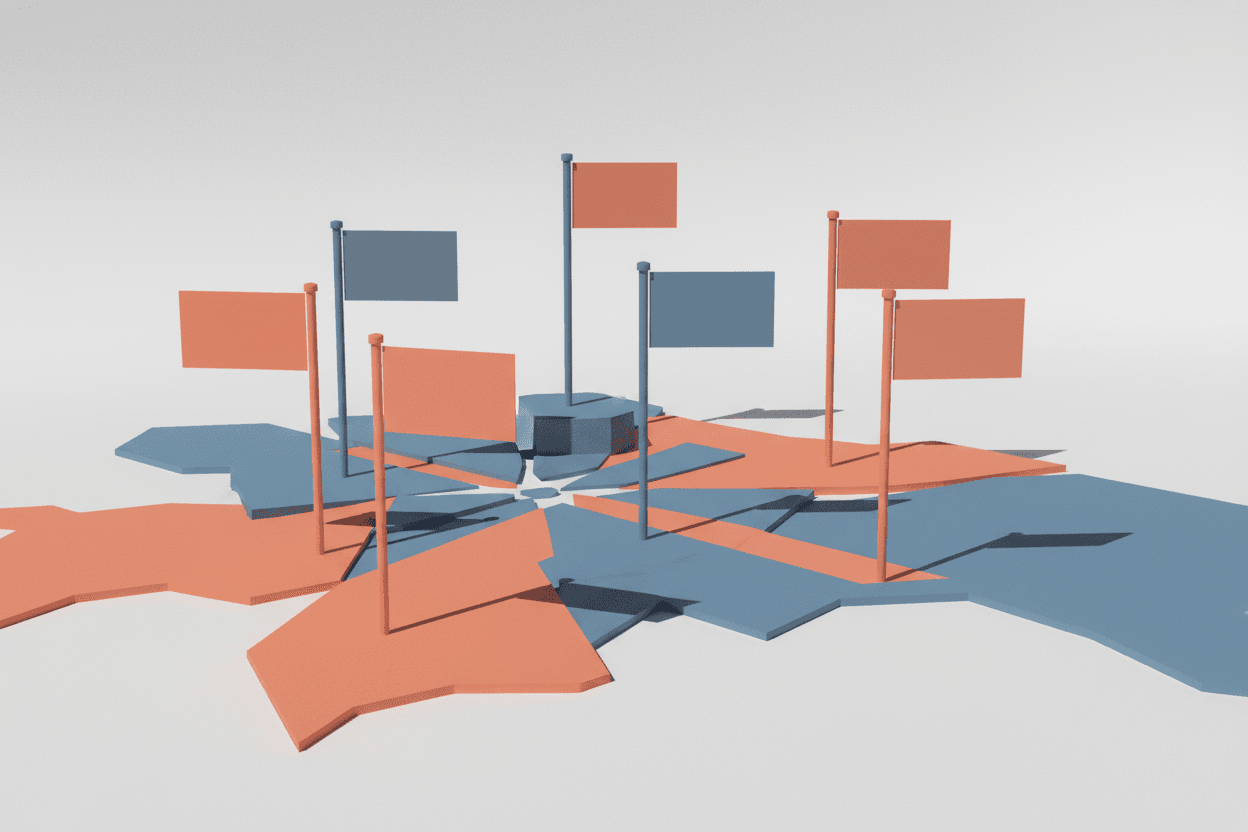
Russia planted a titanium flag on the Arctic seabed in 2007. Seventeen years later, five nations still battle over ownership of the rapidly thawing polar frontier.
Hyle Editorial·
Russia planted a titanium flag on the Arctic seabed in 2007. Canada's response: 'This isn't the 15th century.' The legal battle is still ongoing. What began as a theatrical gesture of geopolitical ambition has evolved into one of the most complex territorial disputes in modern history—a high-stakes chess match over an area estimated to contain 13% of the world's undiscovered oil and 30% of its untapped natural gas.
The Arctic Ocean is warming four times faster than the rest of the planet. By 2035, scientists predict it could be ice-free during summer months. As the frozen barrier disappears, five nations—the United States, Russia, Canada, Norway, and Denmark (via Greenland)—are racing to claim jurisdiction over waters, seabeds, and shipping lanes that were inaccessible just decades ago.
The battle for the Arctic centers on a legal framework most people have never heard of: the United Nations Convention on the Law of the Sea, or UNCLOS. Under this treaty, nations control an Exclusive Economic Zone (EEZ) extending 200 nautical miles from their coastlines. But the real prize lies beyond—a provision allowing countries to extend their claims up to 350 nautical miles if they can prove their continental shelf extends that far.
Russia: The Aggressive Front-Runner
Russia has submitted the most extensive claims, arguing that the Lomonosov Ridge—an underwater mountain range stretching 1,800 kilometers across the Arctic Ocean—is a natural extension of the Siberian continental shelf. If approved, Russia would gain sovereign rights over 1.2 million square kilometers of additional Arctic seabed.
[!INSIGHT] Russia has invested over $12 billion in Arctic infrastructure since 2020, including icebreaker fleets and military bases, signaling its long-term commitment to regional dominance.
In 2007, explorer Artur Chilingarov led a mission to plant a Russian tricolor made of corrosion-resistant titanium on the seabed at the North Pole. While symbolically potent, the gesture held no legal weight under international law. What mattered more was Russia's 2015 revised submission to the UN Commission on the Limits of the Continental Shelf (CLCS), which remains under review.
Canada: Sovereignty Through Science
Canada has countered Russian ambitions with its own scientific expeditions, mapping the Alpha Ridge and Lomonosov Ridge to prove they connect to the North American landmass. Canada's position is complicated by its dispute with the United States over the Northwest Passage—Ottawa considers it internal waters, while Washington insists it's an international strait.
“"We are deeply concerned about the militarization of the Arctic. This is not a region for competition”
— it's a region for cooperation."
Denmark: The Unexpected Claimant
Through Greenland, Denmark has emerged as a surprising major player. Copenhagen's 2014 submission claimed the North Pole itself, arguing that the Lomonosov Ridge connects to Greenland's continental shelf. The Danish claim covers 895,000 square kilometers—roughly 20 times the size of Denmark itself.
Norway: The Cooperative Model
Norway settled its Arctic boundaries peacefully, signing a landmark treaty with Russia in 2010 that delimited the Barents Sea after four decades of negotiation. Norway's approach—scientific rigor paired with diplomatic pragmatism—has made it the only Arctic Five nation with fully delineated maritime boundaries.
The United States: Handicapped by Non-Ratification
The United States faces a unique constraint: it has signed but never ratified UNCLOS. Without ratification, Washington cannot formally submit continental shelf claims to the CLCS. The U.S. relies on bilateral negotiations and freedom of navigation operations to assert its interests, leaving it at a diplomatic disadvantage.
The Lomonosov Ridge: Underwater Battleground
The central geological question is deceptively simple: which country does the Lomonosov Ridge belong to? This submarine mountain chain, rising 3,000 to 3,700 meters above the ocean floor, is the key to claiming the North Pole and its surrounding resources.
Each nation has produced conflicting scientific interpretations:
Russia claims the ridge is structurally continuous with the Siberian platform
Canada and Denmark argue it connects to the North American-Greenland landmass
The scientific consensus remains divided, with the CLCS requesting additional data from all claimants
[!NOTE] The CLCS does not adjudicate disputes—it only makes recommendations based on scientific evidence. If overlapping claims persist, nations must negotiate among themselves or submit to binding arbitration.
The Stakes: Resources, Routes, and Realpolitik
Energy Reserves
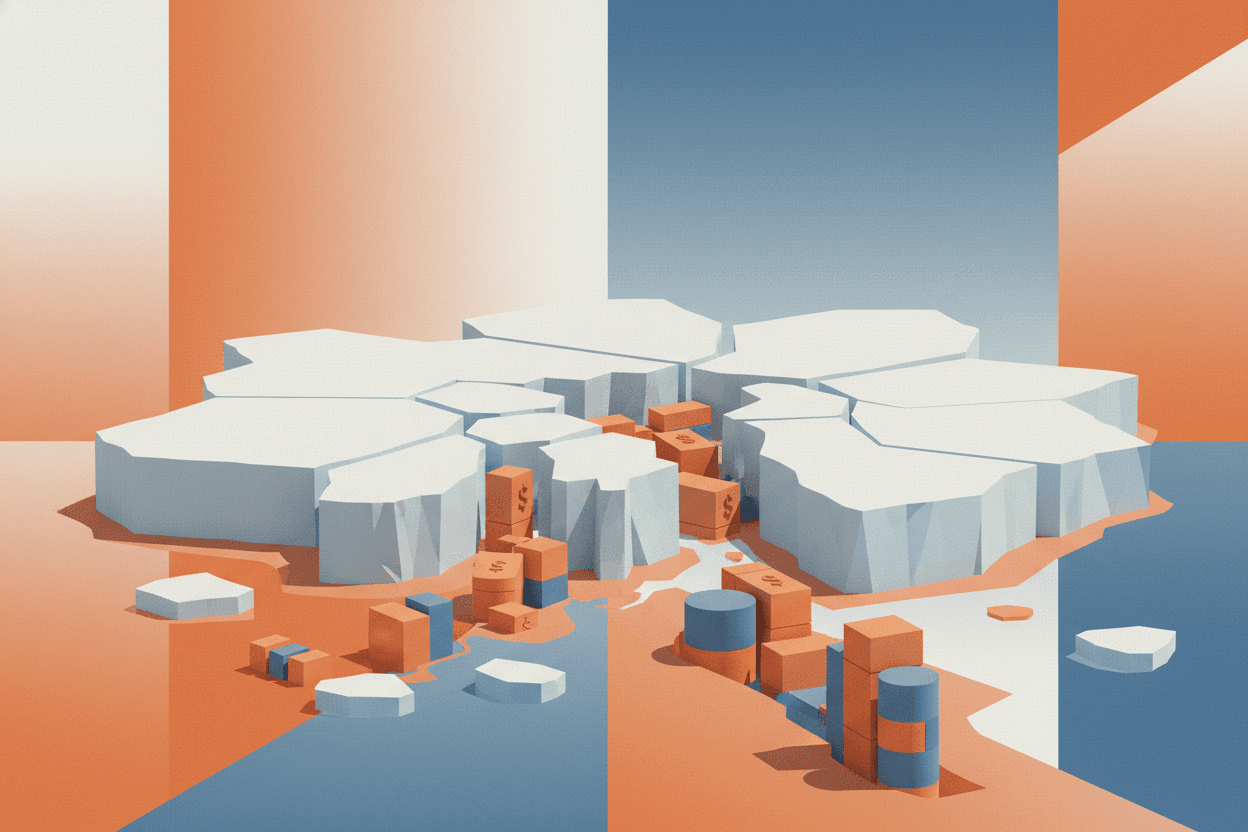
The U.S. Geological Survey estimates the Arctic holds approximately 90 billion barrels of oil and 1,669 trillion cubic feet of natural gas. These aren't hypothetical numbers—Norway's Johan Castberg field, located above the Arctic Circle, began production in 2024 and is expected to yield 450 million barrels over its lifetime.
Shipping Lanes
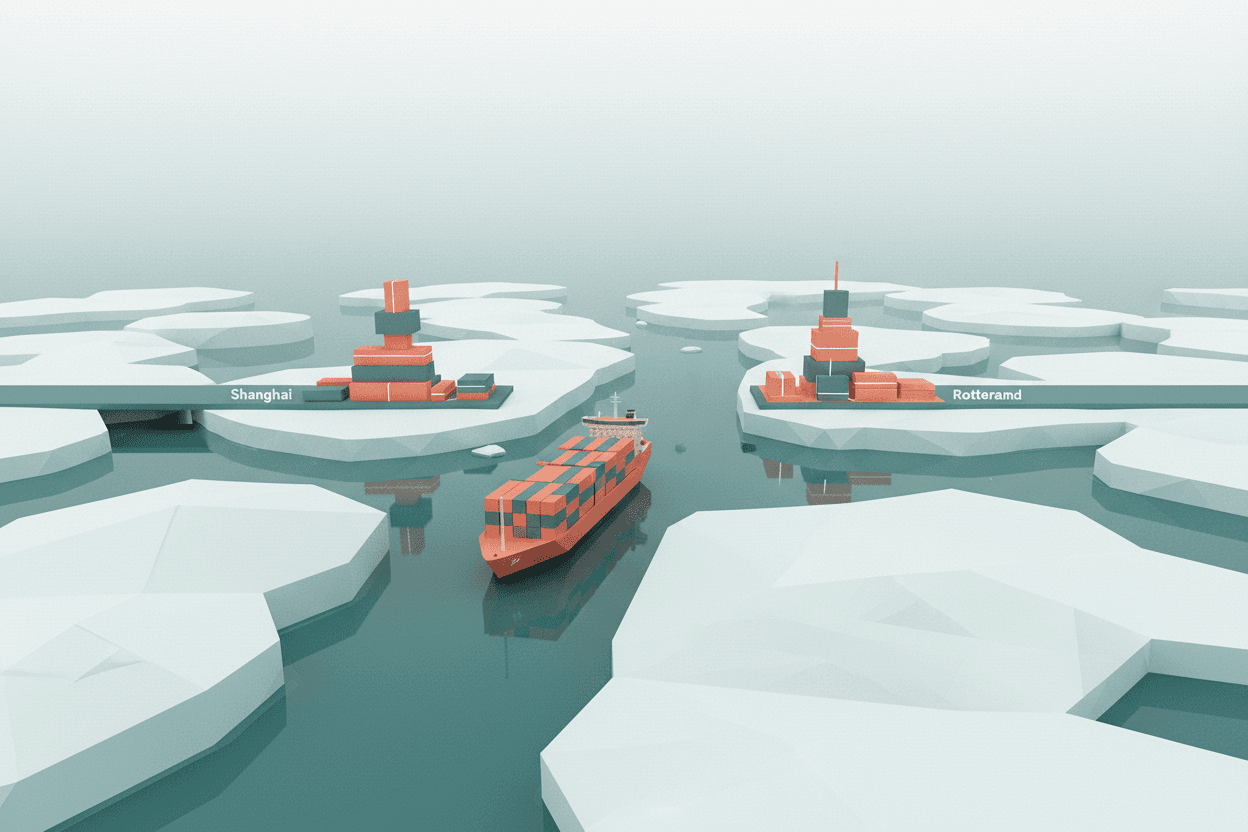
The Northern Sea Route along Russia's coast could cut shipping distances between Europe and Asia by 40% compared to the Suez Canal. In 2023, over 80 vessels transited the route during the ice-free window, up from just 4 in 2010.
The Legal Limbo Continues
The CLCS moves with glacial slowness. Russia's original submission dates to 2001; its revised claim from 2015 is still being evaluated. Denmark's 2014 submission and Canada's 2019 claim have similarly languished. The commission meets only twice yearly and lacks enforcement mechanisms.
Meanwhile, climate change is outpacing diplomacy. The Arctic is losing sea ice at a rate of 13% per decade. By the time legal frameworks are resolved, the geography they govern may have fundamentally changed.
Key Takeaway
The Arctic territorial dispute represents a collision of 21st-century resource competition with 18th-century legal frameworks. As ice melts and stakes rise, the five Arctic nations face a choice: compete for control or cooperate for stewardship. The titanium flag planted in 2007 was theater—but the legal battle it symbolized will shape geopolitics for generations.
Sources: United Nations Commission on the Limits of the Continental Shelf; U.S. Geological Survey Circum-Arctic Resource Appraisal (2008); Arctic Council Reports; Norwegian Petroleum Directorate; Reuters Arctic Coverage (2007-2024); International Boundaries Research Unit, Durham University
This is a Premium Article
Hylē Media members get unlimited access to all premium content. Sign up free — no credit card required.