The New Psychiatry: Treating the Body to Heal the Mind
By 2035, psychiatrists may order stool samples and inflammation tests before prescribing antidepressants. Integrated psychiatry is reshaping mental healthcare.
Hyle Editorial·
The psychiatrist of 2035 will order a stool sample, a sleep study, and a CRP blood test before writing a prescription. That future is already happening in pilot clinics. At Massachusetts General Hospital's Depression Clinical and Research Program, physicians now routinely test inflammatory markers in treatment-resistant patients. The results have fundamentally challenged how we understand mental illness: depression isn't just a chemical imbalance in the brain—it's often a systemic condition rooted in the body.
Consider this: a 2022 meta-analysis of 109 studies found that people with depression have, on average, 30% higher levels of inflammatory markers than healthy controls. More strikingly, nearly 40% of treatment-resistant depression cases show elevated inflammation that standard antidepressants don't address. We've been treating the wrong target for decades.
The paradigm shift began in earnest around 2009, when researchers noticed that cancer patients receiving inflammatory cytokine therapy frequently developed severe depression—sometimes within hours of treatment. This wasn't a psychological reaction to their diagnosis; it was a direct neurobiological response to inflammation.
[!INSIGHT] The blood-brain barrier, once thought to protect the brain from immune signals, is actually a two-way communication highway. Inflammatory molecules can cross it and activate brain immune cells called microglia, which then alter neurotransmitter function.
The Cytokine Model of Depression
Dr. Charles Raison at the University of Wisconsin-Madison has pioneered what's called the "cytokine model of depression." His research demonstrates that psychological stress triggers the same inflammatory pathways as physical infection. The evolutionary logic is elegant: when our ancestors faced threat or injury, inflammation helped heal wounds and fight pathogens. The accompanying symptoms—fatigue, social withdrawal, loss of appetite—kept them safe while recovering.
But in modern life, chronic stress, poor diet, sedentary behavior, and environmental toxins keep this system permanently activated. The result is a population walking around with low-grade inflammation that manifests as anxiety, brain fog, and depression.
A landmark 2021 study published in JAMA Psychiatry tested this theory directly. Researchers gave patients with elevated inflammatory markers either a standard antidepressant or an anti-inflammatory drug called infliximab. The results were unequivocal: for patients with high inflammation, the anti-inflammatory worked better than the antidepressant. For those with normal inflammation levels, the antidepressant was superior. Same diagnosis, different biology, different effective treatment.
The Gut-Brain Axis: Your Second Brain
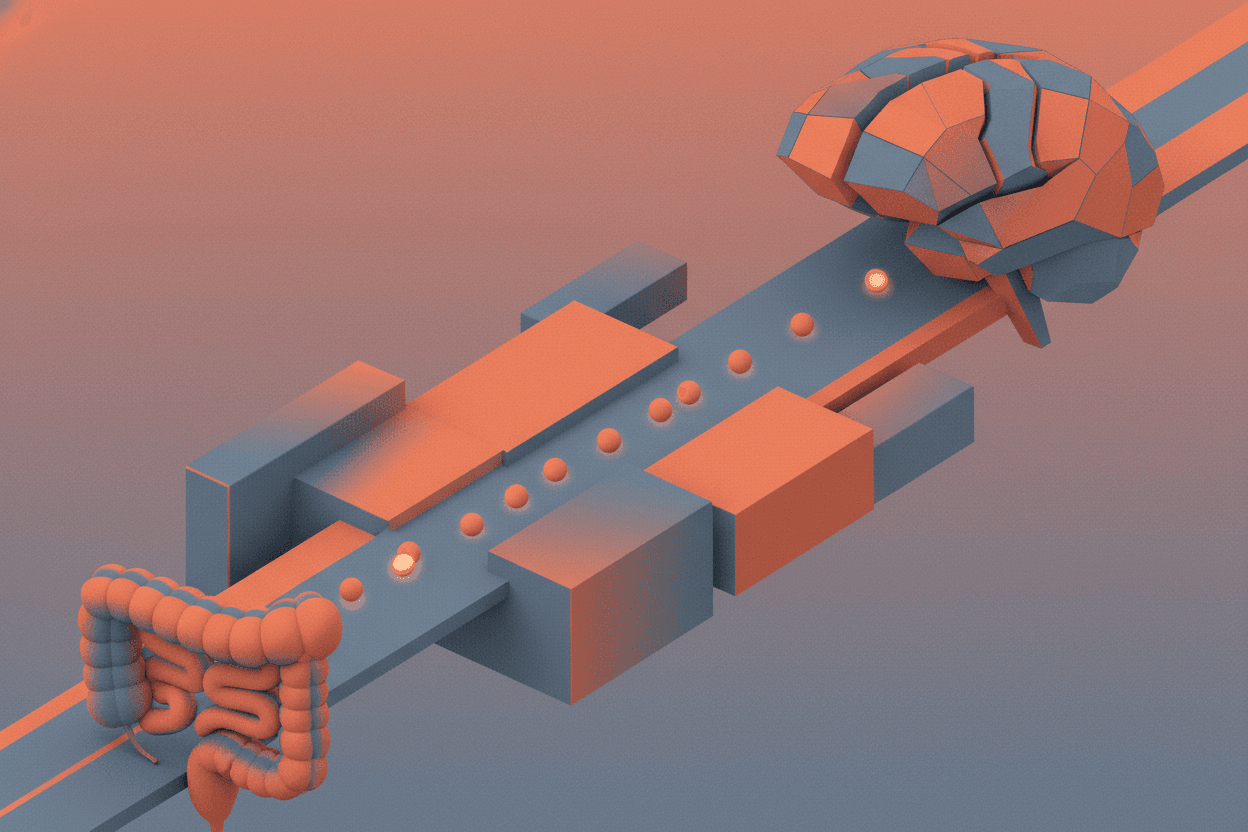
If inflammation is one frontier of integrated psychiatry, the microbiome is another. The human gut contains approximately 100 million neurons—more than the spinal cord—and produces 95% of the body's serotonin.
“*"The gut is not just a digestive organ. It's the largest immune organ in the body and a key regulator of brain function.”
— Dr. Emeran Mayer, UCLA Gut-Brain Researcher
Clinical Applications Emerging Now
In 2023, King's College London published groundbreaking research identifying specific gut bacteria patterns that could predict which patients would respond to antidepressants with 72% accuracy. The implications are profound: instead of the current trial-and-error approach that leaves patients suffering for months, psychiatrists could run a stool test and know within days whether a medication is likely to work.
Pilot clinics are already implementing microbiome-informed protocols:
Testing First: Before prescribing, patients receive comprehensive microbiome analysis identifying dysbiosis, inflammatory bacteria, and short-chain fatty acid production capacity.
Targeted Intervention: Based on results, clinicians prescribe specific probiotic strains, prebiotic fibers, or dietary changes rather than generic recommendations.
Monitoring Progress: Repeat testing every 8-12 weeks to track microbiome changes and correlate with symptom improvement.
Dr. Valerie Taylor at the University of Calgary has taken this further. Her research shows that fecal microbiota transfers (FMT) from healthy donors can reduce depression symptoms in some patients by over 50%. A small 2022 trial found that 60% of participants with treatment-resistant depression showed significant improvement after FMT, with effects lasting at least six months.
[!NOTE] FMT remains experimental for psychiatric conditions and should only be pursued in clinical trial settings. The FDA has not approved it for mental health treatment, though research is advancing rapidly.
Sleep as a Biomarker and Intervention
Sleep disturbances are present in 80-90% of depression cases, but integrated psychiatry flips the traditional question: instead of asking "is poor sleep causing depression or vice versa?" it asks "what physiological dysfunction is disrupting both?"
Wearable technology has transformed sleep from a subjective report to an objective biomarker. Clinics now track:
Sleep latency: Time to fall asleep, indicating hyperarousal states
Sleep efficiency: Percentage of time in bed actually sleeping
REM latency: Time before first REM episode, often shortened in depression
Heart rate variability: A proxy for autonomic nervous system balance
A 2023 Stanford study found that fixing irregular sleep-wake timing alone reduced depression symptoms by 45% in college students—comparable to medication effects in some trials.
The Exercise Prescription: Moving Beyond "It's Good for You"
Exercise has long been recommended for mental health, but integrated psychiatry treats it as a precise therapeutic intervention with measurable biological effects.
[!INSIGHT] A single bout of moderate exercise increases brain-derived neurotrophic factor (BDNF) by 200-300% for up to 48 hours. BDNF is essential for neuroplasticity—the brain's ability to form new connections and recover from damage.
The SMILEs trial at Duke University demonstrated that exercise alone was as effective as sertraline (Zoloft) for mild-to-moderate depression at 16 weeks. More remarkably, the exercise group had lower relapse rates at 10-month follow-up. The message is clear: movement isn't adjunctive—it's therapeutic.
Integrated clinics now prescribe exercise with the same specificity as medication:
Dose: 30-45 minutes per session
Frequency: 3-5 times weekly
Intensity: 60-80% of maximum heart rate
Type: Combination of aerobic and resistance training
Duration: Minimum 10-12 weeks to assess full effect
While inflammation, microbiome, and sleep research is compelling, large-scale randomized controlled trials remain limited. Many studies have small sample sizes or short follow-up periods. The FDA has not approved anti-inflammatory drugs, probiotics, or exercise protocols as primary treatments for psychiatric conditions.
[!NOTE] Insurance coverage presents another barrier. Most plans won't reimburse for microbiome testing, comprehensive metabolic panels for mental health, or nutrition counseling for psychiatric conditions. Patients often pay out-of-pocket for these assessments.
Implementation Challenges
Precision psychiatry requires infrastructure most clinics lack:
Labs capable of running specialized inflammatory panels
Nutritionists trained in psychiatric applications
Data systems to track biomarkers over time
Time for clinicians to interpret complex results
A typical psychiatrist today has 15-20 minutes per patient—barely enough to adjust medication, let alone order and interpret metabolic panels, design exercise protocols, and discuss dietary interventions.
A Pragmatic Framework
Dr. David Mischoulon at Harvard proposes a stepped approach:
Step 1 (All Patients): Basic lifestyle screening—sleep, exercise, diet patterns. Low-cost interventions like sleep hygiene and walking programs.
Step 3 (Severe Resistance): Comprehensive testing including microbiome analysis, food sensitivity panels, hormone assessment. Consider referral to specialized integrated clinics.
Implications: The Future of Mental Healthcare
The shift toward integrated psychiatry reflects a broader transformation in medicine—moving from organ-specific thinking to systems biology. Mental illness doesn't respect the boundaries between neurology, immunology, gastroenterology, and endocrinology. Neither should treatment.
This approach also addresses the legitimacy crisis in psychiatry. Critics have long argued that psychiatric diagnoses are based on symptom clusters rather than biological mechanisms. Biomarker-informed psychiatry offers something different: measurable targets, objective treatment response indicators, and personalized protocols.
For patients who have cycled through dozens of medications without relief, integrated psychiatry offers hope. The 30% of depression patients who don't respond to standard antidepressants may finally have treatments matched to their actual biology.
Key Takeaway
The future of psychiatry lies not in better brain drugs, but in treating the whole body as an interconnected system. Inflammation markers, gut health, sleep quality, and exercise are not lifestyle footnotes—they are measurable biological factors that directly influence mental health. While integrated psychiatry is still evolving, patients and clinicians can begin implementing precision approaches today through systematic lifestyle assessment and targeted testing in treatment-resistant cases.
Sources: JAMA Psychiatry (2021) - Anti-inflammatory treatment for depression; King's College London (2023) - Gut microbiome prediction of antidepressant response; Stanford University (2023) - Sleep timing intervention study; Duke University SMILEs Trial - Exercise vs. medication comparison; UCLA Gut-Brain Research Program; Massachusetts General Hospital Depression Clinical and Research Program
This is a Premium Article
Hylē Media members get unlimited access to all premium content. Sign up free — no credit card required.