The Placenta Report: What We're Passing to the Next Generation
Microplastics are crossing the placental barrier. New research reveals humans now transfer plastic pollution to fetuses before birth—exploring the implications.
Hyle Editorial·
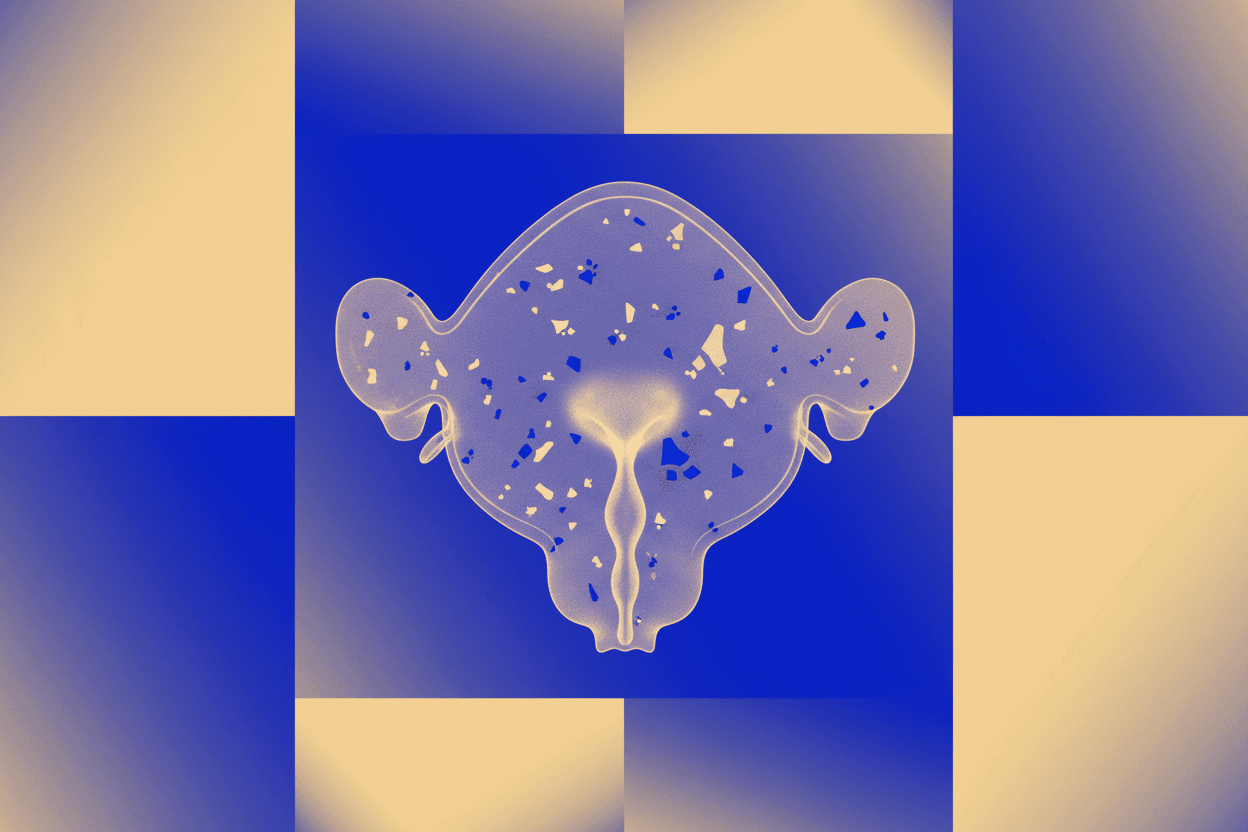
Microplastics have been found in human placentas. We are quite literally giving plastic to the next generation before they take their first breath. In December 2020, a landmark study published in Environment International shattered the assumption that the placenta—an organ evolved over millions of years to filter and protect—could shield developing fetuses from synthetic particles. Researchers detected microplastic fragments on both the fetal and maternal sides of placentas, with some particles measuring up to 10 micrometers in diameter.
The numbers are sobering: out of six placentas examined, four contained a total of 12 microplastic fragments. That's a 67% detection rate in a sample size representing ordinary pregnancies from healthy mothers. These weren't women working in plastic factories or living near industrial zones—they were everyday people consuming everyday food and water. If 67% of a random sample shows contamination, what does that imply for the general population?
Perhaps most disturbing is where these particles were found: on the fetal side of the placental barrier. This means microplastics didn't just enter the mother's body—they traversed an biological checkpoint that evolved specifically to keep foreign materials out. The placenta has one job: protect the fetus. It's failing.
The 2020 Study: Methods and Findings
The research team, led by Dr. Antonio Ragusa of San Giovanni Calibita Fatebenefratelli Hospital in Rome, employed rigorous contamination controls to ensure their findings weren't artifacts of laboratory pollution. They collected placental tissue from six consenting mothers who delivered via cesarean section, minimizing external contamination during birth.
Analytical Methodology
The team used Raman microspectroscopy—a technique that identifies materials by analyzing how they scatter laser light at specific wavelengths. Each suspected microplastic was subjected to spectral analysis, comparing its fingerprint against known polymer databases.
Polymer Type
Fragments Found
Size Range (μm)
Location
Polypropylene (PP)
2
4–6
Fetal side
Polyethylene (PE)
1
8
Maternal side
Polyethylene terephthalate (PET)
3
5–10
Mixed
Polystyrene (PS)
4
2–8
Fetal side
Polyvinyl chloride (PVC)
2
4–7
Maternal side
The mass concentration was calculated at approximately 6.5–68.5 μg per gram of placental tissue—a range that, while seemingly small, represents billions of polymer chains interacting with fetal development at the cellular level.
“[!INSIGHT] The placenta develops from the same fertilized egg as the fetus, meaning these microplastics aren't just "passing through" an external organ”
— they're integrating into fetal tissue from the earliest stages of development.
Transmission Pathways
The study identified three probable routes of maternal exposure:
Dietary ingestion: Microplastics in seafood, drinking water (an estimated 5 grams per week per person enters the human body through consumption), and food packaging.
Inhalation: Airborne microplastics from synthetic textiles, tire wear, and urban dust. Urban residents inhale approximately 26–130 microplastic particles daily.
Dermal contact: Personal care products containing microbeads, though this pathway contributes minimally compared to ingestion and inhalation.
Once inside maternal circulation, particles smaller than 10 μm can cross the placental barrier through endocytosis or passive diffusion through trophoblast cells.
The Biological Cost: What We Don't Know Yet
Here's what keeps toxicologists awake at night: the surface area-to-volume ratio of microplastics. As particle size decreases, surface area increases exponentially. A 1-gram cube of plastic has 6 cm² of surface area. The same mass as 1-micrometer particles has 6,000,000 cm² of reactive surface.
This matters because microplastics don't arrive alone. They carry:
Additives: Phthalates, bisphenol A (BPA), flame retardants, and heavy metals added during manufacturing
Adsorbed pollutants: Persistent organic pollutants (POPs) like DDT and PCBs that bind to plastic surfaces in the environment
Biofilm communities: Bacterial colonies that colonize plastic surfaces, potentially including pathogens
The concentration factor is significant. Studies show that microplastics can concentrate organic pollutants up to 1,000,000 times higher than ambient seawater levels. When these particles enter human tissue, they may act as Trojan horses, delivering concentrated doses of endocrine disruptors directly to fetal cells.
Endocrine Disruption Mechanisms
The fetal endocrine system operates at picomolar concentrations ($10^{-12}$ M). Bisphenol A, commonly found in microplastics, can disrupt hormone signaling at nanomolar levels ($10^{-9}$ M)—meaning contamination at concentrations 1,000 times lower than typical toxicological detection limits can still produce biological effects.
The dose-response relationship for endocrine disruptors is non-monotonic—meaning higher doses don't necessarily produce stronger effects, and traditional toxicological thresholds don't apply. This fundamentally challenges how we assess chemical safety.
“"We are conducting a vast, uncontrolled experiment on human development. The subjects are our children, and there is no control group.”
— Dr. Philip Landrigan, Director of the Global Observatory on Planetary Health, Boston College
Intergenerational Transfer: An Ethical Reckoning
The discovery of microplastics in placentas raises profound ethical questions that medicine and environmental policy are ill-equipped to address.
The Consent Problem
A fetus cannot consent to chemical exposure. The 2020 study found microplastics in pregnancies where mothers had no occupational exposure, no unusual habits—nothing that would indicate elevated risk. This means informed consent is structurally impossible: pregnant people cannot avoid microplastic exposure because it's now ubiquitous in air, water, and food.
[!NOTE] Under the precautionary principle—established in the 1998 Wingspread Declaration—when an activity raises threats of harm to human health or the environment, precautionary measures should be taken even if some cause-and-effect relationships are not fully established scientifically. The burden of proof shifts from proving harm to proving safety.
Intergenerational Justice
Philosophers of environmental ethics have long argued that current generations hold obligations to future ones. The non-identity problem, articulated by philosopher Derek Parfit, complicates this: if pollution changes who is born (by affecting conception timing or partner selection), we can't claim to harm specific future people because different people would exist.
But microplastics bypass this paradox. They harm identifiable individuals—fetuses currently developing—who will bear the consequences of exposures they couldn't prevent and didn't consent to.
Implications for Medicine and Policy
The clinical implications are still emerging, but early indicators suggest:
Prenatal monitoring: Should microplastic exposure become a standard screening metric during pregnancy? Current detection methods require spectroscopy unavailable in clinical settings.
Cumulative burden: Microplastics don't degrade. A child born today starts life with a plastic load that will only accumulate. We have no models for lifelong exposure trajectories.
Epigenetic effects: Emerging evidence suggests microplastics may alter gene expression without changing DNA sequences—changes that can be inherited across generations.
A 2024 follow-up study in Toxicological Sciences found that mice exposed to microplastics during pregnancy produced offspring with altered immune function and metabolic dysregulation—effects that persisted into the third generation.
Key Takeaway: The 2020 placenta study proved that microplastic pollution has achieved total penetration of the human life cycle—we are born contaminated. This represents a fundamental failure of environmental protection and raises urgent questions about intergenerational consent that our regulatory frameworks cannot currently address. The solution requires not better filtration, but source elimination.
Sources: Ragusa et al. (2020). "Plasticenta: First evidence of microplastics in human placenta." Environment International, 146, 106274. | Prata et al. (2021). "Exposure to microplastics and human health concerns." Environmental Science & Technology. | Walkinshaw et al. (2024). "Multigenerational effects of microplastic exposure." Toxicological Sciences. | World Wildlife Fund (2019). "No Plastic in Nature: Assessing Plastic Ingestion from Nature to People."
This is a Premium Article
Hylē Media members get unlimited access to all premium content. Sign up free — no credit card required.