The Ice Is Gone. Now What?
By 2035, the Arctic will see its first ice-free summer. Who wrote the playbook for what comes next—and what does it mean for the world?

Scientists now agree: within 15 years, there will be a summer with no Arctic ice. The question isn't whether it happens. The question is who wrote the playbook for after. When the first ice-free Arctic summer arrives—conservatively estimated between 2030 and 2035—it will mark the end of a climatic era that has shaped human civilization for over 100,000 years. The Arctic Ocean, frozen for millennia, will become a blue highway connecting the Atlantic to the Pacific.
In 2024, Arctic sea ice reached its sixth-lowest extent in the satellite record, continuing a downward trend that has accelerated beyond most climate models' predictions. The Arctic has warmed nearly four times faster than the global average since 1979. What was once impassable is becoming a shipping corridor. What was once protected is becoming a battleground.
But here's what nobody is talking about: the nations circling the Arctic have already spent over a decade preparing for this moment. The plans exist. The claims are filed. The military assets are moving into position.
The 2035 Scenario: When the Last Ice Melts
The first ice-free Arctic summer won't be a singular event—it will be the beginning of a new normal. Climate models from the National Snow and Ice Data Center project that by 2050, the Arctic could be ice-free for up to three months each year. By 2100, that window could extend to five months.
The Shipping Revolution
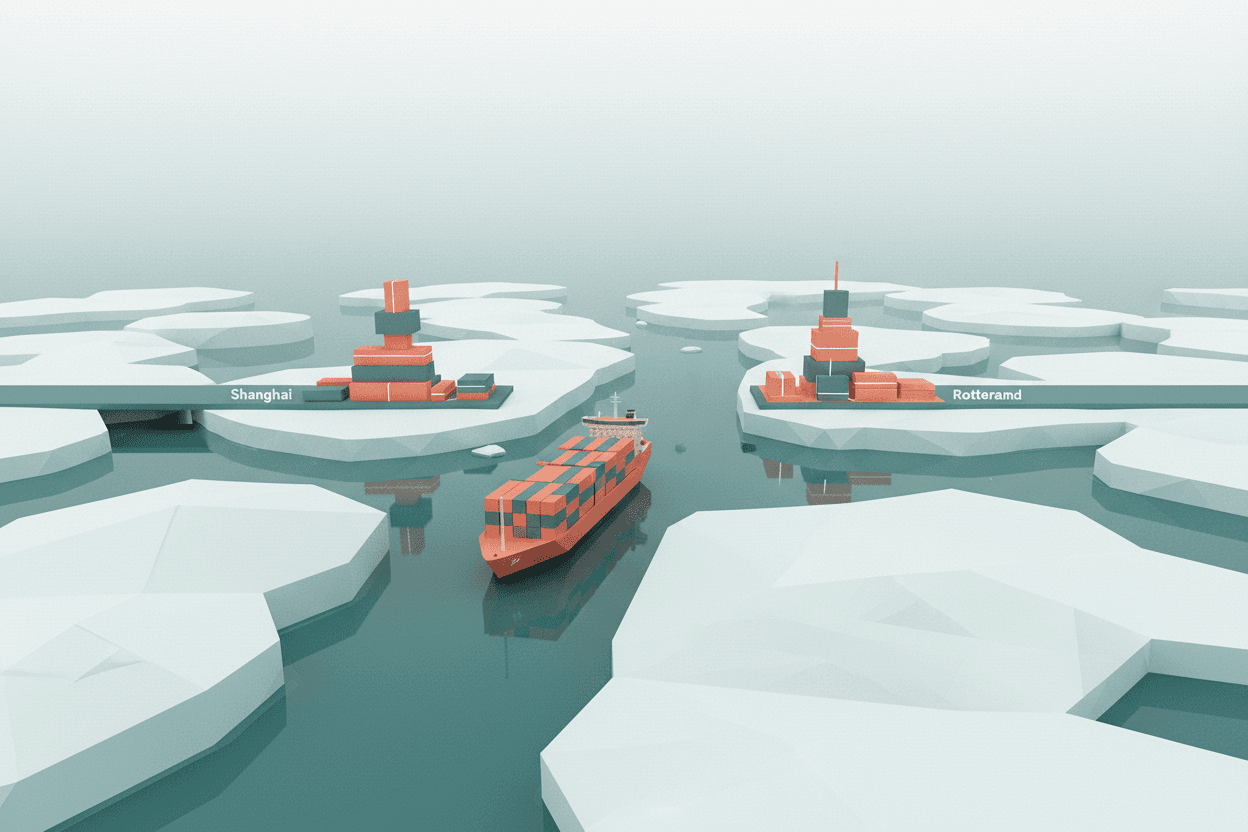
The Northern Sea Route along Russia's coast and the Northwest Passage through Canadian waters have historically been navigable for only a few weeks per year with icebreaker escort. An ice-free summer transforms these into viable commercial shipping lanes, cutting travel distances between Northern Europe and East Asia by up to 40% compared to the Suez Canal route.
In 2023, the Northern Sea Route saw 36 million tonnes of cargo transit—a figure projected to reach 80 million tonnes by 2025. Russia's state nuclear corporation, Rosatom, has positioned itself as the gatekeeper, operating a fleet of nuclear-powered icebreakers that will remain essential even in an ice-free summer, spring, and fall.
[!INSIGHT] The first nation to control Arctic logistics will hold a chokepoint on global trade that rivals the Suez and Panama Canals—without a single treaty governing its use.
The Resource Frontier
The U.S. Geological Survey estimates that the Arctic holds approximately 13% of the world's undiscovered oil and 30% of its undiscovered natural gas. These resources were previously inaccessible beneath thick ice sheets. As the ice retreats, they become technically and economically recoverable.
Russia has already staked its claim. The Yamal LNG project, one of the largest natural gas developments in the world, began production in 2017 and exports liquefied natural gas to Asia via the Northern Sea Route. Norway's Snohvit field in the Barents Sea has been operational since 2007. American and Canadian companies are eyeing the Alaskan and Canadian Arctic shelves, though regulatory hurdles have slowed development.
“*"The Arctic is the last frontier for hydrocarbon exploration. The ice is receding, and the resources are there for the taking.”
The Great Power Chess Match
Russia's Arctic Fortress
Russia has been the most aggressive in preparing for the post-ice Arctic. The country controls over 50% of the Arctic coastline and has invested billions in military infrastructure above the Arctic Circle. Since 2014, Russia has reopened or built new bases at Franz Josef Land, the New Siberian Islands, and Wrangel Island—creating a defensive arc that spans the entire Russian Arctic.
The Northern Fleet, based in Severomorsk, has received the lion's share of Russia's naval modernization budget. New ice-capable patrol vessels, submarines, and coastal defense systems are being deployed specifically for Arctic operations. In 2021, Russia conducted its largest Arctic military exercises since the Cold War, involving over 50,000 troops and 1,200 pieces of military equipment.
[!INSIGHT] Russia's Arctic military buildup isn't defensive—it's a sovereign claim to control the Northern Sea Route and the resources beneath it.
NATO's Awakening
The Arctic was largely neglected by NATO after the Cold War, but Russia's buildup has triggered a reassessment. In 2022, NATO released its first Arctic strategy in over a decade, acknowledging that the region is becoming a potential flashpoint for conflict.
Norway, a NATO member with an extensive Arctic coastline, has been increasing defense spending and hosting allied exercises. The United States has begun rotating troops through Alaska and has announced plans for a new strategic port in Nome. Canada, despite its extensive Arctic claims, has been slower to respond, with military capabilities in the region limited to a handful of patrols and aging infrastructure.
China's Polar Silk Road
China declared itself a "Near-Arctic State" in 2018, a term that raised eyebrows among the eight Arctic nations. China's Polar Silk Road initiative envisions Arctic shipping routes as part of its Belt and Road infrastructure network, and Chinese companies have invested in Russian Arctic LNG projects and Icelandic ports.
The Chinese icebreaker Xue Long 2 has conducted multiple research expeditions in the Arctic, and China is reportedly developing nuclear-powered icebreakers of its own. While China lacks Arctic coastline, its economic and scientific presence is growing—a concern for both Russia and the Western Arctic nations.
[!NOTE] The Arctic Council, the primary forum for Arctic governance, includes eight member nations and six Indigenous organizations as permanent participants—but has no enforcement mechanism and suspended operations in 2022 due to tensions over Ukraine.
The Hidden Casualties: Ecosystems and Indigenous Peoples
A Food Web Unraveling
The disappearance of Arctic sea ice is not merely an economic or geopolitical story—it is an ecological catastrophe unfolding in real time. The Arctic marine ecosystem is built on ice. Algae that grow on the underside of sea ice form the base of a food web that supports everything from zooplankton to polar bears.
When the ice disappears, so does the habitat. Polar bears, which hunt seals from sea ice platforms, have experienced population declines of up to 40% in some areas. Arctic cod, a keystone species that thrives in ice-covered waters, is being replaced by boreal species moving north as waters warm. The loss of sea ice also eliminates critical resting and breeding grounds for walruses, seals, and migratory birds.
Indigenous Rights in a Thawing World
Approximately four million people live in the Arctic, including over 500,000 Indigenous people from dozens of distinct cultures. The Inuit, Sami, Nenets, and other Indigenous groups have lived in the Arctic for thousands of years, developing cultures and livelihoods adapted to the ice.
The melting of sea ice threatens not just their way of life but their legal rights. In Canada, the Nunavut Land Claims Agreement recognizes Indigenous hunting and fishing rights based on ice coverage. As the ice disappears, the legal framework for those rights becomes uncertain. Infrastructure built on permafrost is collapsing as the ground thaws. Traditional food sources are becoming scarce or contaminated.
“*"We didn't cause this problem, but we are the first to live with its consequences. Our survival as peoples is at stake.”
[!INSIGHT] Indigenous peoples hold legal rights to much of the Arctic, but these rights are being outpaced by extractive interests and military posturing.
The Governance Vacuum
Perhaps the most alarming aspect of the post-ice Arctic is the lack of a comprehensive governance framework. The United Nations Convention on the Law of the Sea (UNCLOS) provides some guidance, allowing nations to claim exclusive economic zones up to 200 nautical miles from their coastlines, with potential extensions to 350 nautical miles if continental shelf claims are proven.
But UNCLOS was written for a world with a frozen Arctic. It does not address the unique challenges of Arctic shipping, resource extraction, or environmental protection in a region undergoing rapid transformation. The Arctic Council, which has served as a forum for cooperation, is hamstrung by geopolitical tensions and has no regulatory authority.
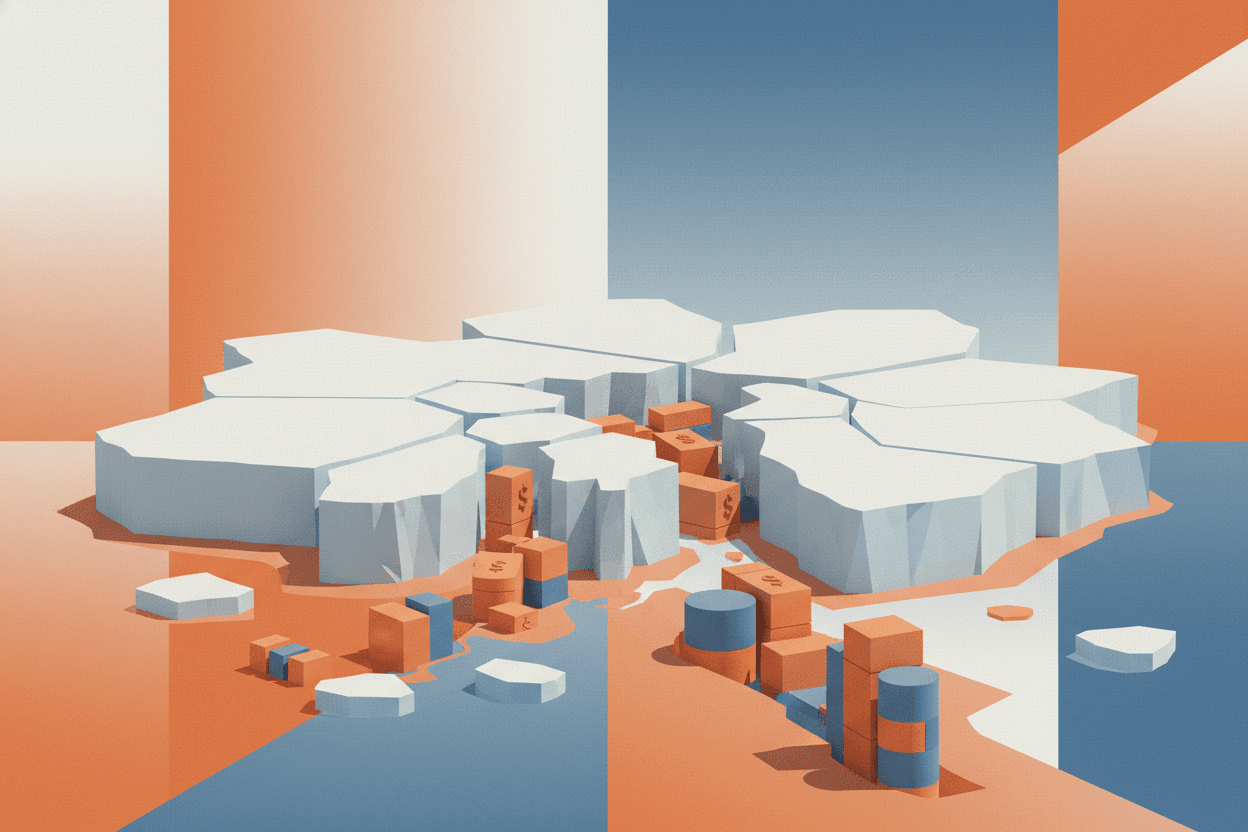
The result is a potential tragedy of the commons. Nations are racing to claim territory and resources before international rules can be established. The Arctic Ocean, once protected by its ice, is becoming a lawless frontier.
What Happens After the First Blue Summer
The first ice-free Arctic summer will be a milestone, but it will not be an endpoint. It will be the beginning of a new era in which the Arctic transforms from a frozen barrier into a global crossroads. The question is not whether this transformation will occur—the question is whether the world will be prepared for its consequences.
Will the Arctic become a zone of cooperation, governed by international agreements that protect its fragile environment and respect the rights of its Indigenous peoples? Or will it become a battleground, contested by great powers and exploited for its resources without regard for the consequences?
The playbook for the post-ice Arctic is being written right now—in Moscow, Washington, Beijing, and Brussels. But so far, it reads less like a plan for shared prosperity and more like a blueprint for conflict.
Sources: National Snow and Ice Data Center, U.S. Geological Survey Arctic Resource Assessment, NATO Arctic Strategy 2022, Arctic Council Reports, Rosatom Northern Sea Route Development Plan, Inuit Circumpolar Council Testimony to UN Permanent Forum on Indigenous Issues
This is a Premium Article
Hylē Media members get unlimited access to all premium content. Sign up free — no credit card required.